Technical Specifications and Selection Matrix
The table below compares the main technical characteristics of the three portable gantry crane configurations. Final specifications, dimensions, and operating limits depend on the selected model and approved project drawings.
| Technical Item |
Manual Steel |
Motorized Steel |
Aluminum Alloy |
| Lifting Capacity |
Up to 5 t |
Customizable up to 20 t |
Folding: up to 1 t; other applicable models: up to 5 t |
| Main Girder |
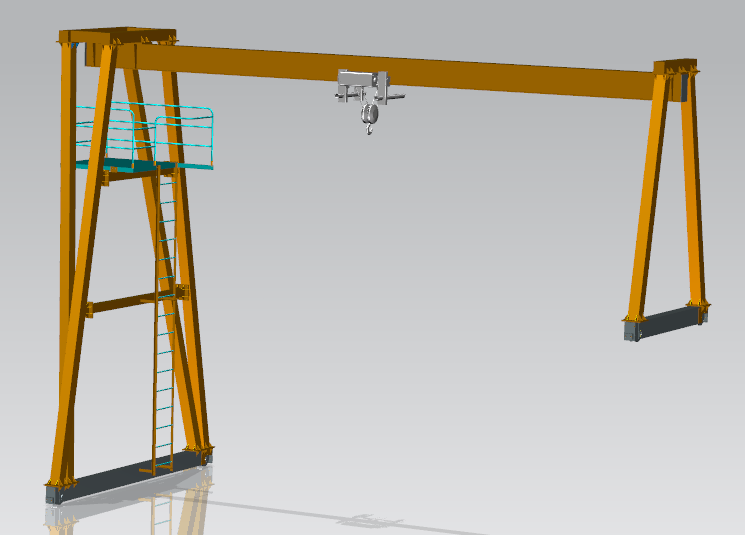
Typically single-girder |
Single or double-girder |
Typically single-girder |
| Hoist |
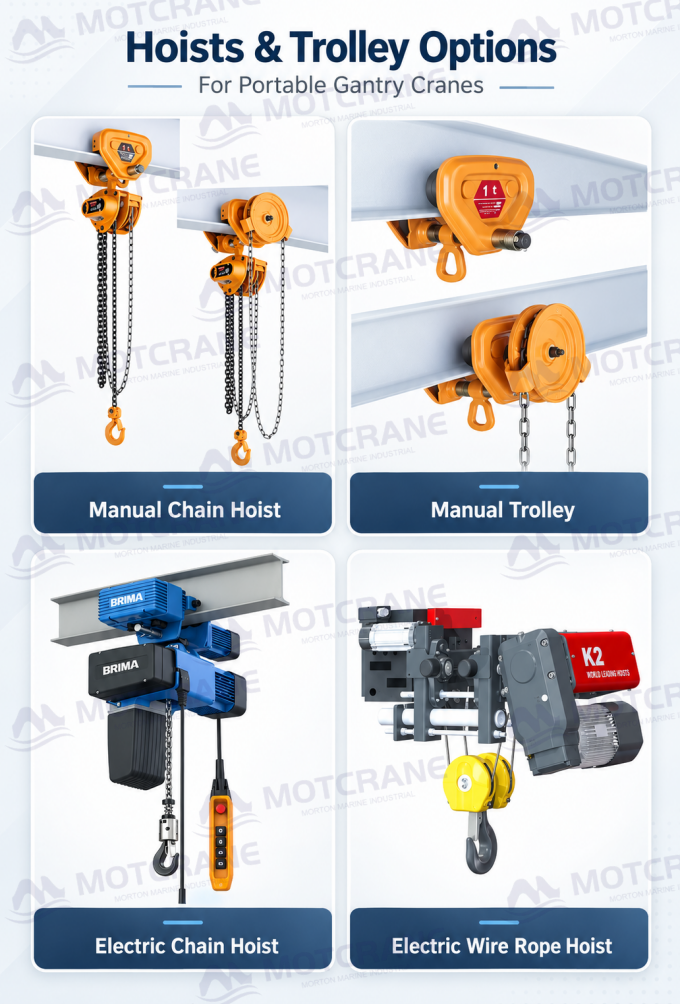
Manual chain hoist |
Electric chain or wire rope hoist |
Manual or compatible electric hoist |
| Trolley Travel |
Manual trolley |
Motorized trolley |
According to hoist and girder |
| Gantry Travel |
Manually pushed on casters |
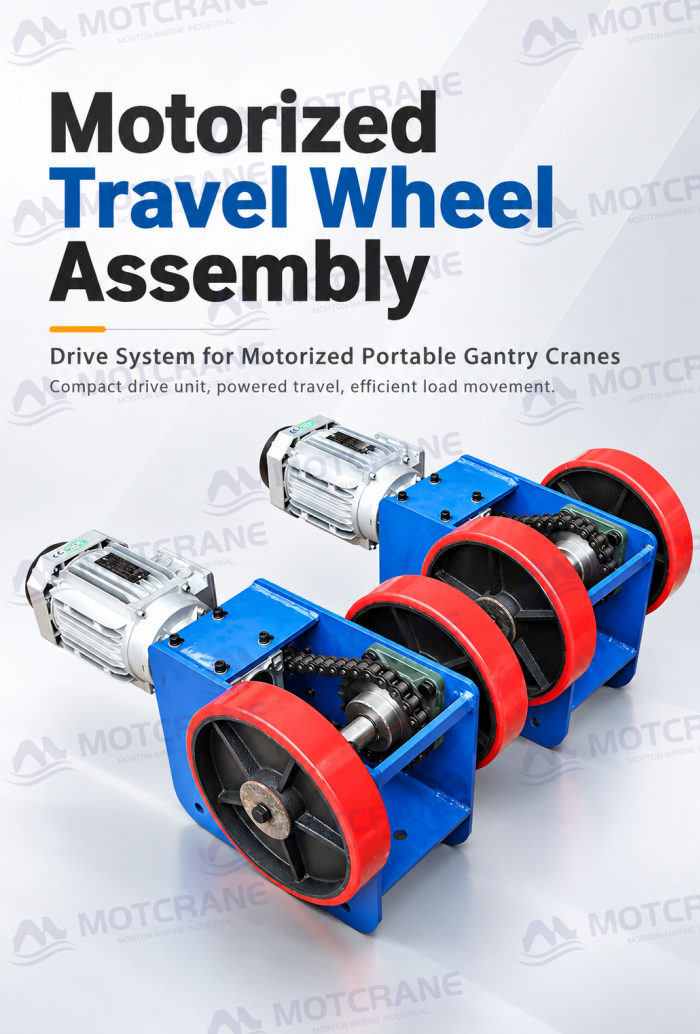
Two motor-driven wheels and two non-driven swivel casters (typical) |
Typically manual |
| Travel Under Load |
Supported within specified operating limits; pushing effort must be assessed |
Supported within specified operating limits |
Supported within specified operating limits; pushing effort must be assessed |
| Height Adjustment |
Winch-assisted on applicable single-girder models |
Winch-assisted on applicable single-girder models |
Manual or hand-crank-assisted |
| Adjustment Conditions |
Unloaded, followed by mechanical locking |
Unloaded, followed by mechanical locking |
Unloaded, followed by mechanical locking |
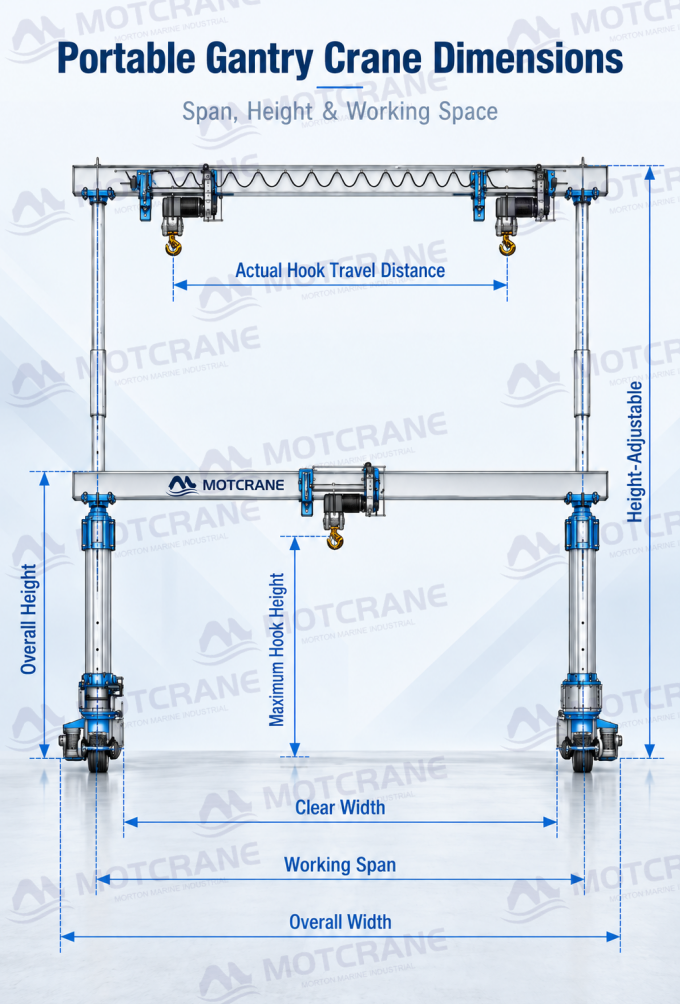
| Working Span |
Project-specific |
Project-specific |
According to model and span |
| Maximum Hook Height |
According to site requirements |
According to site requirements |
According to site requirements |
| Overall Height / Width |
Checked against access clearances |
Checked against travel routes and access clearances |
Checked against access and storage dimensions |
| Wheel Assemblies |
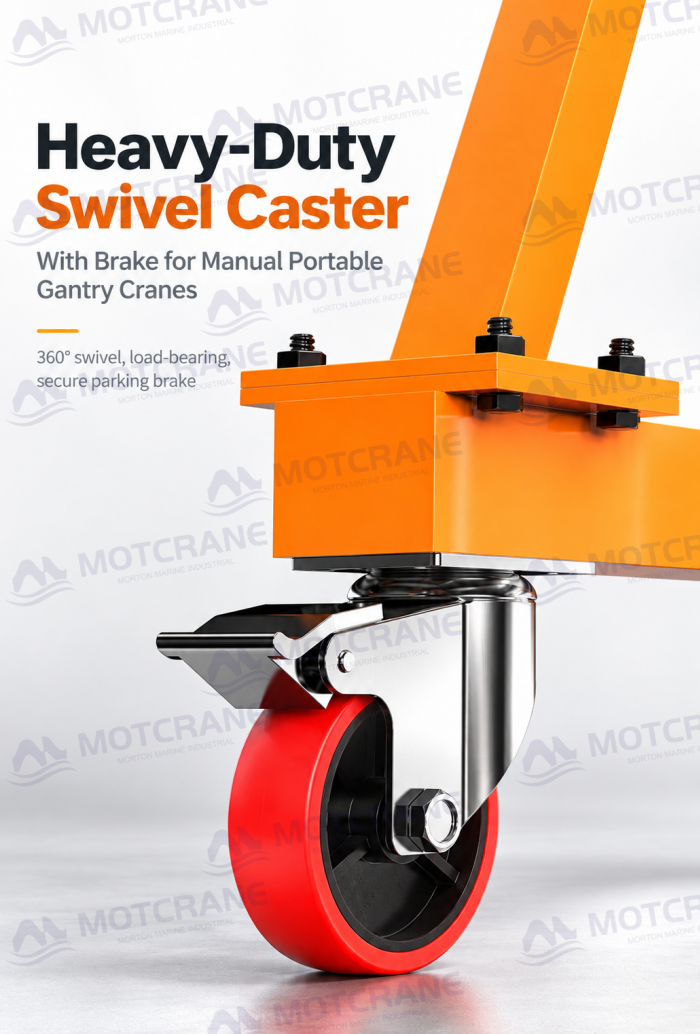
Load-bearing casters, with optional directional locks and brakes |
Powered drive wheels and non-driven swivel casters |
Primarily load-bearing casters |
| Travel Surface |
Level, firm, and suitable for wheel loads |
Engineered hard surface with verified load capacity |
Level, firm, and suitable for wheel loads |
| Power Supply |
No power required for manual hoisting and travel |
Mains power, diesel generator, or project-specific battery system |
No power required for manual configurations; powered options as specified |
How to Choose the Right Portable Gantry Crane for Your Project
Before choosing between manual and motorized configurations, consider how the load needs to move. Will it only be lifted and positioned along the main girder, or must the entire gantry travel while carrying the suspended load?
For lifting and trolley travel at a fixed position, the main consideration is the available hook coverage. If the entire gantry must move under load, you also need to evaluate the travel route, turning space, and floor conditions.
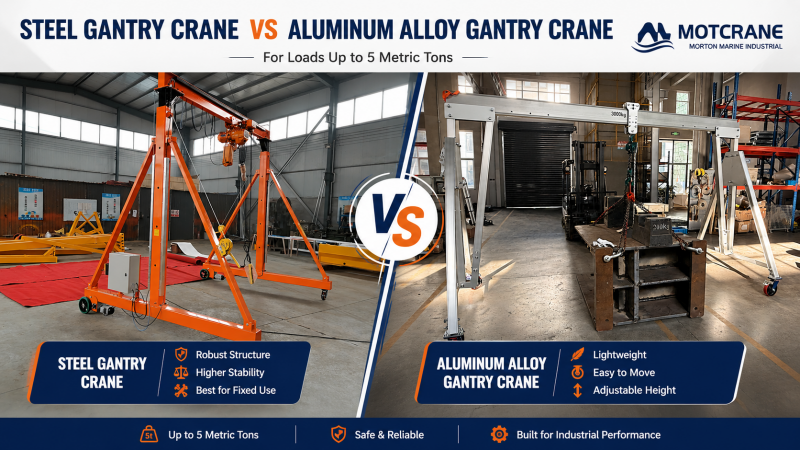
If your project involves short-distance movement between a few workstations and manual pushing is practical, a manual steel or aluminum alloy gantry crane may be a suitable option. For heavier loads, longer routes, or applications where manual pushing is impractical, a motorized steel configuration is worth considering.
Loaded travel also requires attention to the load’s center of gravity, lifting attachments, wheel loads, floor joints, and any slopes along the route. Standard workshop casters should not be used on uneven or demanding outdoor surfaces without a specific assessment. Routes involving compacted gravel or irregular ground may require a different travel system.
Share your load details, required hook height, span, floor photos, and handling process with MOTCRANE. We can then recommend a suitable configuration and prepare a preliminary general arrangement drawing.
Manual Steel Portable Gantry Cranes: Is Manual Travel Practical for Your Site?
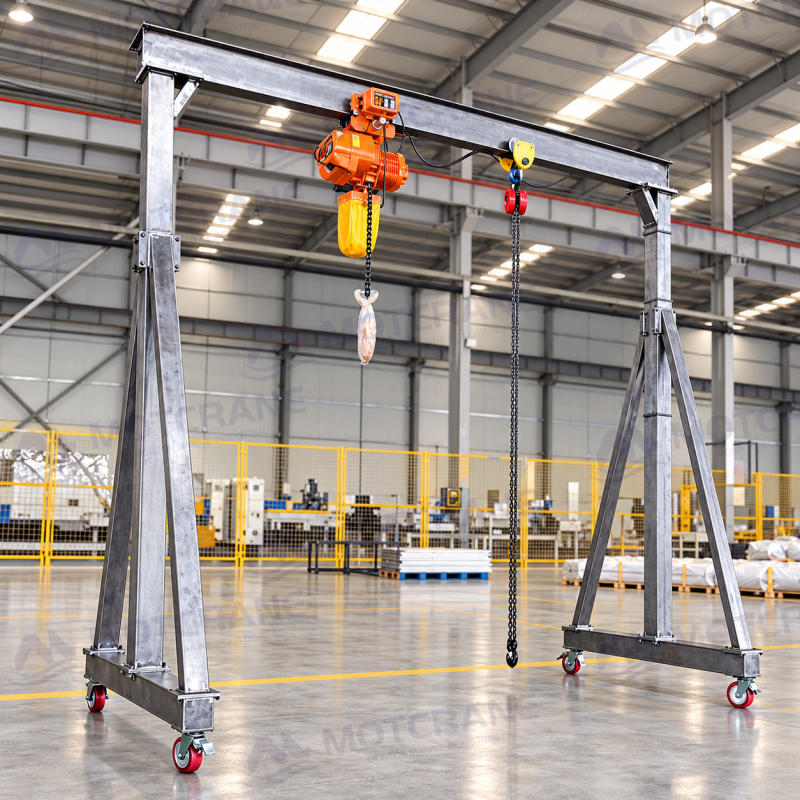
Manual steel portable gantry cranes are available with rated lifting capacities up to 5 t. However, selecting a manually pushed crane involves more than checking its lifting capacity.
The effort required to move the same load can vary significantly with floor conditions, caster materials, and turning requirements. For applications involving longer routes, frequent turns, or several doorways, wheel diameter, directional locking, and parking arrangements should be considered during the design stage.
If the crane must operate around equipment of different heights, a height-adjustable single-girder configuration may also be considered. This allows the working height to be changed between lifting operations, but height adjustment is not permitted while a load is suspended.
For a practical assessment, provide the complete travel route and the lowest doorway clearance, rather than only the maximum load weight.
Motorized Steel Portable Gantry Cranes: Differential Drive or Advanced Steering?
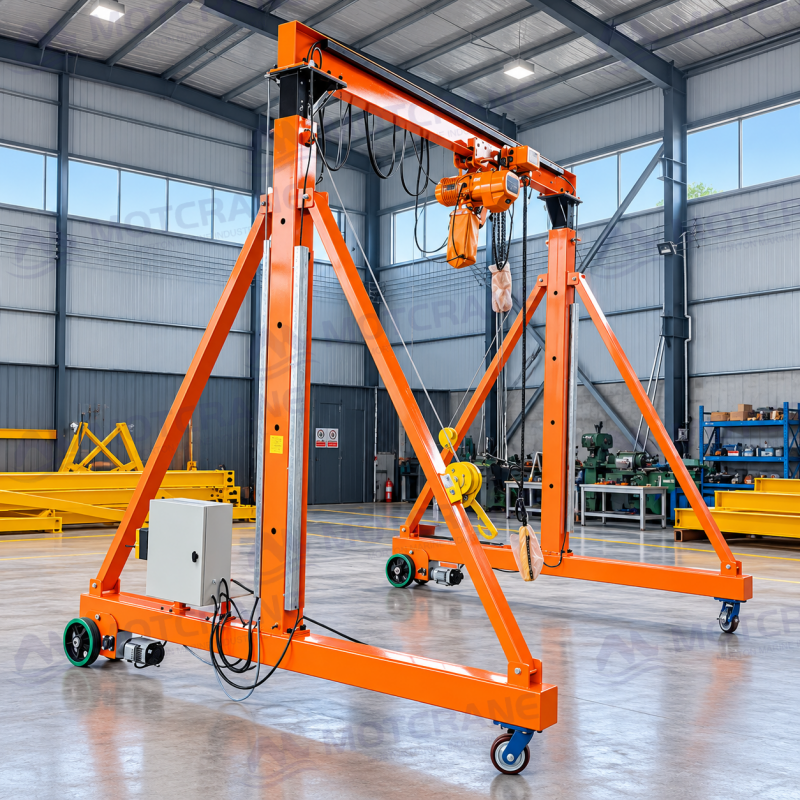
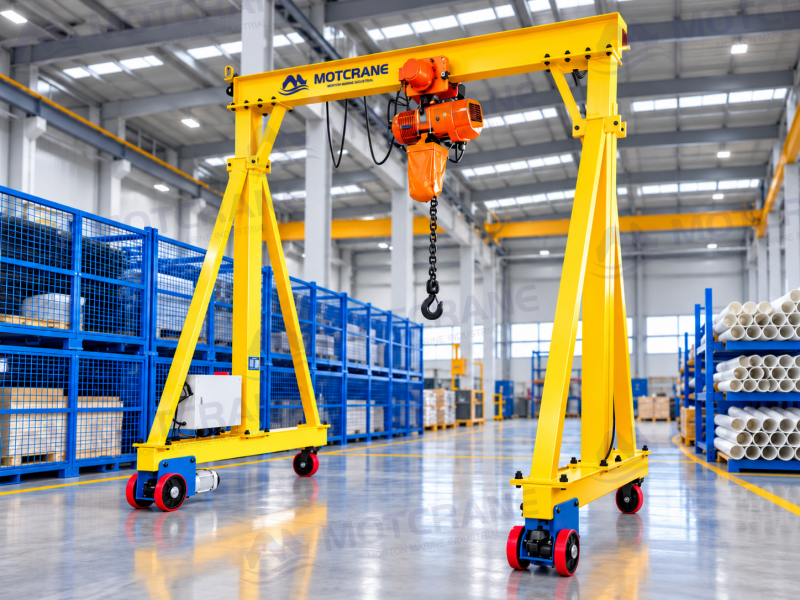
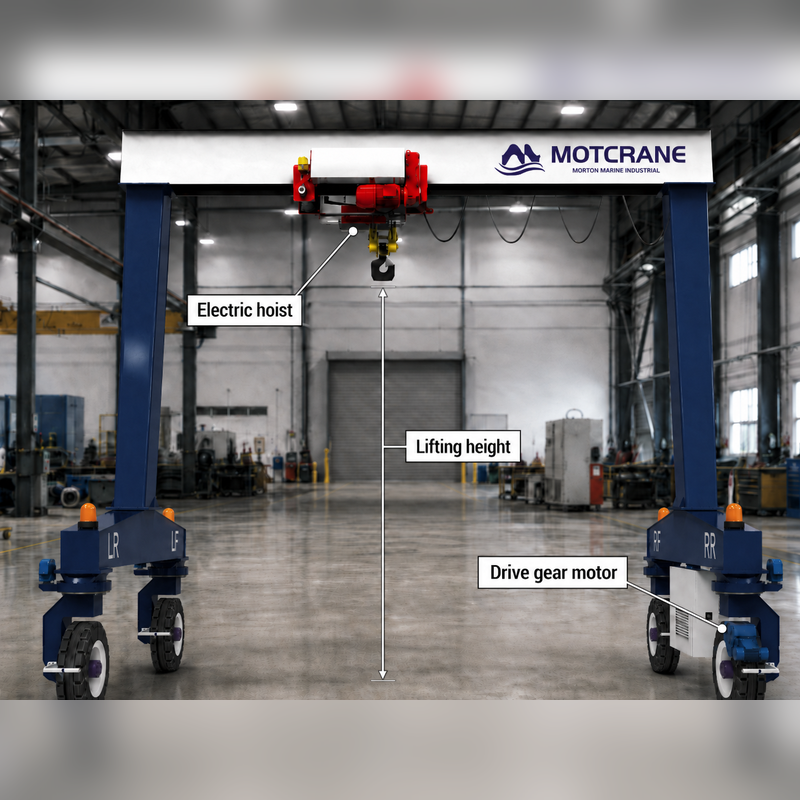
MOTCRANE motorized steel portable gantry cranes typically use two independently motor-driven wheels and two non-driven swivel casters.
During straight travel, both drive wheels propel the crane in the same direction. Turning is achieved by varying the speed or travel direction of the two drive wheels, allowing differential steering without a separate powered steering mechanism for the swivel casters.
This arrangement is suitable for workshops and equipment installation areas with relatively predictable travel routes and firm, level surfaces. The achievable turning radius and loaded-travel conditions depend on the crane dimensions, wheel arrangement, and control system.
If your project requires more advanced movement modes, such as sideways travel, diagonal travel, or pivot turning, or if the load and ground conditions exceed the capability of a conventional wheel arrangement, a specialized Rubber Tyred Gantry Crane may be more suitable.
These cranes can be equipped with separate travel and steering control systems to provide different movement modes according to the project requirements. For applications involving the lifting and transport of long or oversized components or containers within a straddling frame, a Straddle Carrier may also be considered. Available steering modes and handling functions depend on the specific equipment configuration.
Aluminum Alloy Portable Gantry Cranes: When Do Lightweight Design and Easy Assembly Matter Most?
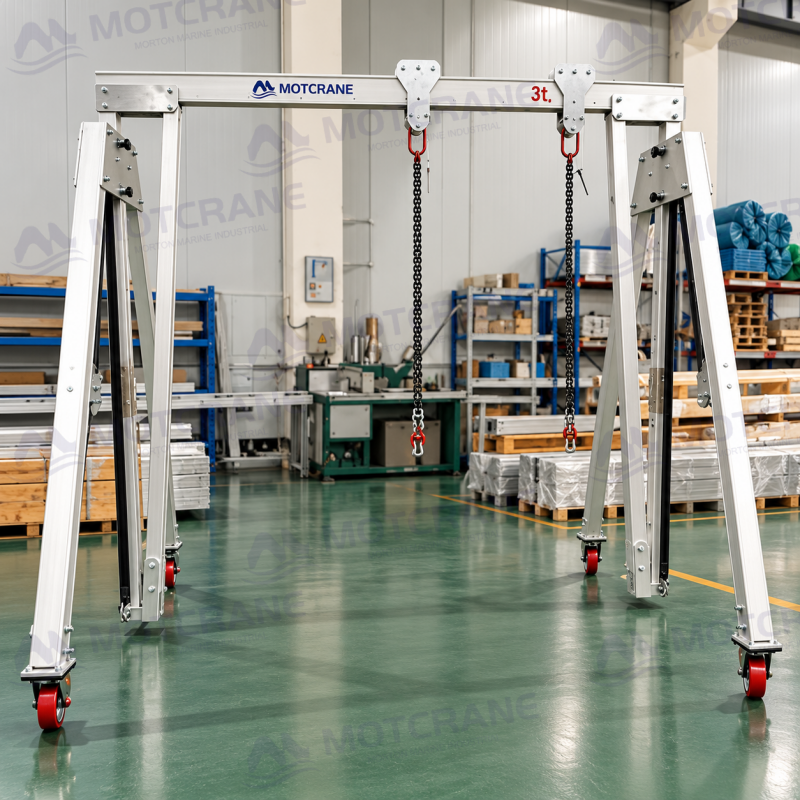
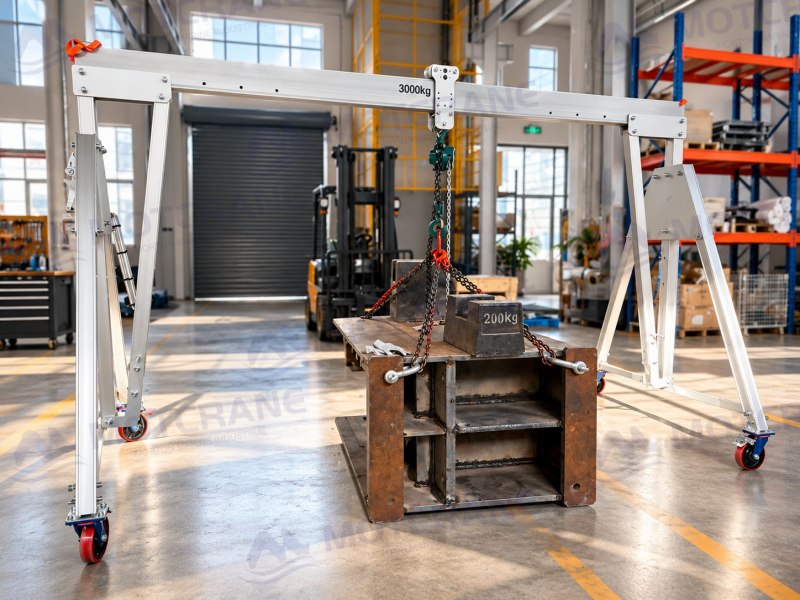
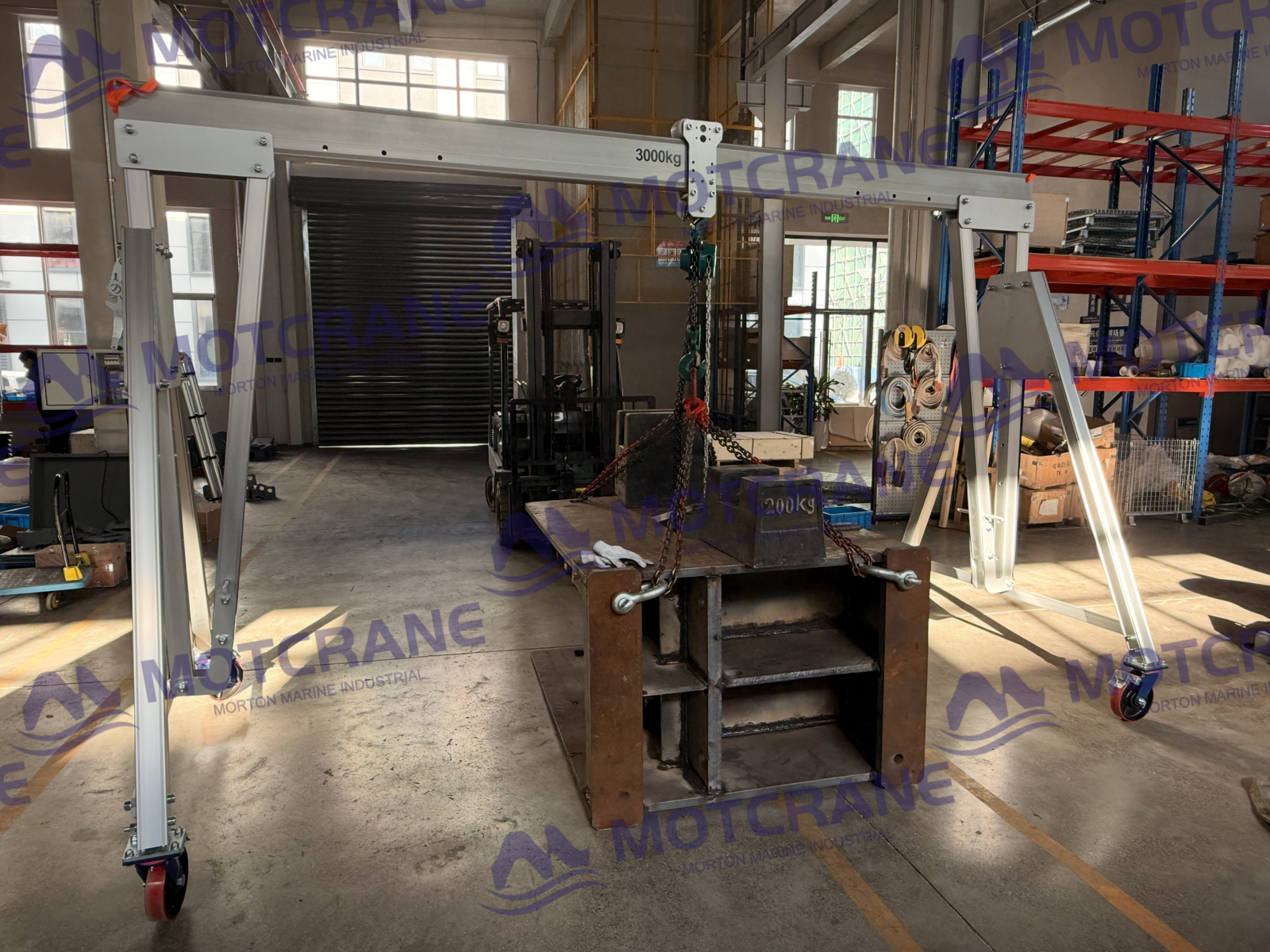
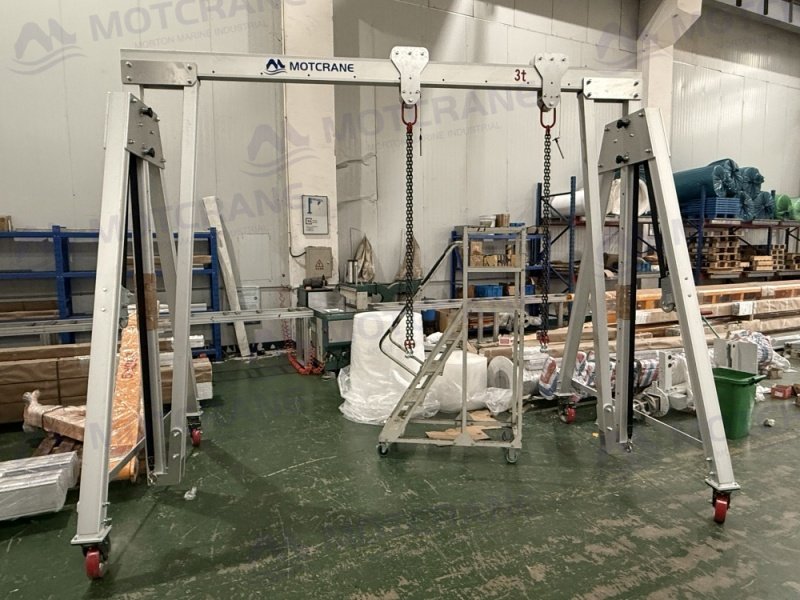
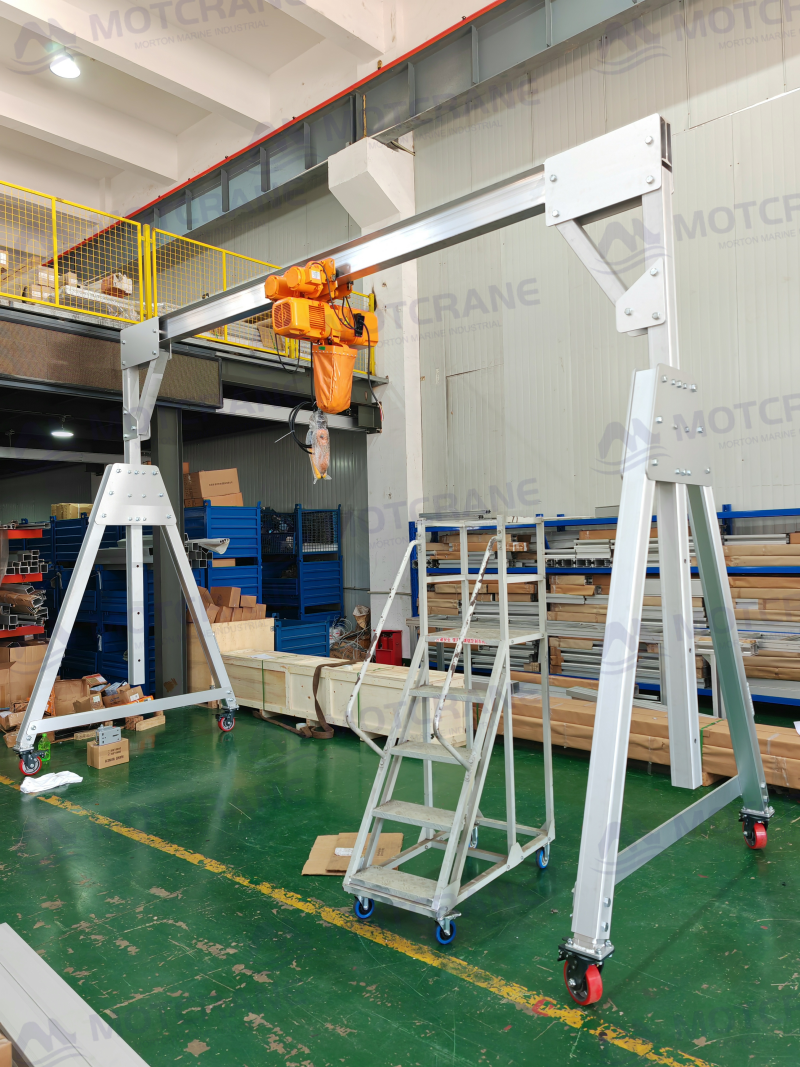
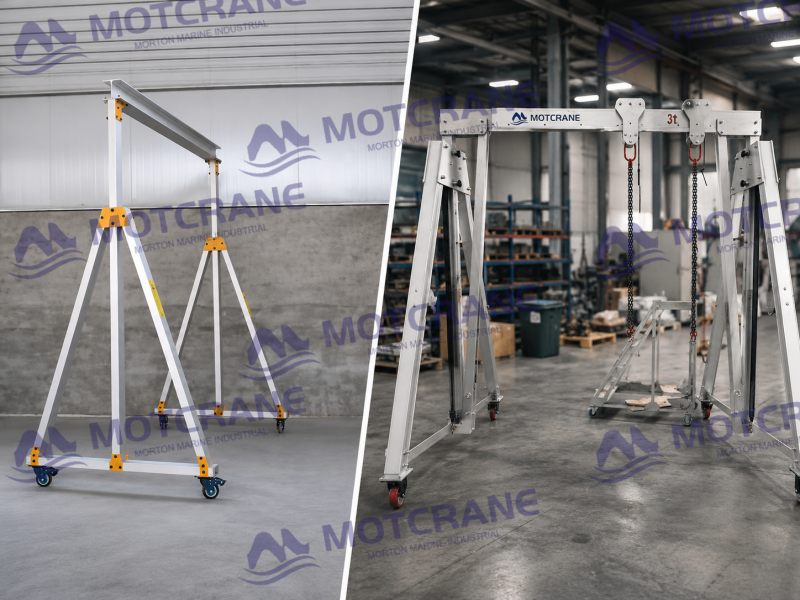
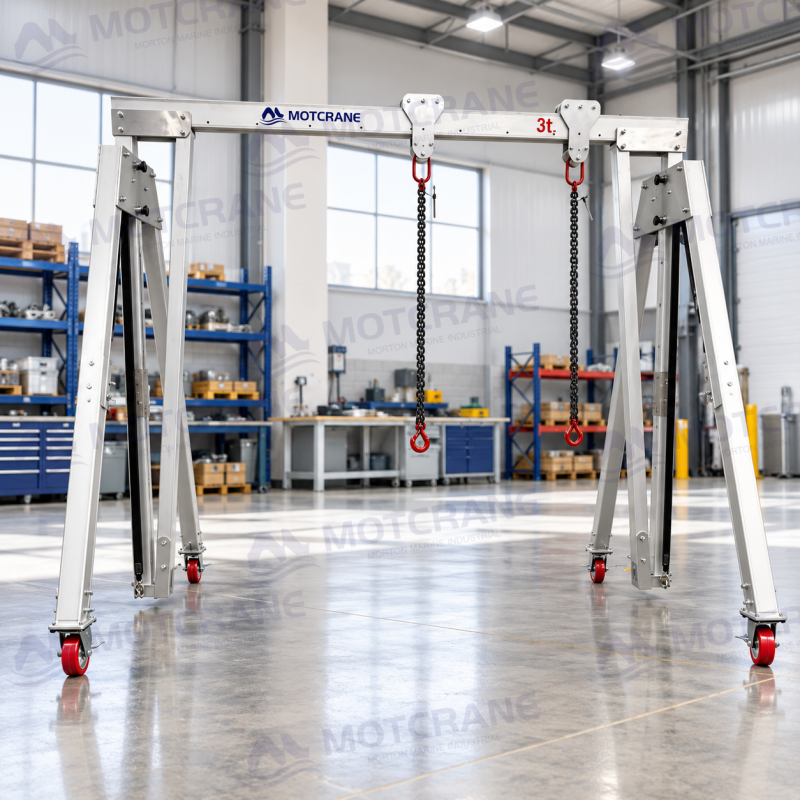
Aluminum alloy portable gantry cranes are particularly useful for temporary maintenance, relocation between work areas, and applications that require frequent assembly, disassembly, transportation, or storage.
When a gantry needs to be dismantled and moved regularly, its self-weight, component dimensions, and assembly method may be more important than motorized travel. Folding and height-adjustable models suit different access and storage requirements, so the choice should be based on the available working space and how the equipment will be transported or stored.
If you have already decided on an aluminum alloy structure, explore our Aluminum Gantry Crane range for folding designs, height-adjustment methods, model-specific spans and height ranges, and a real application from a customer in Japan.
Request a Portable Gantry Crane Configuration and Quotation
Tell us the weight of the load you need to lift, whether special lifting attachments are required, where the load will be picked up, how it needs to move, and where it will be placed.
If available, please also provide the required maximum hook height, working span, doorway and passageway dimensions, floor photos, and estimated travel distance. For projects involving longer routes or turning with a suspended load, a simple route sketch would be particularly helpful.
MOTCRANE will use this information to recommend a suitable portable gantry crane configuration, prepare a preliminary layout, and provide a quotation.






 English
 Russian
 French
 Spanish
 Arabic
 Indonesian
 Japanese