


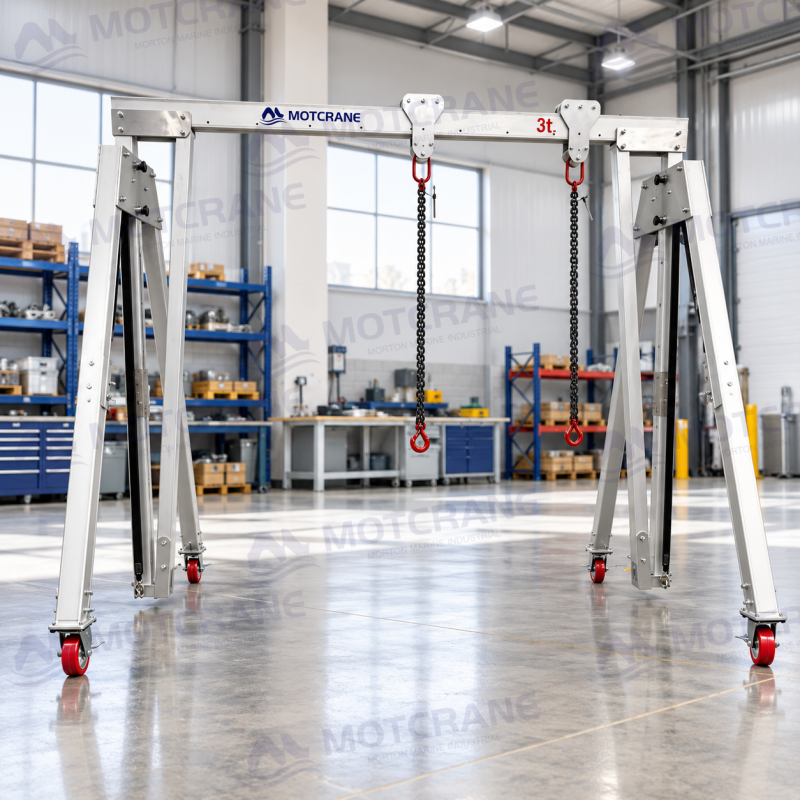
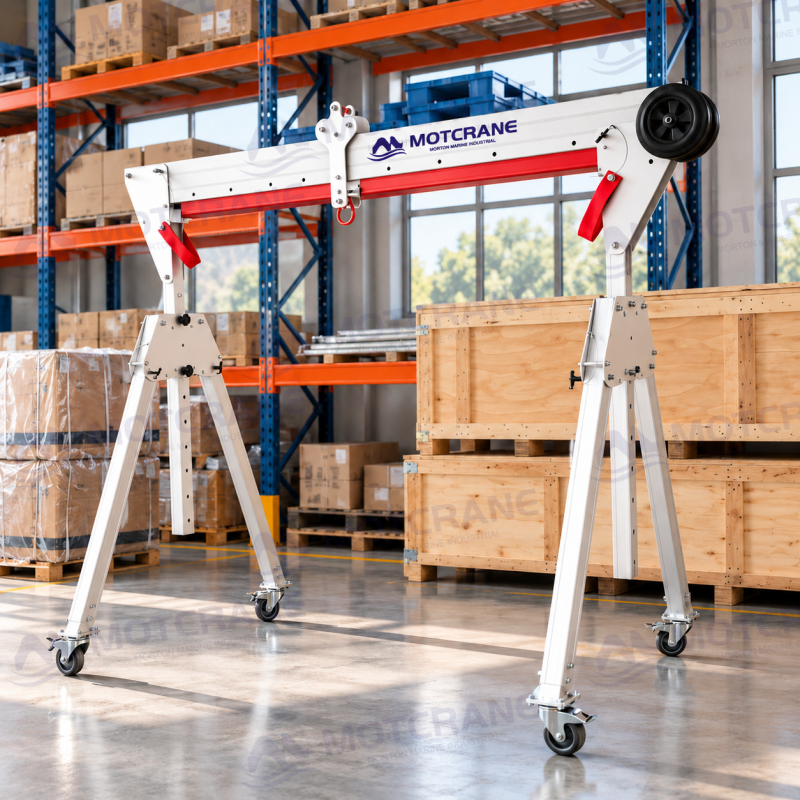
An aluminum gantry crane is a portable lifting system with a lightweight aluminum frame and load-rated casters. It is suitable for equipment maintenance, machinery assembly, loading, and other lifting tasks where a permanent overhead crane system is not required.
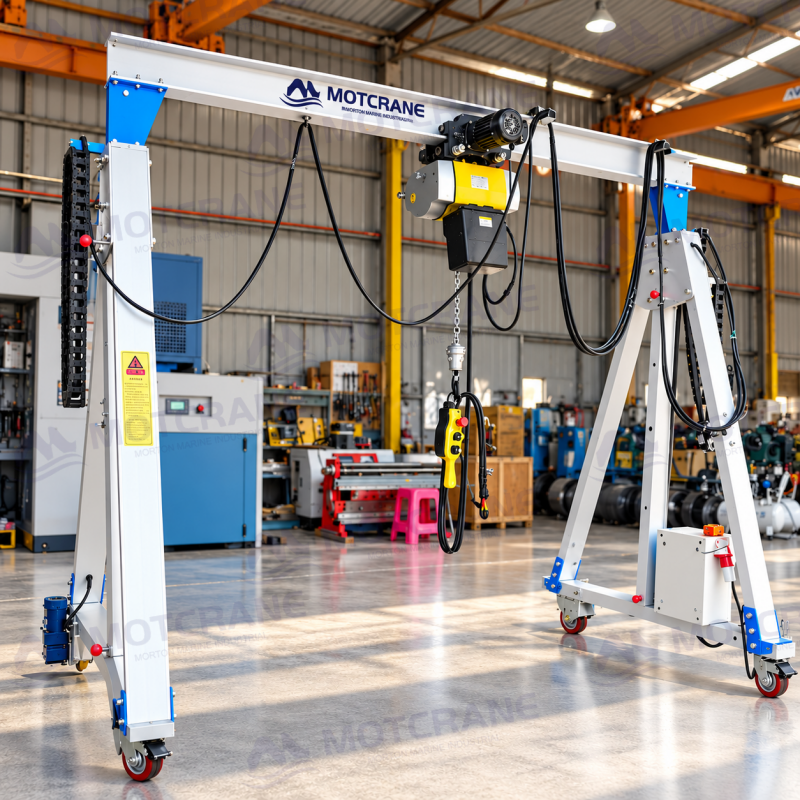
MOTCRANE offers foldable, adjustable-height, and motorized-travel aluminum gantry cranes. Adjustable-height models can be raised or lowered manually or with hand winches, while motorized travel allows the entire gantry to move with less manual effort.
With lifting capacities up to 5 tons, our aluminum gantry cranes can be configured to meet your required span, working height, hoist selection, and site conditions.
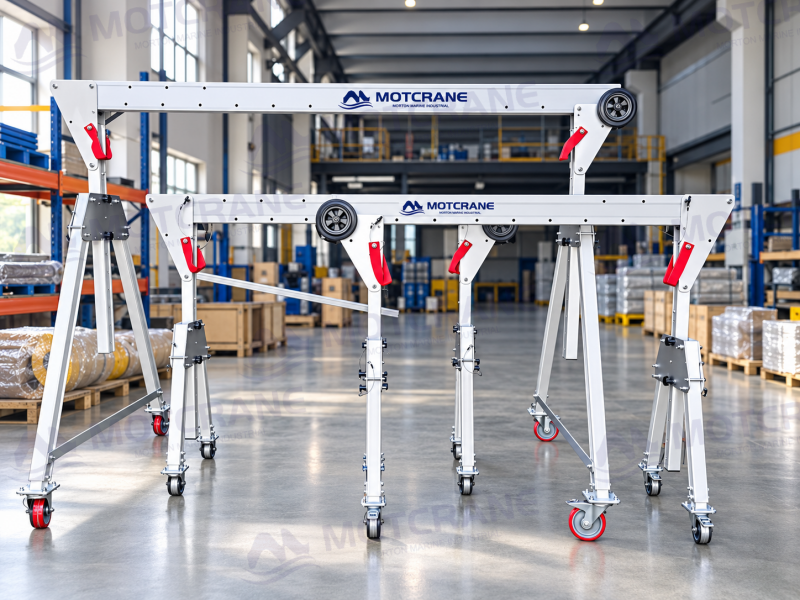
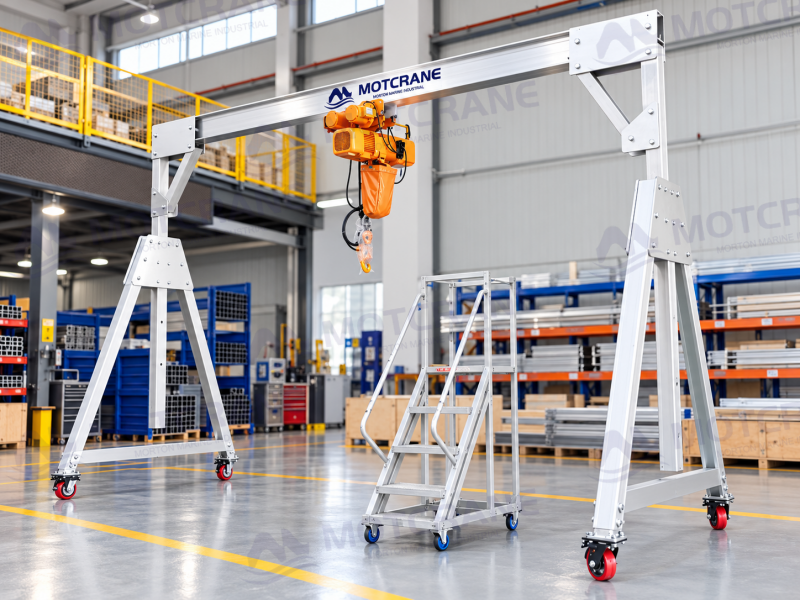
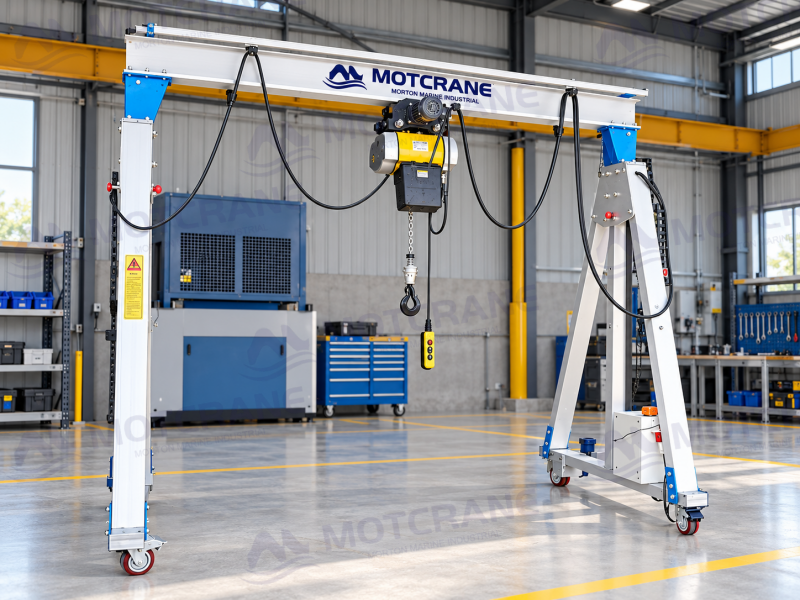
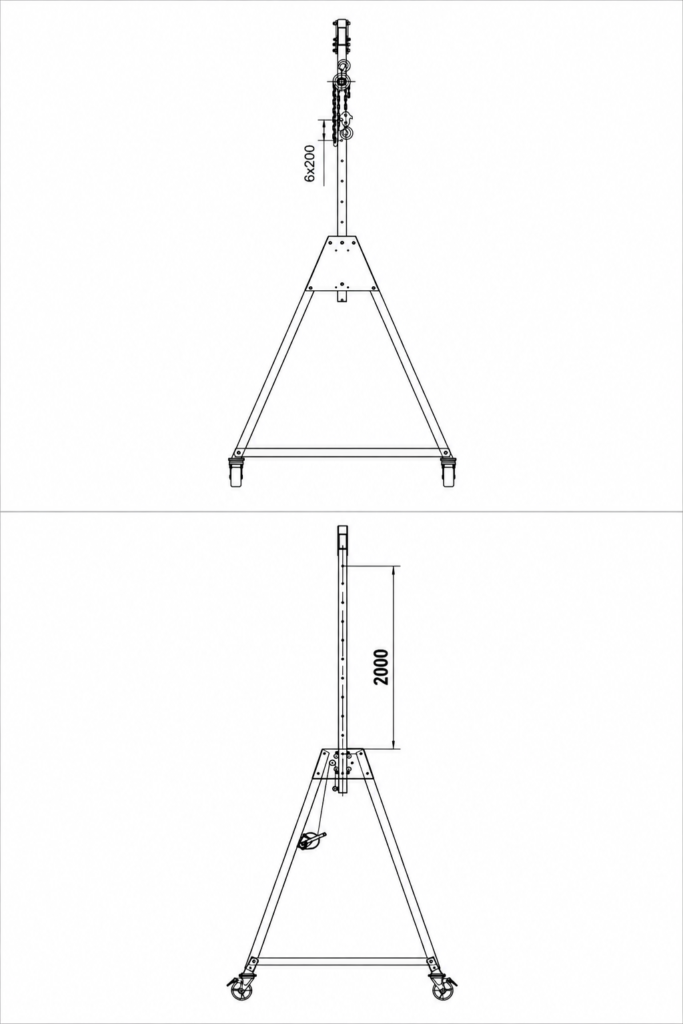
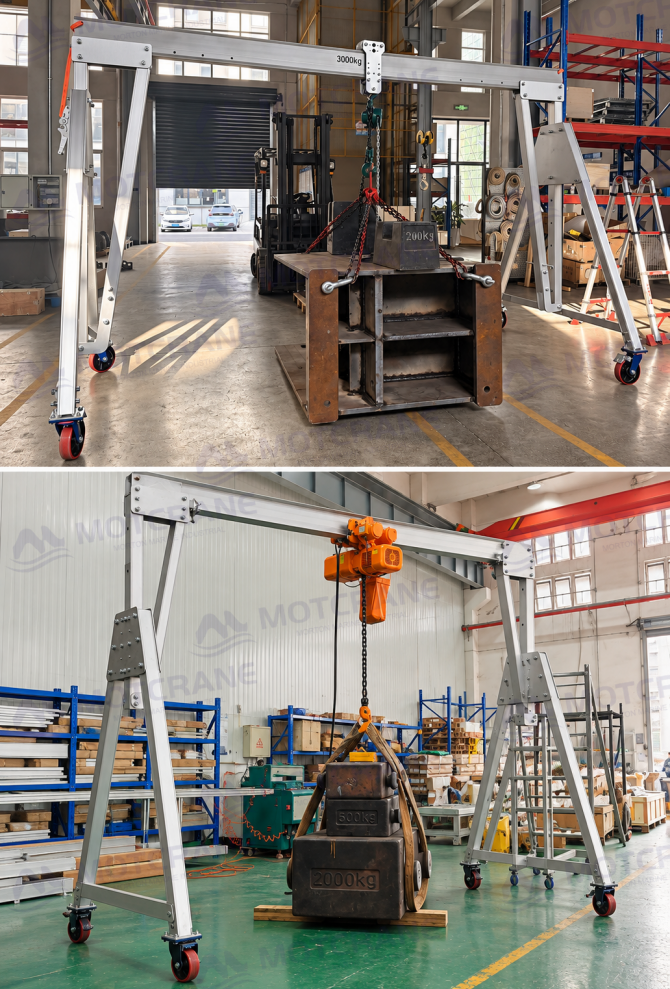
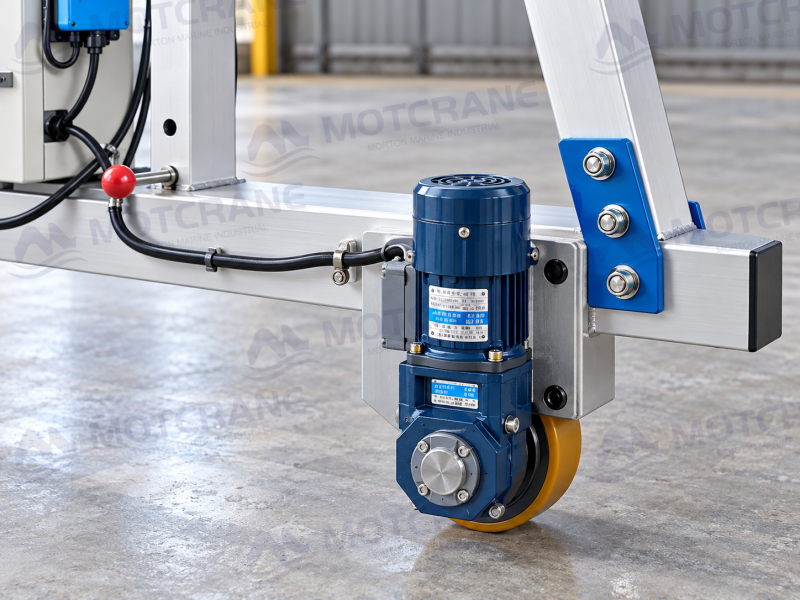
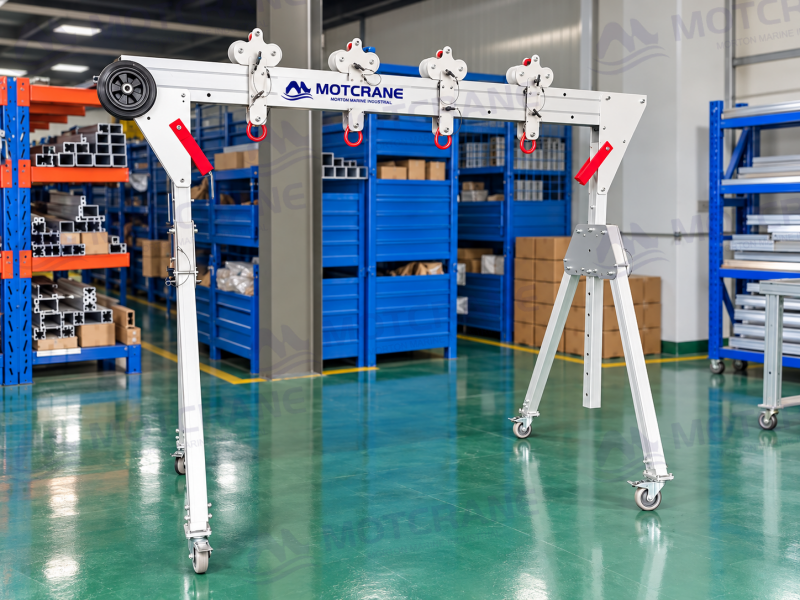
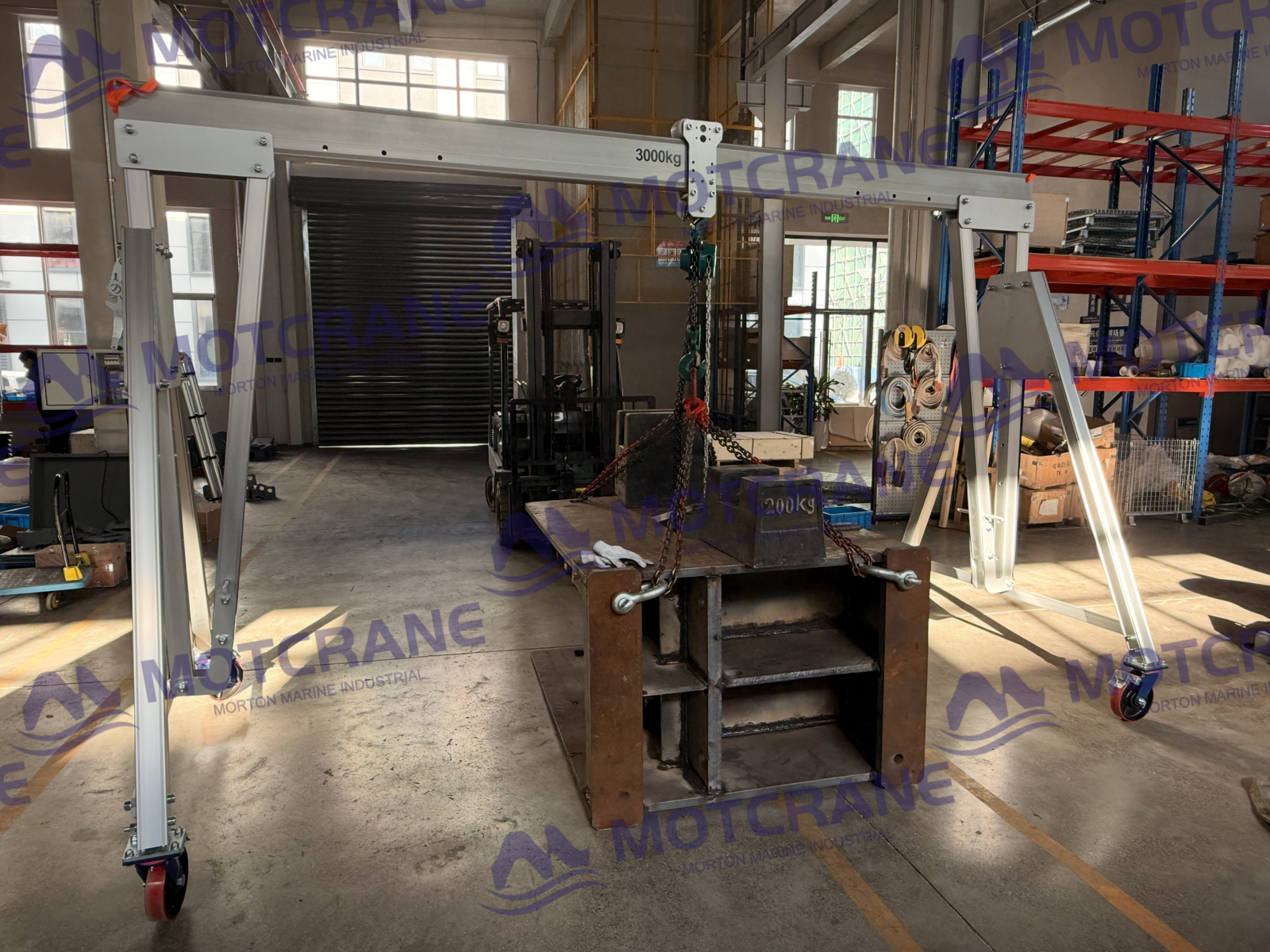
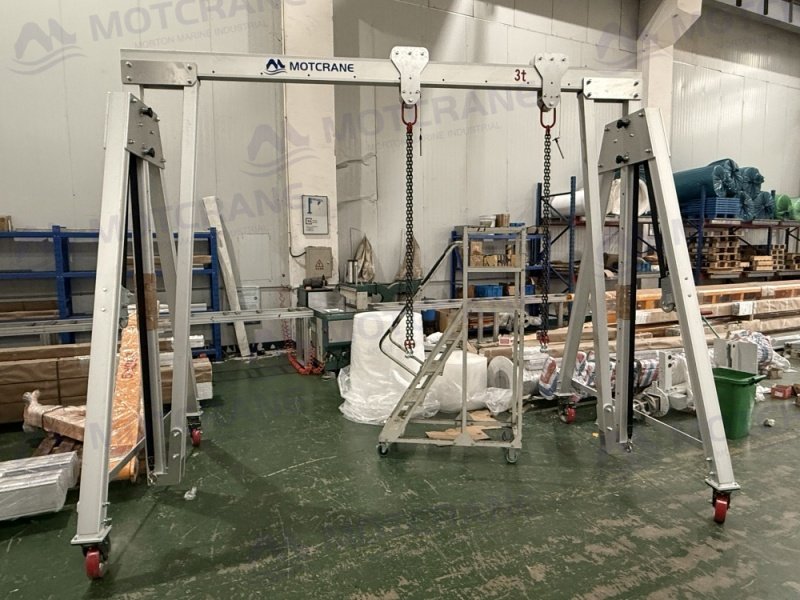
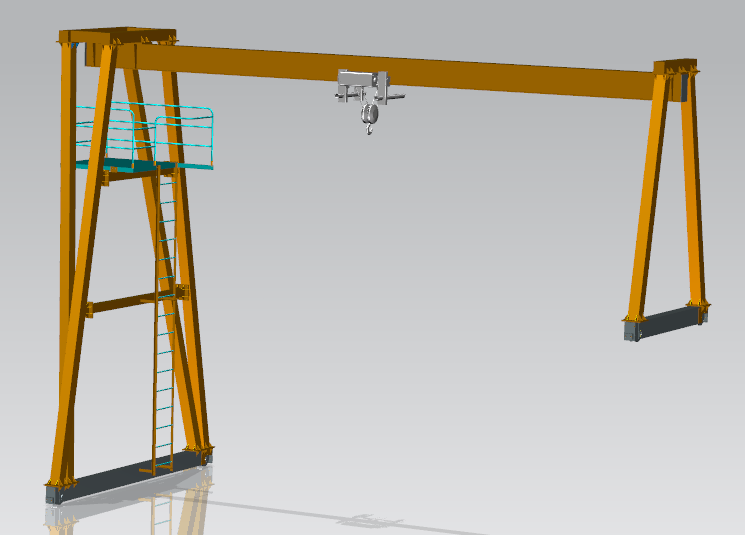
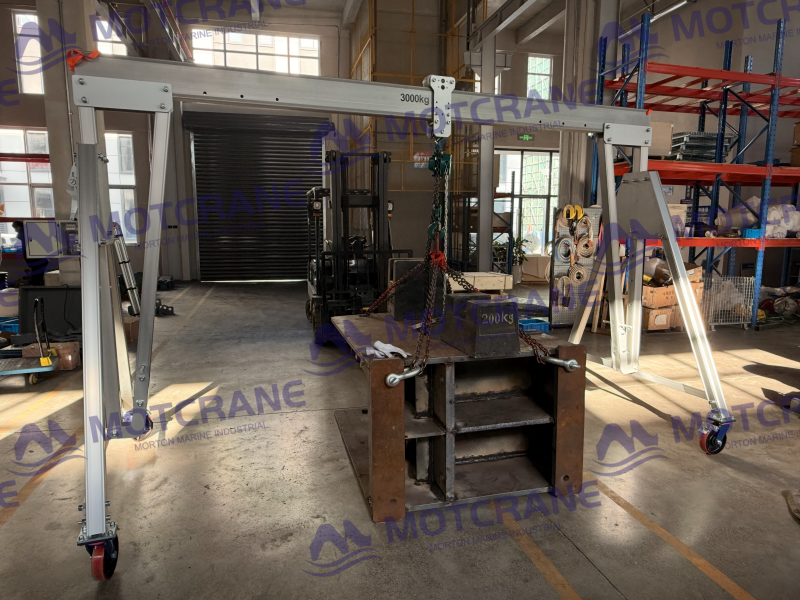
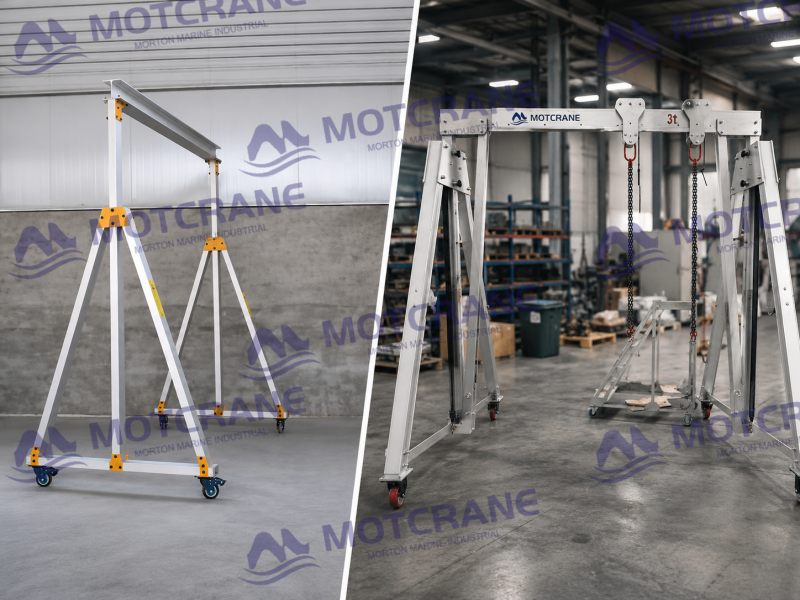
The specifications below cover the main configurations of MOTCRANE aluminum gantry cranes. Actual capacities, spans, and operating dimensions depend on the selected structure and approved design.
| Item | Specifications |
|---|---|
| Rated Capacity | Foldable: 250–1,000 kg; Other Aluminum Gantry Models: Up to 5 t |
| Main Configurations | Foldable / Adjustable Height / Motorized Travel |
| Height Adjustment Methods | Manual Lift / Hand Winch |
| Height Adjustment Travel | 750–2,000 mm for applicable adjustable-height models; customizable |
| Height Locking | Load-Bearing Locking Bolts for Adjustable-Height Models |
| Main Girder & Span | Customized According to Capacity and Structural Design |
| Clear Height Under Girder | Project-Specific |
| Hoist & Trolley | Manual or Electric Chain Hoist / Compatible Trolley |
| Gantry Travel | Manual Pushing / Electric Motorized Travel |
| Loaded Travel | Permitted Under Specified Operating Conditions |
| Casters | Selected According to Crane Capacity and Wheel Loads |
| Height Adjustment Condition | Completely Unloaded; Locking Bolts Secured Before Lifting |
| Power Supply | According to Electric Hoist and Motorized Travel Requirements |
When selecting an aluminum gantry crane, it is important to distinguish between overall height, clear height under the girder, maximum hook height, and working span.
For adjustable-height models, you should also check whether the gantry can pass through the required doorway when lowered and still provide sufficient lifting height when raised.
Overall Height: The vertical distance from the floor to the highest point of the gantry crane. This determines whether the crane can fit within the available building or doorway clearance.
Clear Height Under Girder: The vertical distance from the floor to the underside of the main girder. This is not the same as maximum hook height.
Maximum Hook Height: The vertical distance from the floor to the hook at its highest permitted position, taking the hoist headroom into account.
Clear Span / Working Width: The available width between the inside faces of the supporting legs, which differs from the overall girder length.
Doorway Clearance: Check the crane’s minimum overall height, width, and caster dimensions to determine whether it can pass through the doorway.
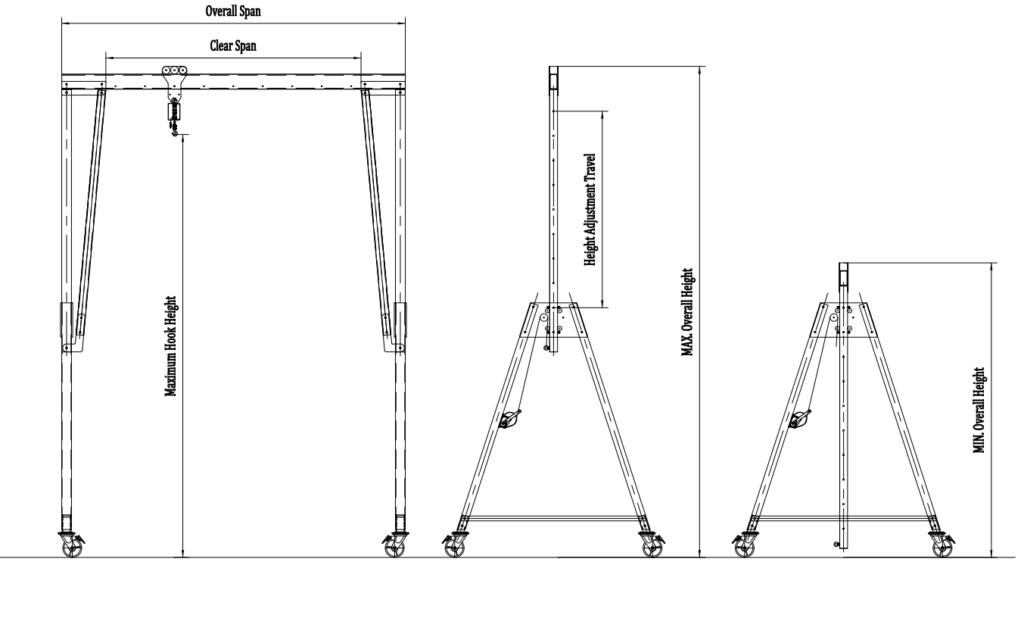
The height of an adjustable aluminum gantry crane must only be changed when the crane is completely unloaded. Before adjustment, check the floor conditions, secure the casters, and follow the specified procedure for adjusting both telescopic support legs.
Once the required height is reached, all load-bearing locking bolts must be correctly installed and checked before lifting operations begin. Hand winches and lifting straps used for height adjustment must not replace the mechanical locking structure during normal lifting.
Loaded travel and height adjustment are separate operations. When moving a gantry with a suspended load, follow the specified travel speed, floor, load stability, and operating restrictions. Electrically driven models must also be operated using the designated travel controls and braking system.
You do not need to finalize every dimension before requesting a quotation. Provide your main lifting requirements and working conditions, and MOTCRANE can prepare a preliminary arrangement for review.
Provide the maximum workpiece weight, dimensions, lifting points, and lifting frequency. Explain where the load will be picked up, how it needs to be moved, and where it will be placed.
Confirm the required working span, available lifting height, doorway dimensions, and overhead obstructions. For adjustable-height models, specify the minimum and maximum working heights.
Choose a foldable gantry for compact storage and transportation, or an adjustable-height model for changing working heights. For height-adjustable designs, select manual lifting or hand winch assistance according to the required adjustment range and operating conditions.
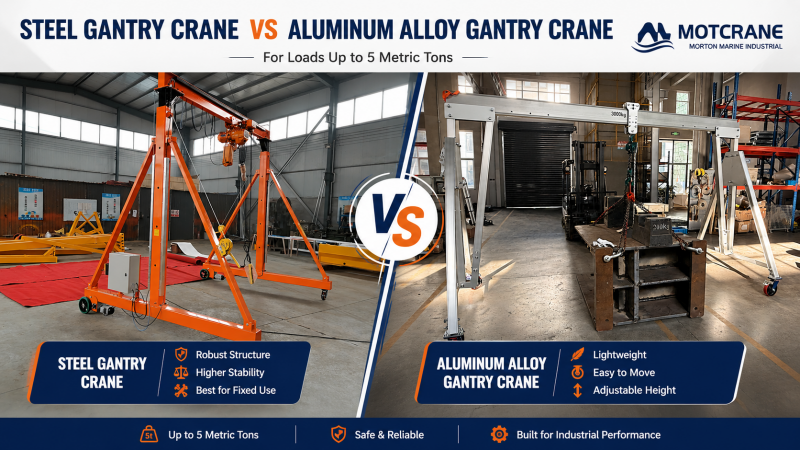
If you are also comparing aluminum and steel structures, our steel vs aluminum gantry crane comparison explains the key factors to consider for lifting applications under 5 tons.
Describe the floor surface, travel route, and expected travel distance. Confirm whether the crane will move with a suspended load and whether manual pushing is practical. For heavier loads or frequent movement, an electrically driven travel system can be considered.
Select a manual or electric chain hoist and compatible trolley. Confirm the available power supply if electrical equipment is required. MOTCRANE will prepare a preliminary general arrangement drawing showing the main dimensions and selected configuration for approval before production.
No. Height adjustment must be performed with the crane completely unloaded. All required load-bearing locking bolts must be securely installed before lifting begins.
Manual lifting requires operators to raise or lower the telescopic support legs directly. Hand winches use lifting straps to support the adjustable structure during height changes. Both methods require mechanical locking before lifting.
Typical height adjustment travel ranges from 750 to 2,000 mm. Custom ranges are available depending on the structural design. This refers to the adjustment travel, not the total gantry height or maximum hook height.
Yes. MOTCRANE aluminum gantry cranes are designed for loaded travel under specified operating conditions. The floor surface, wheel loads, load stability, and travel speed must meet the applicable design and operating requirements.
Motorized travel means an electric drive moves the entire gantry along the floor. It is different from an electric hoist, which raises and lowers the load. Both functions can be specified separately according to the application.
Yes. A compatible electric chain hoist and trolley can be selected according to the crane capacity, main girder profile, and available electrical supply.
MOTCRANE foldable aluminum gantry cranes are available up to 1 ton. Higher-capacity aluminum gantry configurations are available up to 5 tons, subject to the span and structural design.
No. Height adjustment and span adjustment are separate design features. The span is determined by the selected main girder and supporting structure unless a specific adjustable-span design is provided.
Please provide the maximum load weight, required working span, working height, doorway clearance, floor conditions, travel distance, and preferred travel method. Site photographs and a description of the handling process are also helpful.
Tell us your maximum lifting load, required span, working height, doorway clearance, and floor conditions. Let us know whether you need a foldable frame, adjustable height, or motorized gantry travel.
MOTCRANE will review your application, recommend a suitable configuration, and prepare a preliminary general arrangement drawing for your approval.



 English
 Russian
 French
 Spanish
 Arabic
 Indonesian
 Japanese