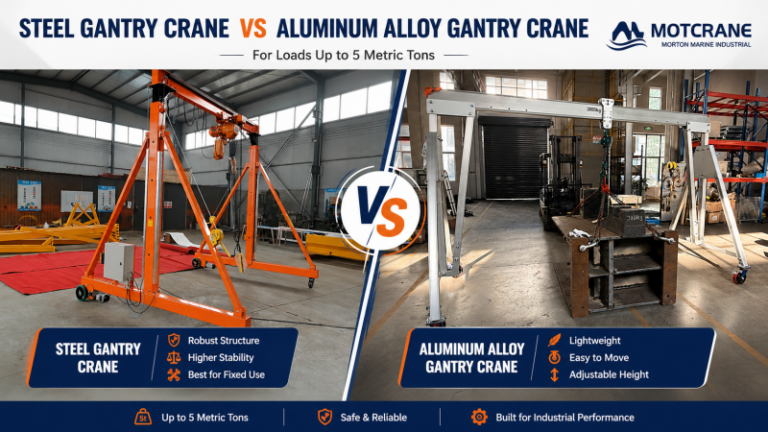
Steel Gantry Crane vs Aluminum Alloy Gantry Crane Under 5 Tons: Which Should You Choose?
Compare steel and aluminum gantry cranes under five tons.

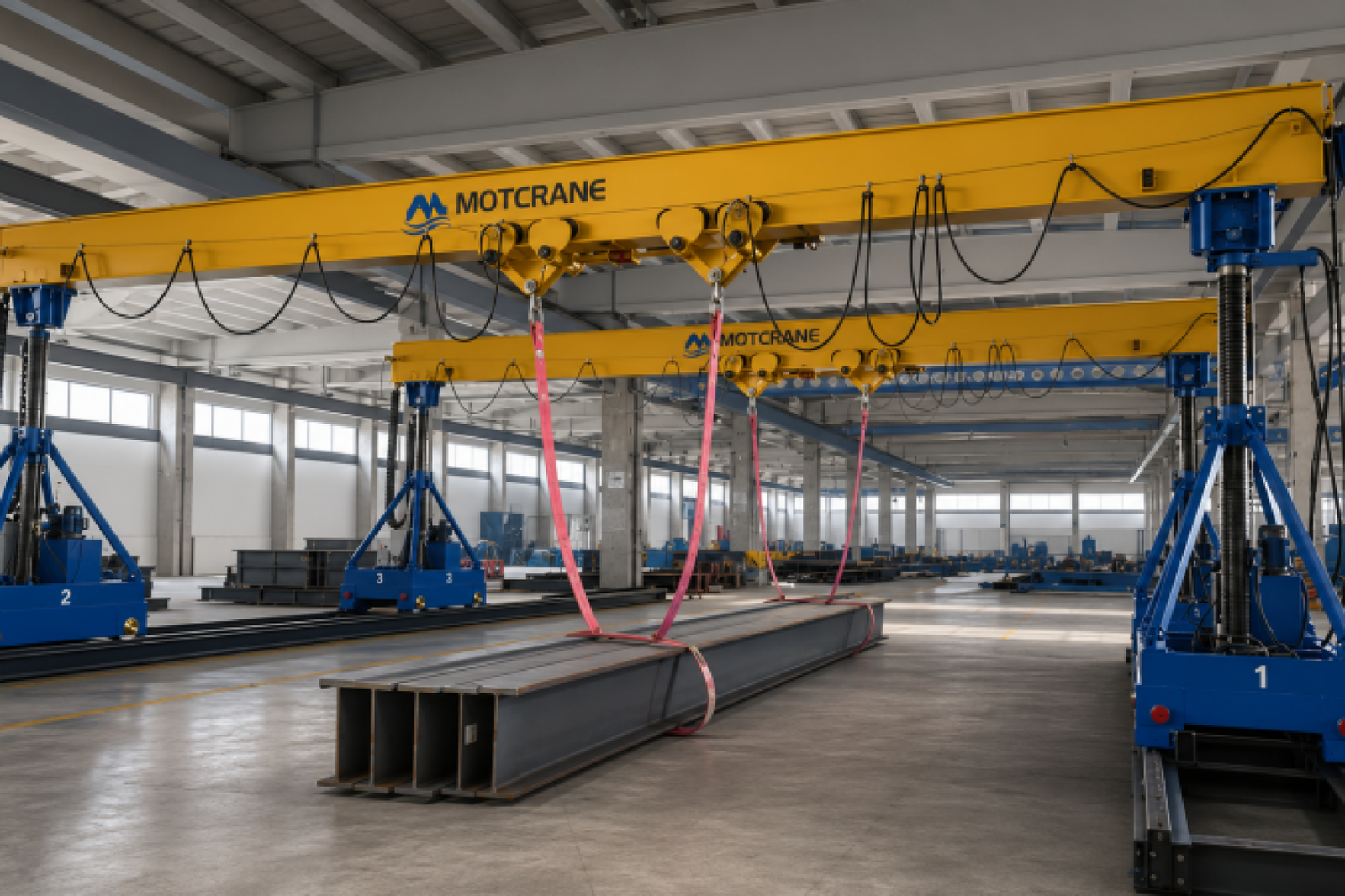
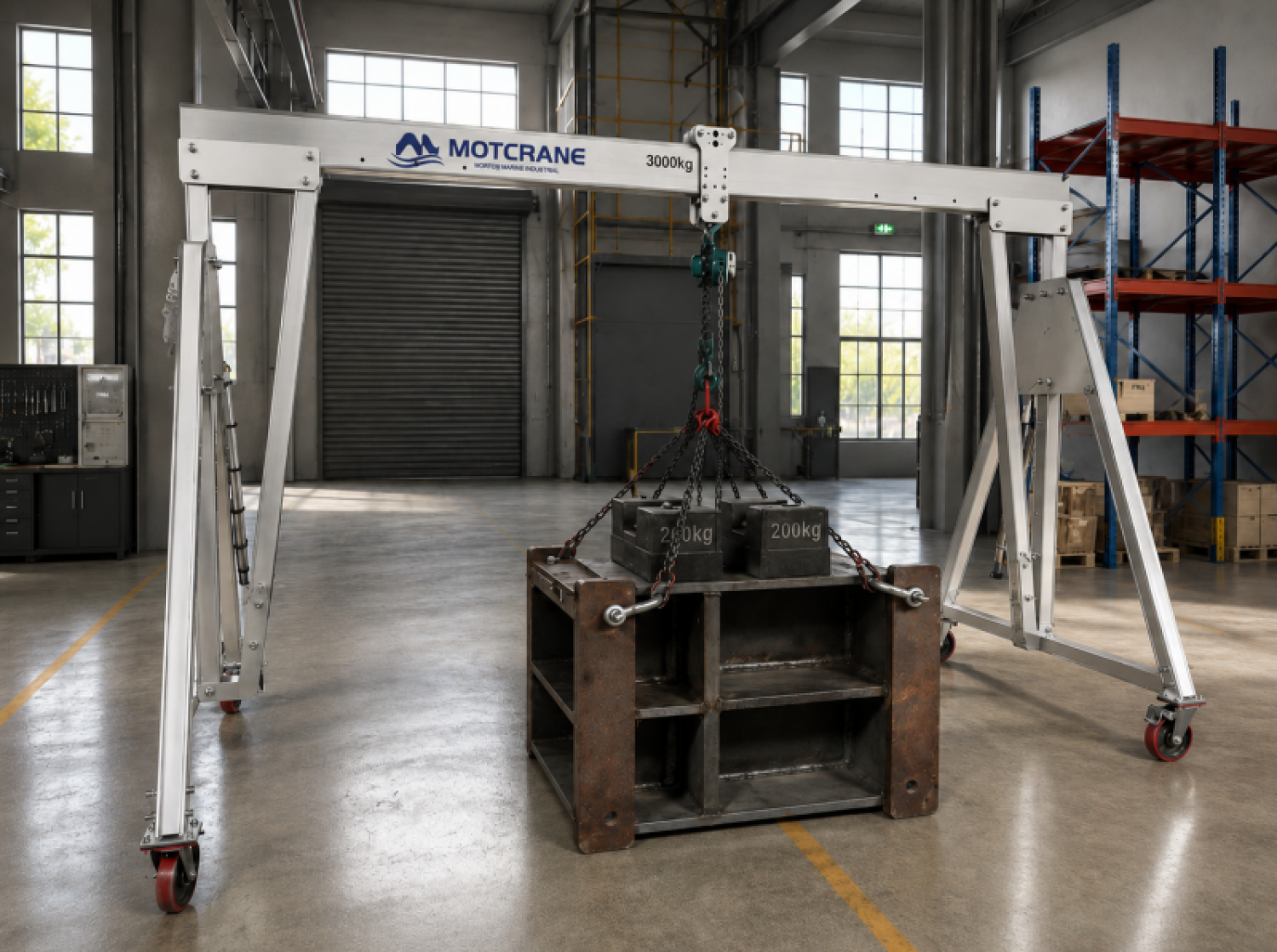
MOTCRANE supplies hydraulic gantry systems for synchronized heavy lifting and aluminum gantry cranes for movable workshop handling.
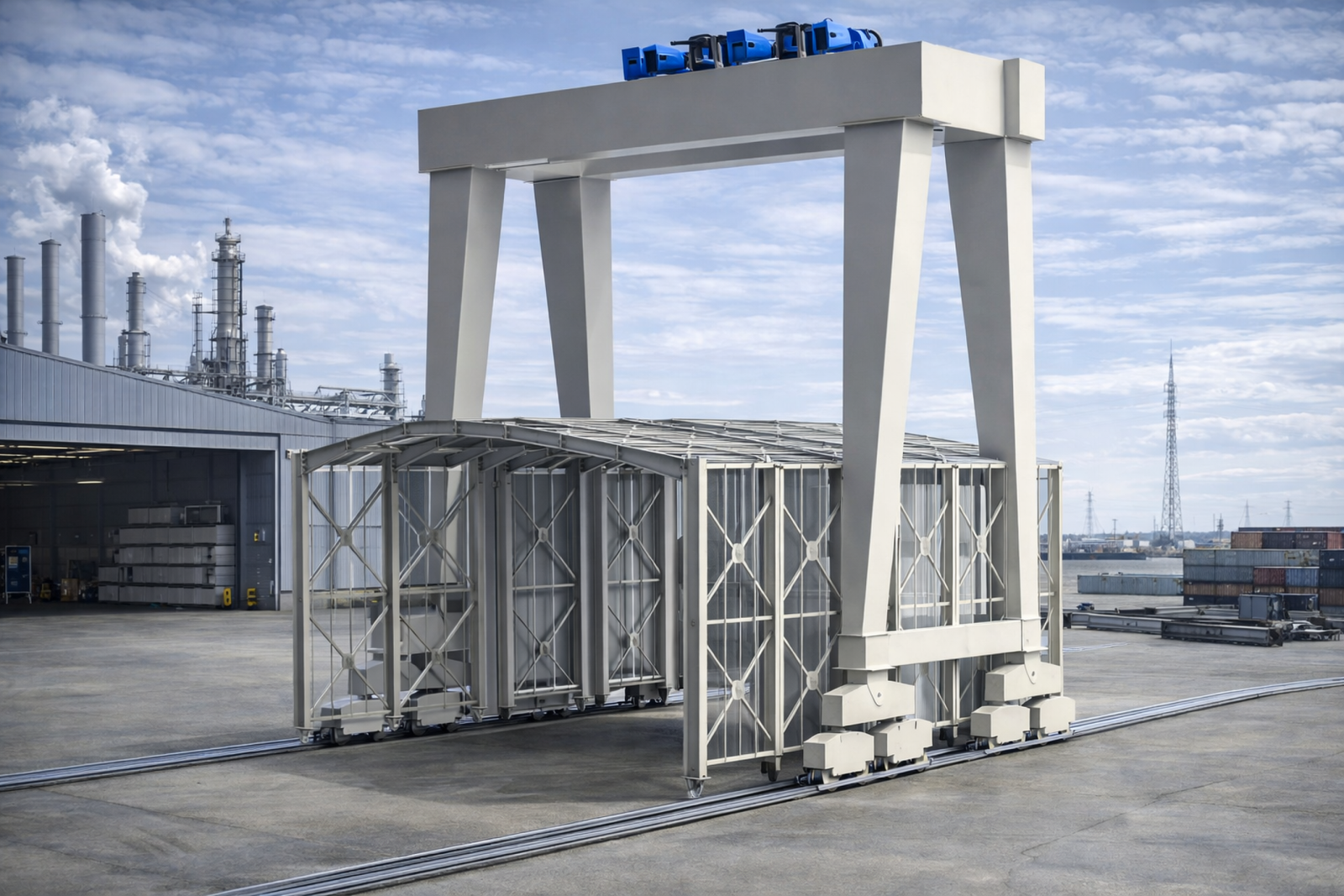
Rail-mounted, rubber-tyred and other gantry configurations are selected according to the load, site conditions and working process.
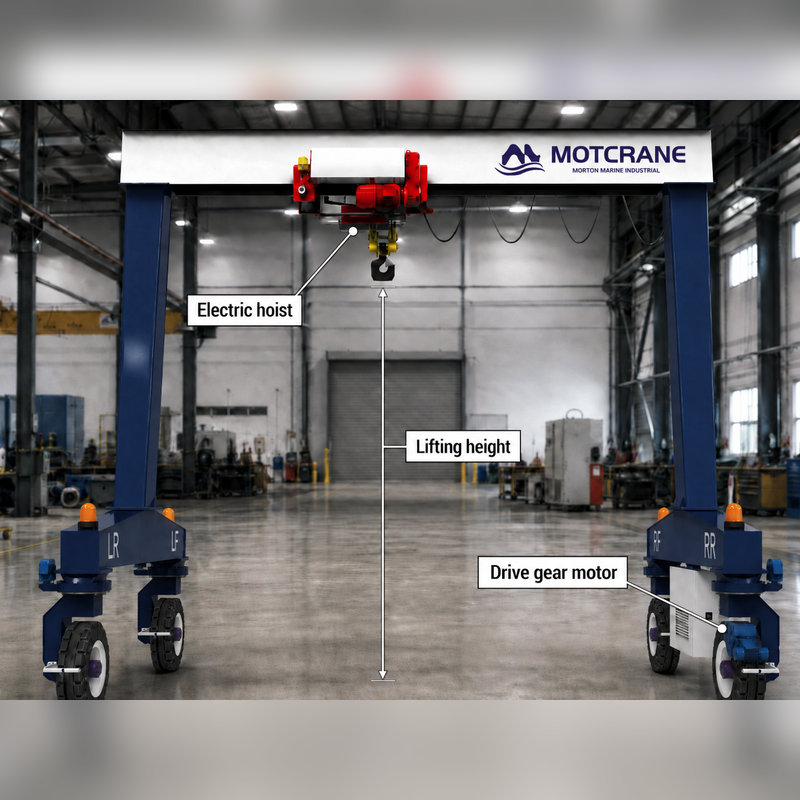
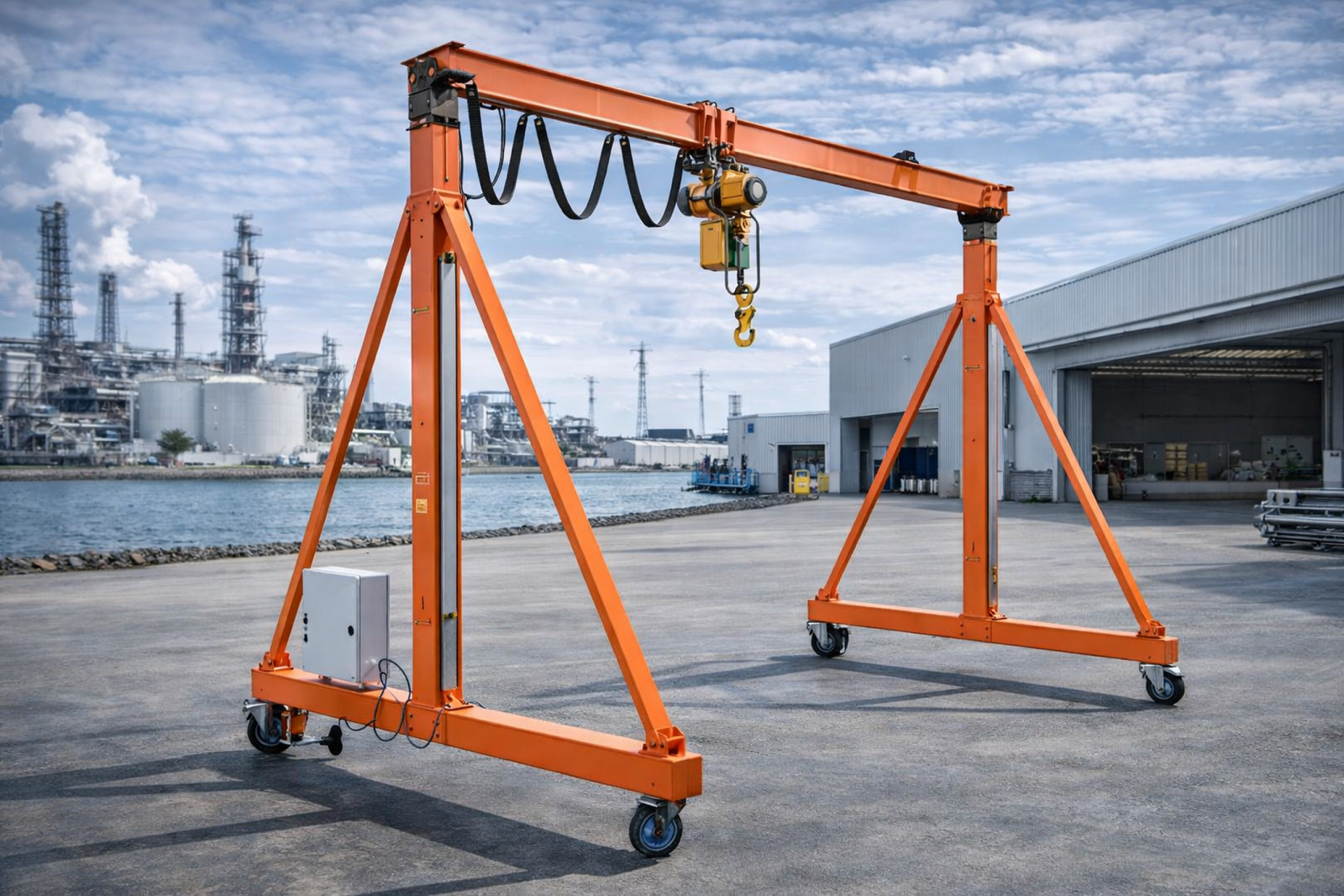
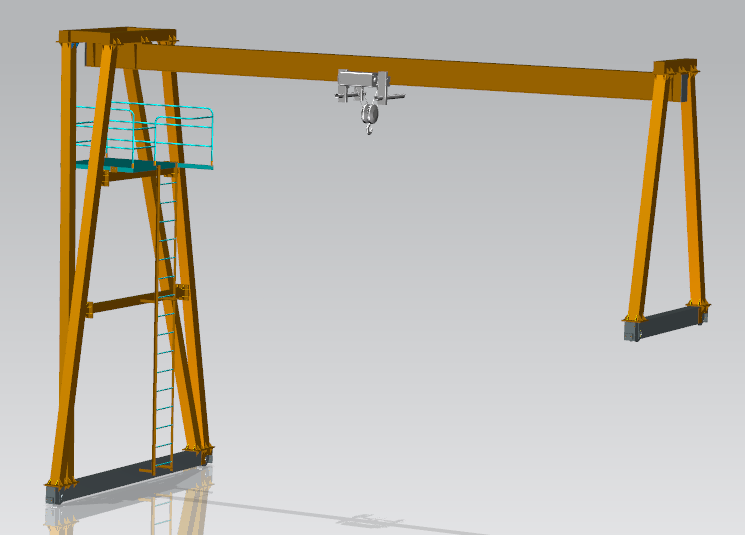
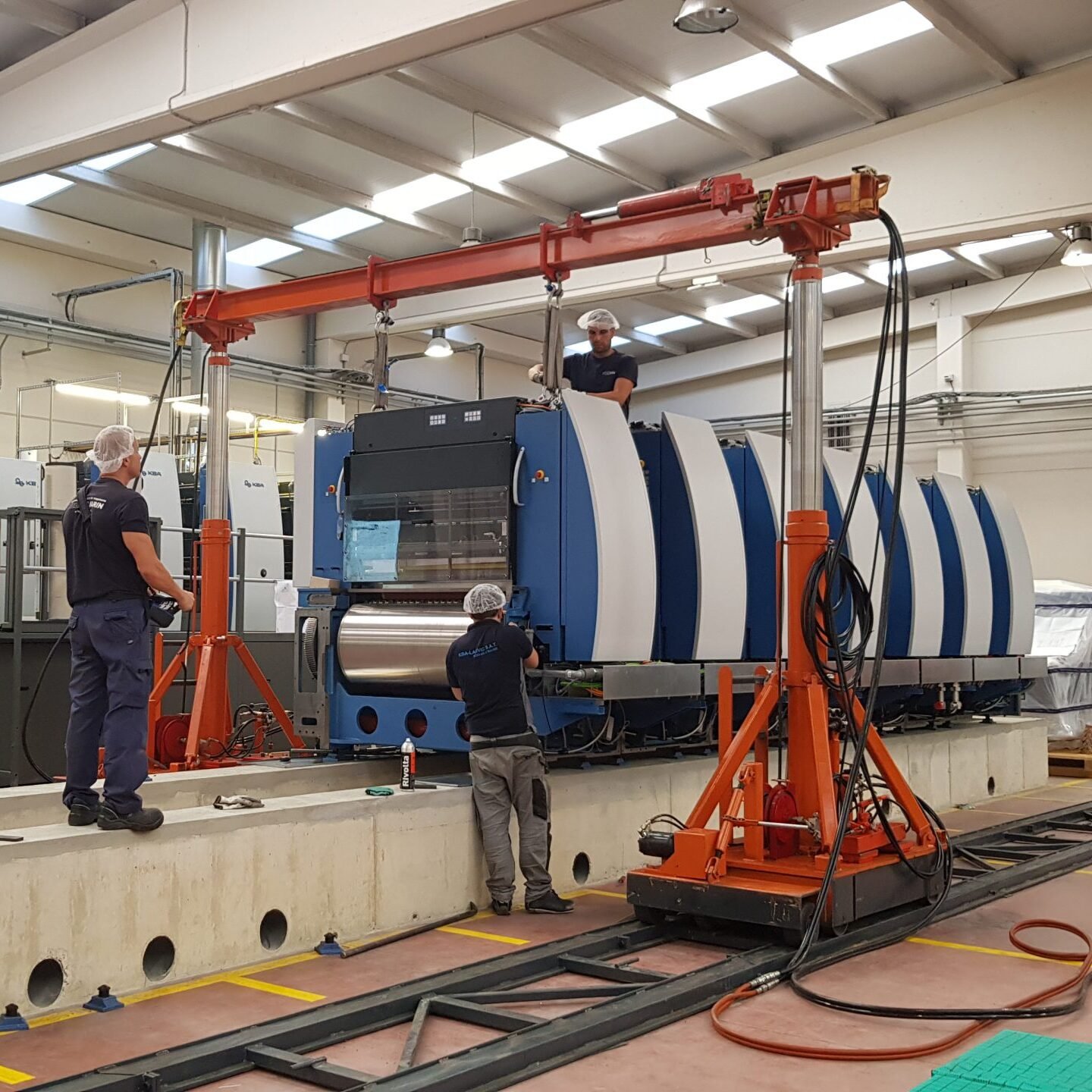
A gantry crane is a self-supporting lifting system that does not rely on a building runway. Standard gantry cranes use one or two legs to support a bridge and may travel on rails, rubber tyres or casters. A hydraulic gantry works differently: synchronized hydraulic lifting units and header beams raise and position heavy equipment, often where headroom or access is limited. The right configuration depends on the load weight and dimensions, lifting points, available headroom, travel route, ground conditions, lifting frequency and whether the equipment must move between working areas. MOTCRANE reviews these factors before recommending a hydraulic gantry, aluminum gantry, rail-mounted crane, rubber-tyred system or another solution.
If the building can support a runway system, compare an overhead crane with a gantry crane before deciding.
MOTCRANE focuses on two distinct lifting requirements: hydraulic gantry cranes for heavy and precise lifting, and aluminum gantry cranes for lightweight, flexible workshop handling.
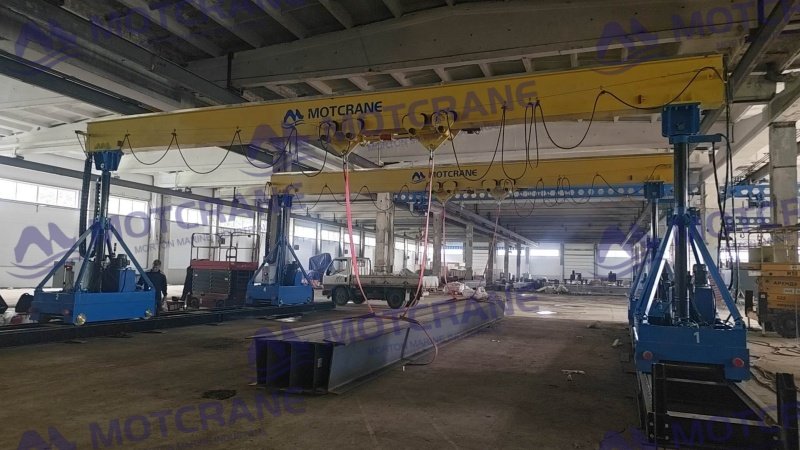
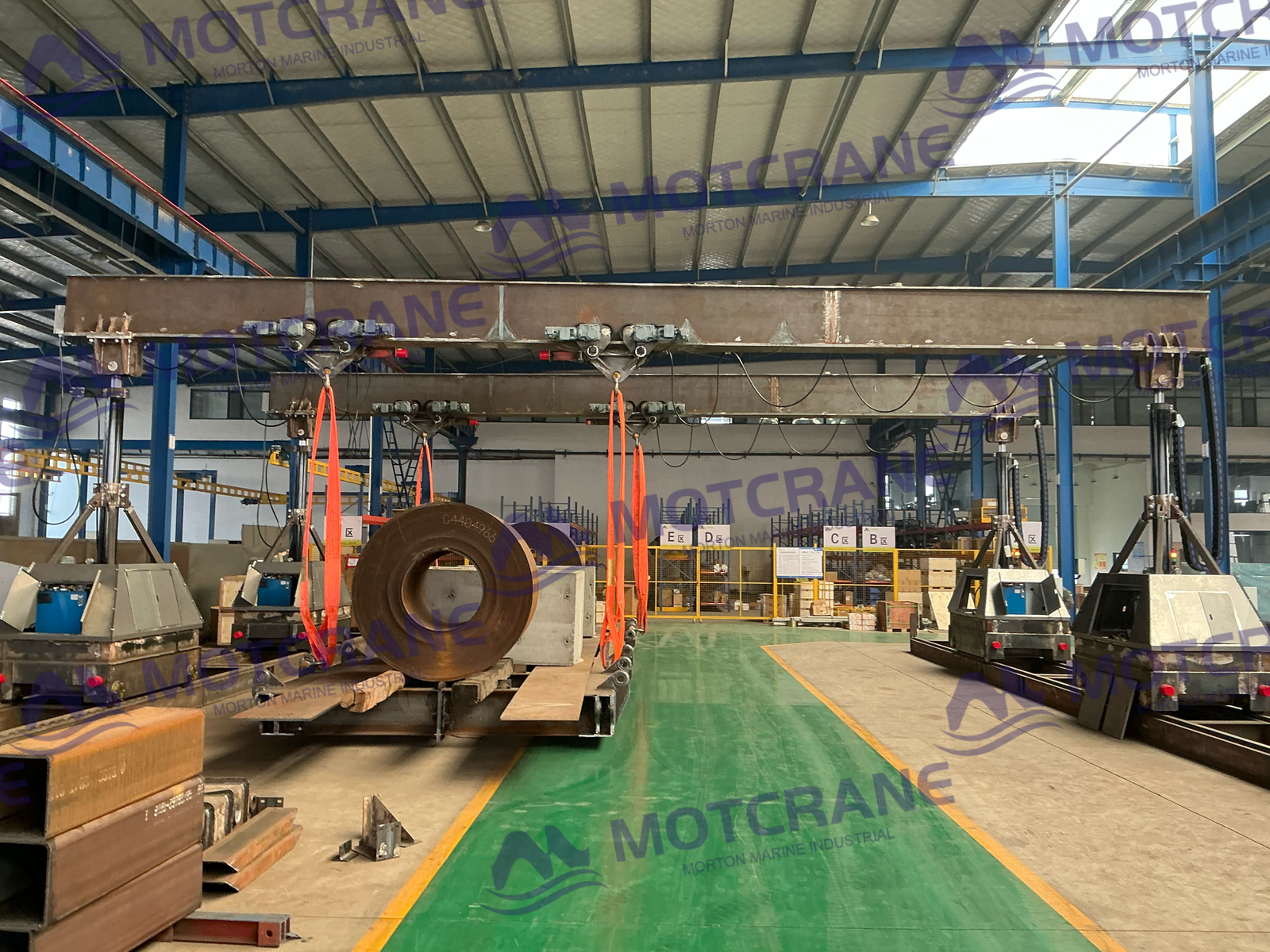
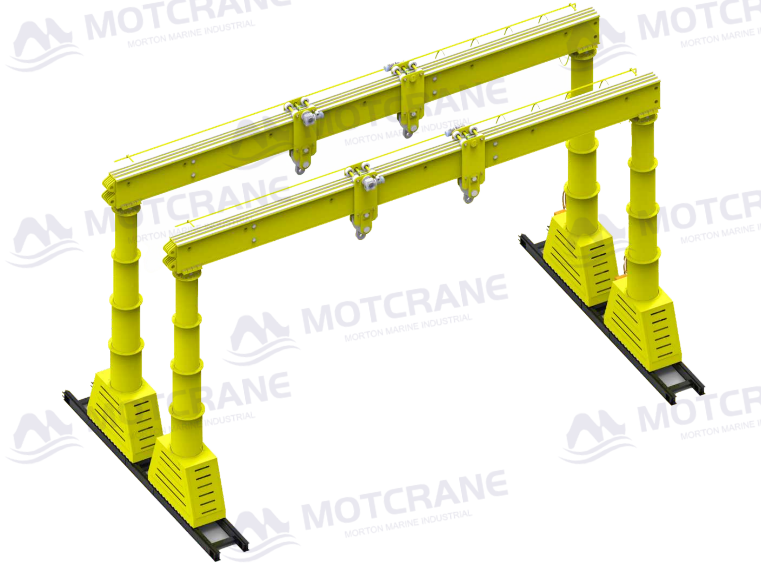
Designed for heavy equipment installation, synchronized lifting, long-load handling, and precise positioning in areas where conventional cranes may not be suitable. Multiple gantry units can be combined according to the load dimensions, lifting points, site clearance, and required movement.
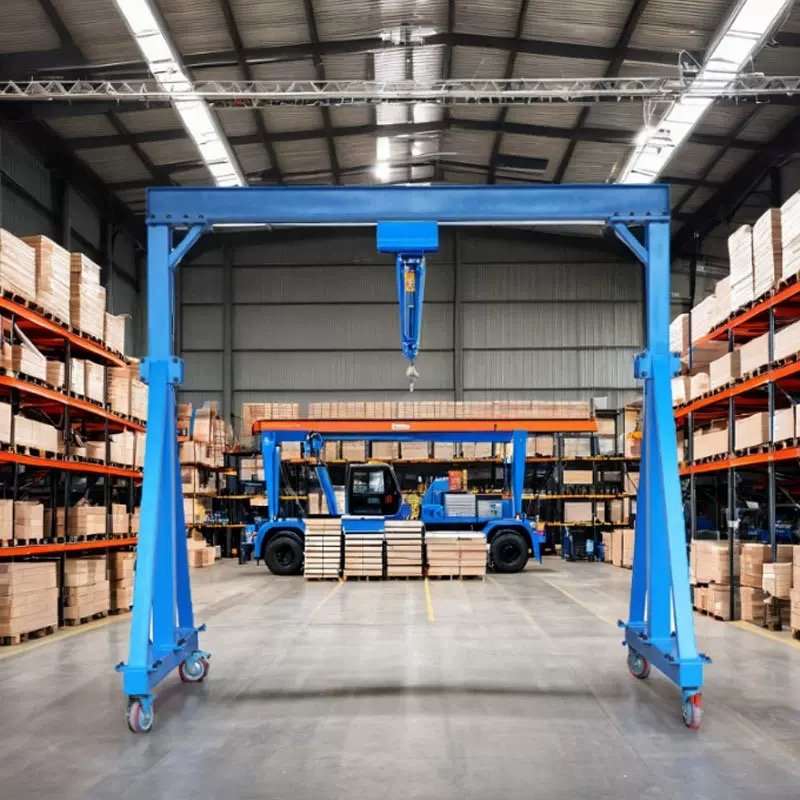
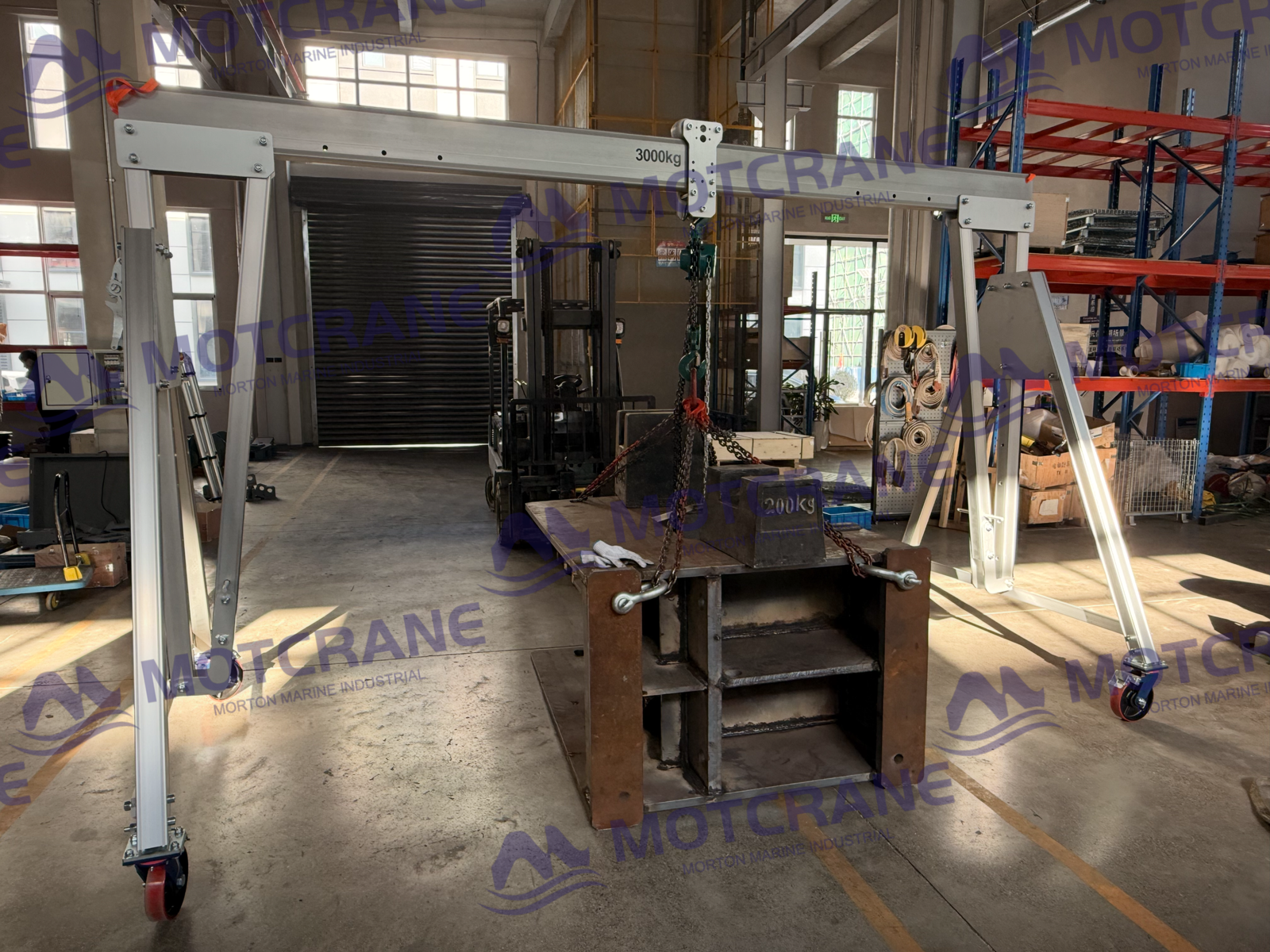
A lightweight and movable lifting solution available in established models for workshop assembly, equipment maintenance, and temporary handling tasks. Customers can select a suitable model from our catalog according to the required capacity, span, clear lifting height, and maximum overall height. Special requirements are subject to engineering review.
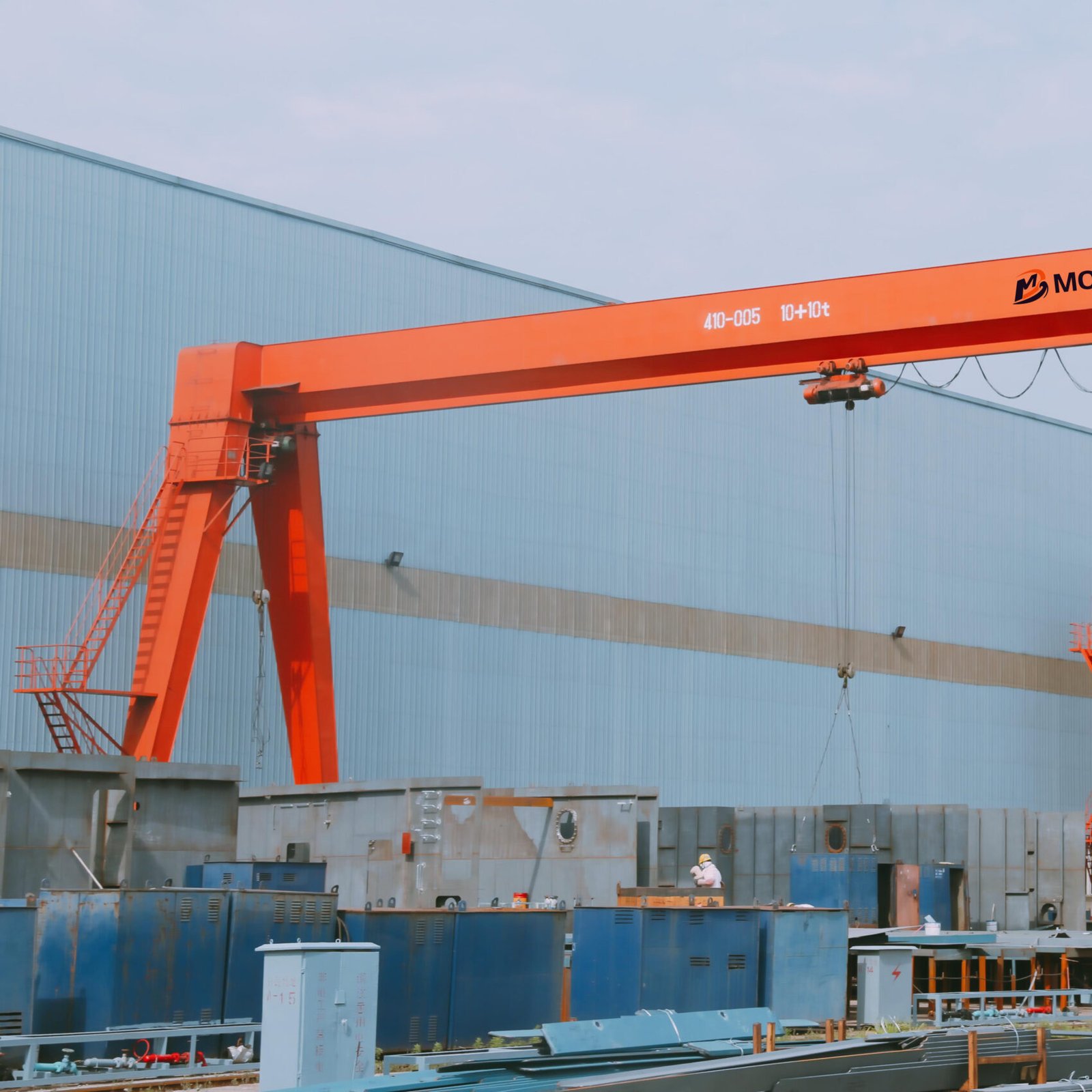
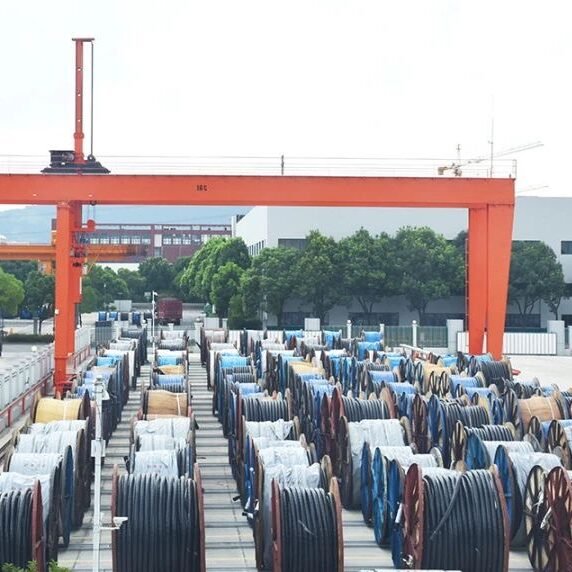
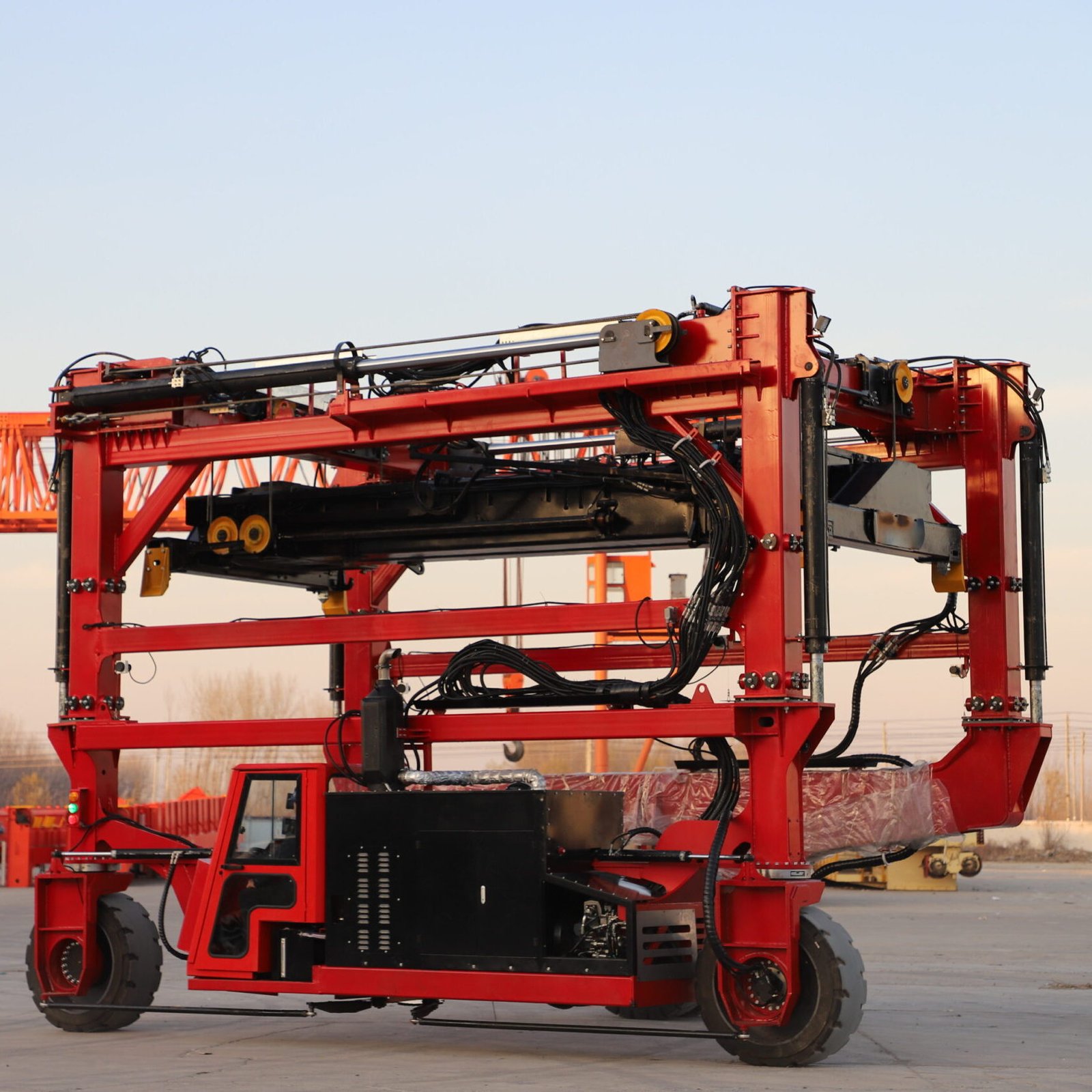
In addition to our core hydraulic and aluminum gantry crane solutions, MOTCRANE can provide other gantry crane types for fixed-area lifting, outdoor handling, and specialized transport applications.
MOTCRANE operates through an engineering-led project model that combines technical design with flexible production coordination. Our engineers are responsible for requirement review, technical design, component matching, drawing confirmation, inspection, testing, and final technical acceptance. Steel structures are manufactured by qualified partner factories selected according to the equipment type and project requirements.
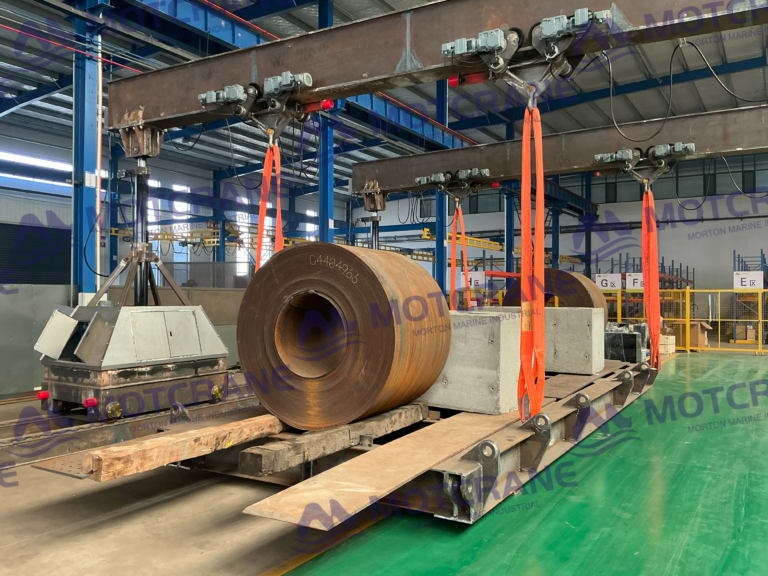
Hydraulic gantry systems are pre-assembled and adjusted before painting where required, helping avoid coating damage during later assembly. Aluminum gantry cranes are fully assembled and tested before shipment to verify structural matching, height adjustment, caster movement, and hoist operation.
Our gantry crane solutions follow a structured quality assurance process from requirement review to final delivery, helping ensure reliable performance and proper project execution.
Confirm the load weight and dimensions, lifting points, required stroke or lifting height, movement requirements, and site conditions.
Develop drawings and technical solutions based on project needs.
Steel structures are manufactured by qualified partner factories according to MOTCRANE drawings and technical requirements.
Select reliable suppliers for hoists, motors, wheels, hydraulic units, and electrical systems.
Inspect purchased components, key materials, structural dimensions, weld quality, and fabrication consistency during production.
Hydraulic gantry systems and other selected projects are pre-assembled and adjusted before painting to verify structural fit and avoid coating damage during later assembly.
Hydraulic systems undergo synchronized lifting and functional testing, while aluminum gantry cranes are fully assembled and tested before shipment. Load testing is arranged according to the equipment type and project requirements.
Complete final checks before packaging and shipment.
We provide responsive support from technical consultation to delivery coordination for standard and non-standard gantry crane projects.

Evaluate lifting needs and working conditions.

For hydraulic gantry cranes, we evaluate load dimensions, lifting points, synchronization, travel, and positioning requirements. For aluminum gantry cranes, we match the required capacity, span, lifting height, adjustment method, casters, and hoist with an established model. Special requirements are subject to engineering review.

Confirm drawings and key specifications before production.

Coordinate qualified factories and production progress.

Arrange pre-paint assembly, synchronized hydraulic testing, complete aluminum gantry assembly, functional testing, and load testing according to the equipment type and project requirements.

Coordinate packing, shipping documents, delivery arrangements, installation guidance, commissioning support, spare parts, and after-sales communication according to project needs.
Explore selected hydraulic and aluminum gantry crane projects for heavy equipment installation, synchronized lifting, workshop assembly, and flexible material handling. Other standard gantry crane projects are also included as additional references.
Explore related articles about gantry crane types, application scenarios, heavy lifting solutions, and project selection tips for different industries.

Compare steel and aluminum gantry cranes under five tons.

How hydraulic gantries maintain synchronized and stable lifting.
Key factors when selecting a 30-ton hydraulic gantry crane.

Frequently Asked Questions About Gantry Crane Solutions
Choosing the right lifting solution depends on the load, working process, site conditions, and required movement. Below are common questions about hydraulic gantry cranes, aluminum gantry cranes, and other project-specific gantry crane solutions.
A hydraulic gantry crane is generally suitable for heavy equipment installation, long or oversized load lifting, synchronized lifting, and precise positioning, especially where the available headroom is limited or conventional cranes cannot operate effectively.
To determine whether this system is suitable, we need to understand the load, lifting points, required lifting and movement process, site clearance, ground conditions, and installation method. In some cases, another type of lifting equipment may be more practical, so an engineering review is recommended before confirming the solution.
We normally need the following information:
For long or irregular loads, drawings showing the load structure, center of gravity, and lifting-point arrangement are especially important.
MOTCRANE aluminum gantry cranes are available in a range of established models. Customers can first select a suitable model from our catalog according to the required capacity, span, clear lifting height, and maximum overall height.
The catalog also provides the main structural dimensions and available configurations for each model. If the standard models cannot meet the application requirements, our engineers will evaluate whether a customized solution is technically feasible.
For special requirements, please provide the complete working process, including:
No. The height of an aluminum gantry crane can only be adjusted under no-load conditions. The load must be completely removed, and the gantry must be positioned on stable, level ground before any height adjustment is carried out.
Depending on the model, two height-adjustment methods are available:
The locking pins must be fully inserted and checked before the crane is put into service.
Yes. Hydraulic gantry systems can be pre-assembled before painting and undergo synchronized lifting and functional testing. Aluminum gantry cranes are normally fully assembled to verify structural matching, height adjustment, caster movement, and hoist operation. Load testing is arranged according to the equipment type and project requirements.
MOTCRANE follows an engineering-led project model. Our engineers are responsible for requirement review, technical design, drawings, component matching, inspection, testing, and project coordination. Steel structures are manufactured by qualified partner factories according to MOTCRANE drawings and technical requirements.
Phone:+86 188 1666 3689 (WhatsApp)
Email:motcrane@163.com
Address:NO.19, Liantai Road, Jingjiang, Jiangsu, China.