


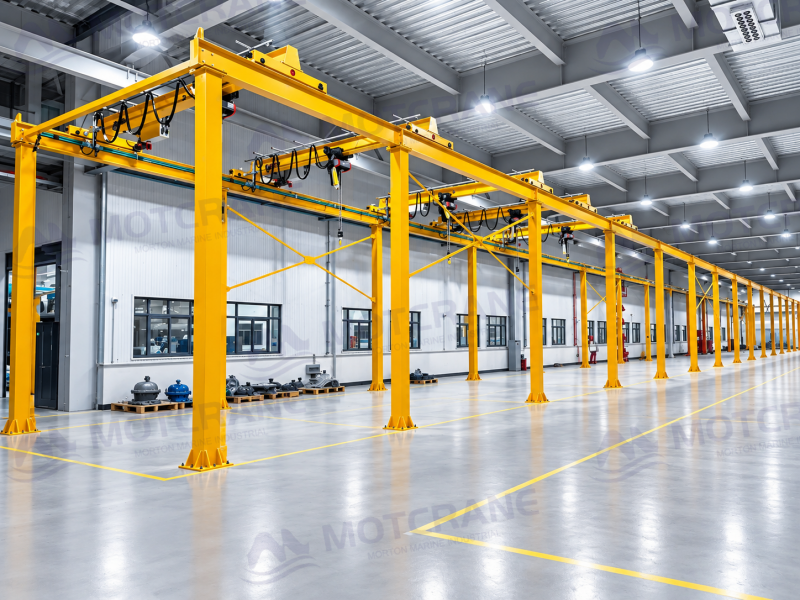

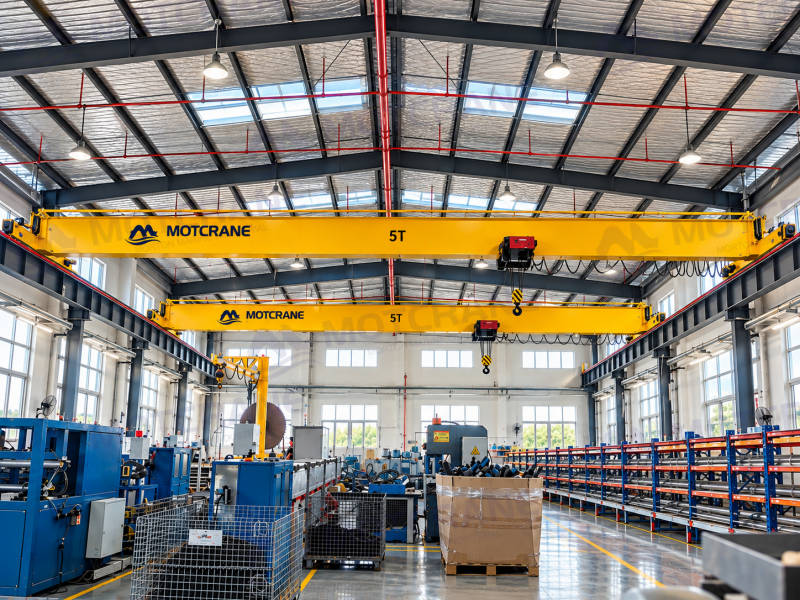
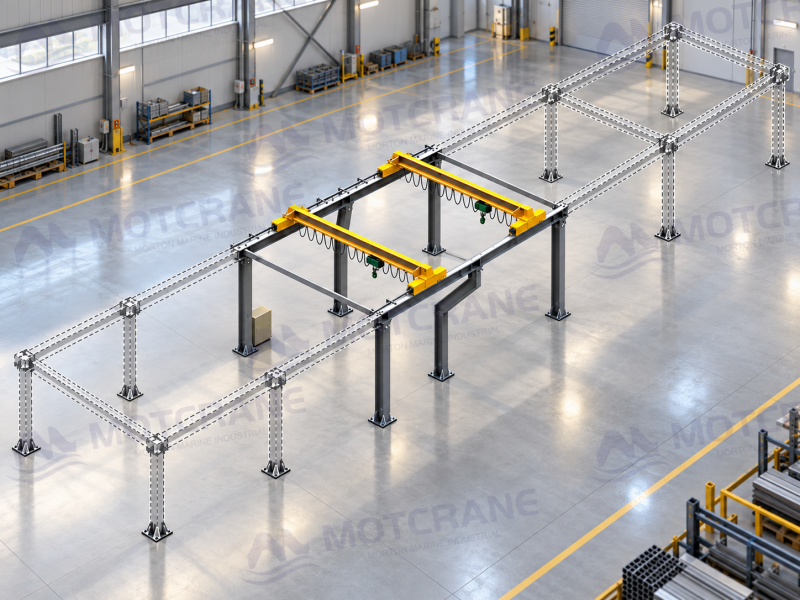
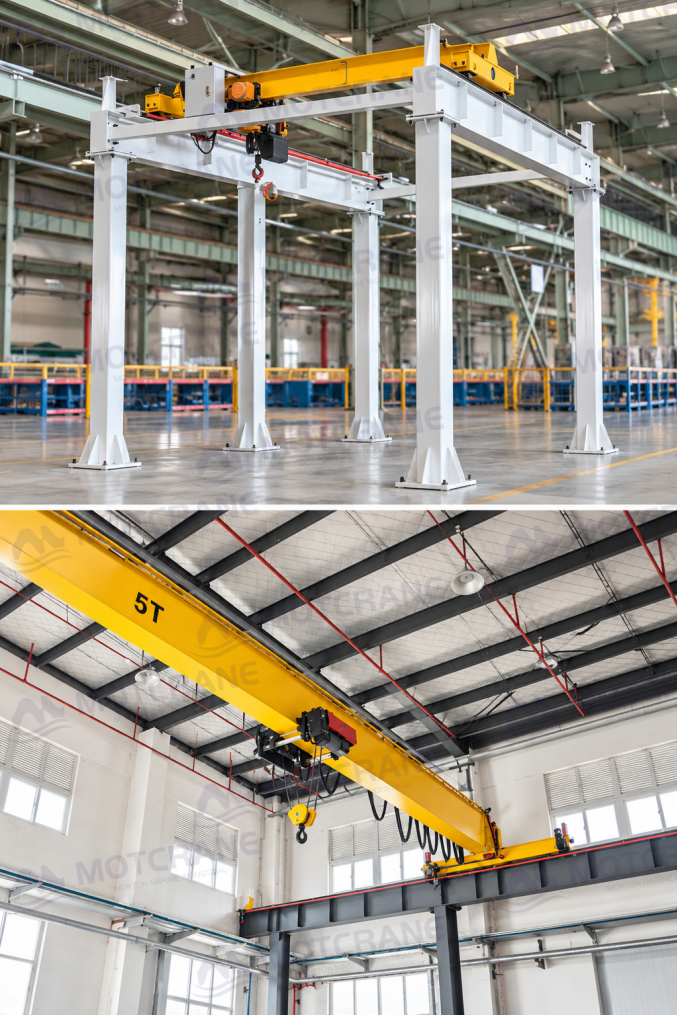
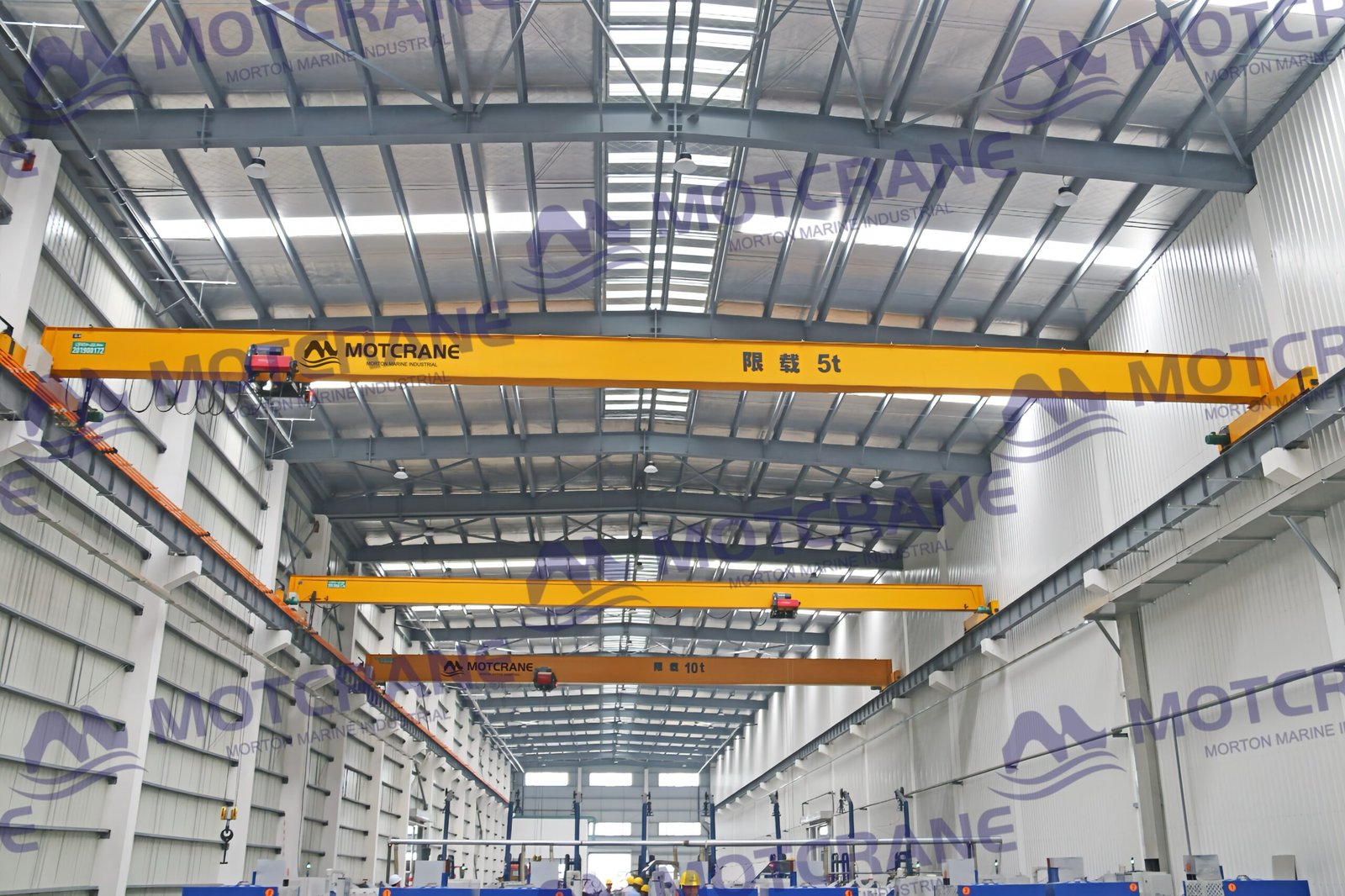
A free standing bridge crane is an industrial overhead lifting system supported by independent steel columns and runway beams, without relying on the existing building structure to carry crane loads.
MOTCRANE generally recommends this configuration for lifting capacities of 3 metric tons and above, with spans typically starting at around 6 m. Smaller 1–2 ton systems are also available, although a workstation crane may be more economical for lighter loads and shorter spans.
We have completed free standing bridge crane projects with spans up to 18 m. Longer spans can be evaluated based on the required crane capacity, runway beam design, column reactions, foundation conditions, and available installation space.
Column spacing can be adjusted to accommodate machinery, doorways, access routes, and other site obstructions, subject to structural verification.
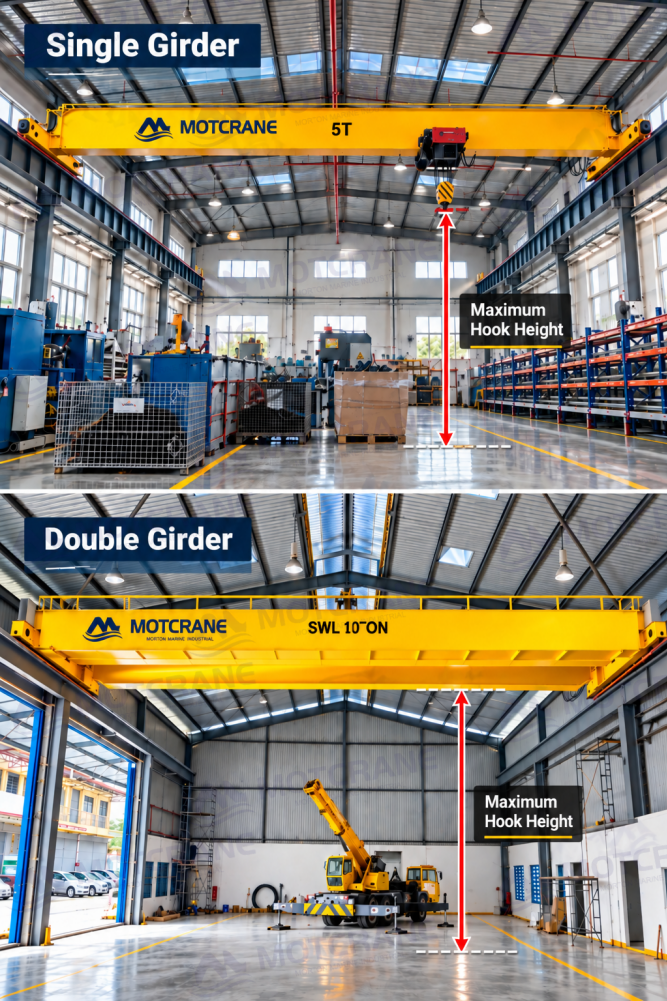
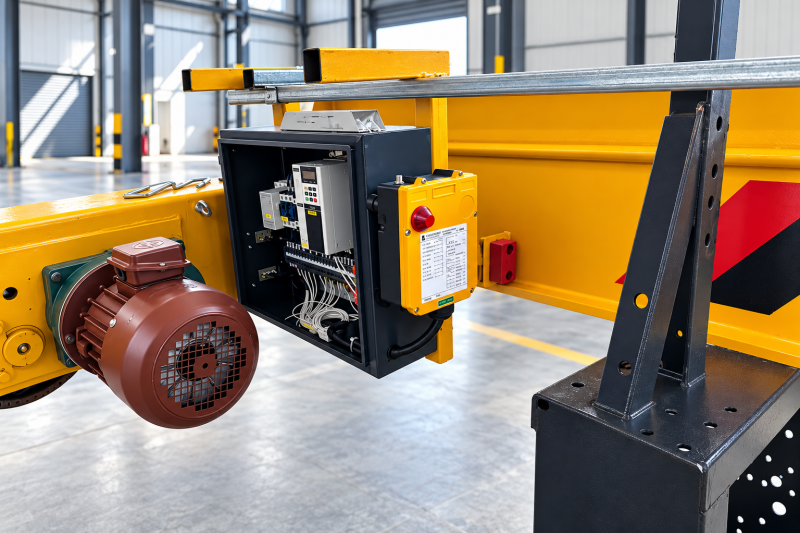
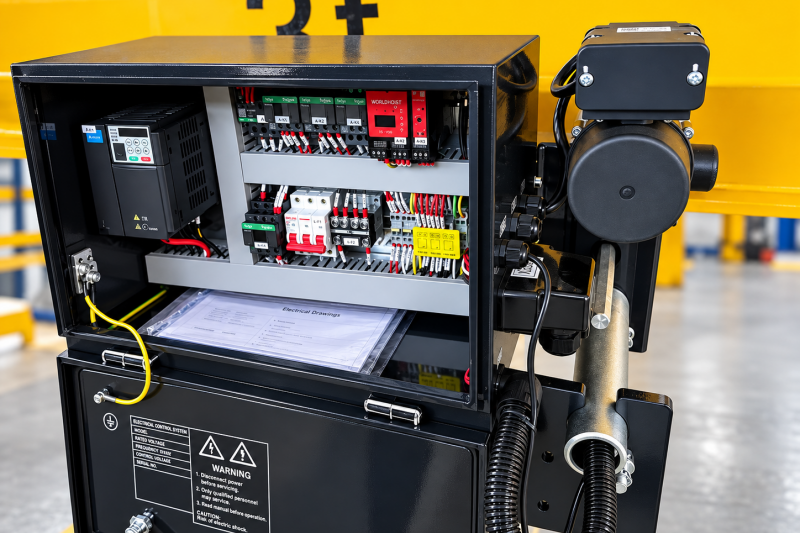
Single-girder and double-girder configurations are available with electric chain hoists or European-style wire rope hoists, motorized travel, and optional variable-frequency control and wireless remote operation. The runway can also be designed for future expansion or indoor-to-outdoor applications.
| Item | Recommended Configuration |
|---|---|
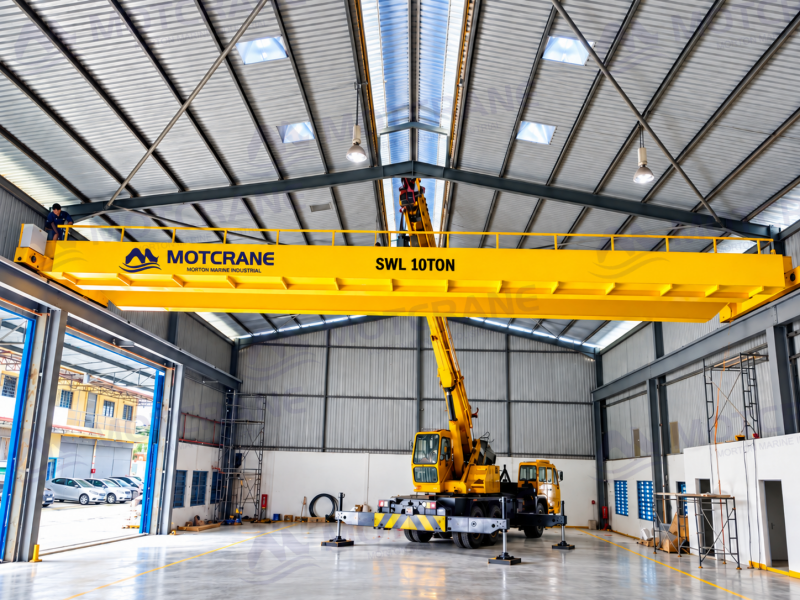
| Rated Capacity | Typically 3–10 t; up to 20 t by custom design |
| Bridge Configuration | Single Girder / Double Girder |
| Span | Customized; 18 m project experience |
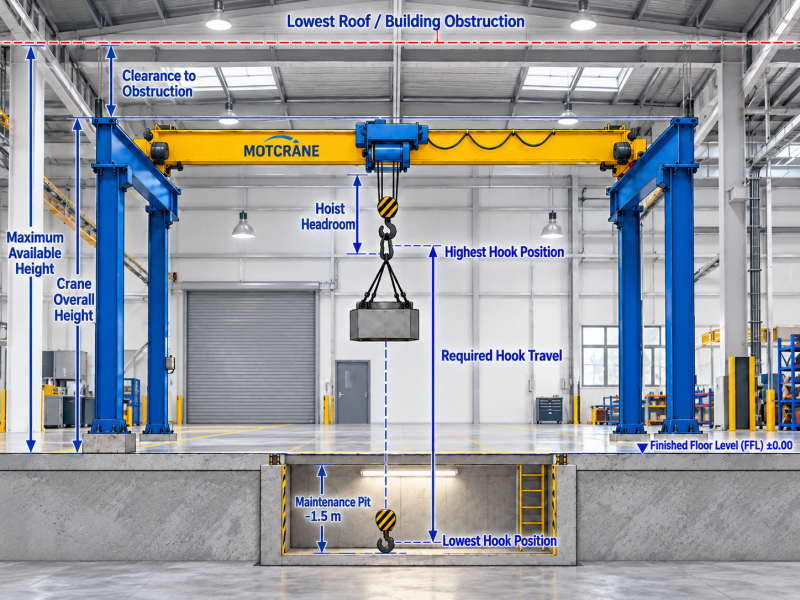
| Lifting Height | Customized; typically 3–10 m |
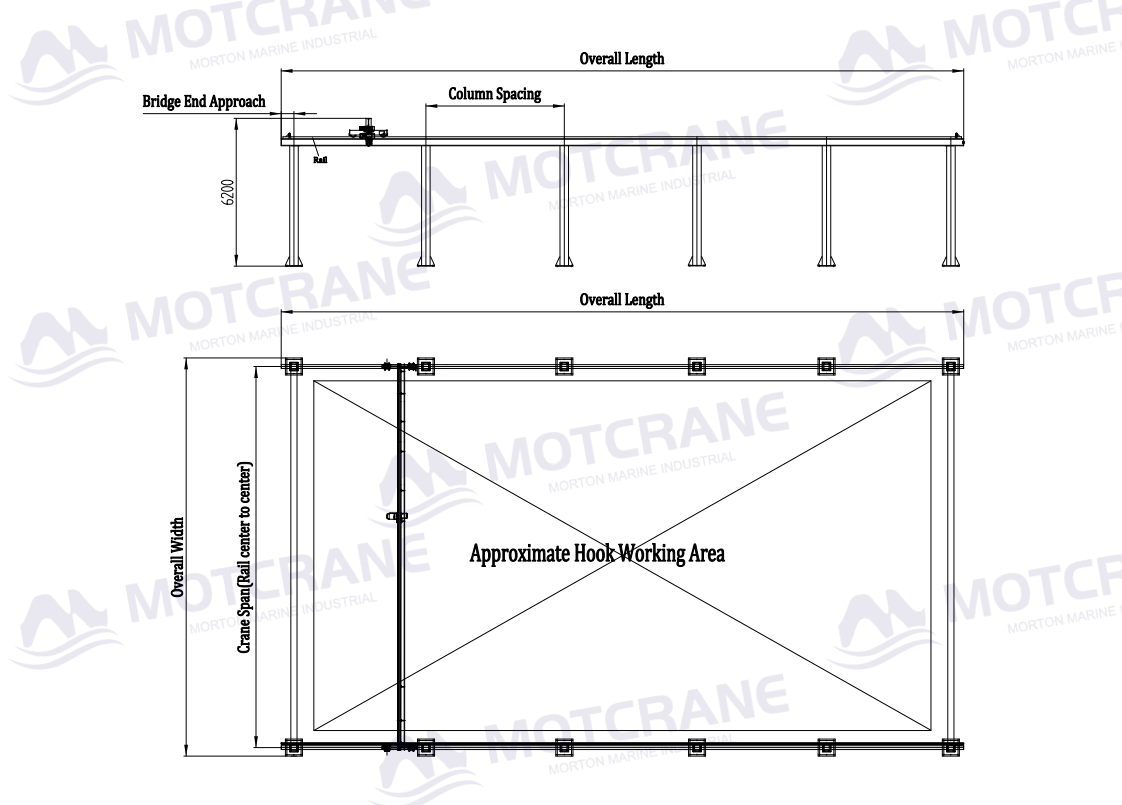
| Runway Length | Customized according to production area and material flow; future extension available |
| Column Spacing | Project-specific, based on site layout and structural loads |
| Hoisting Equipment | Electric Chain Hoist / European-Style Wire Rope Hoist |
| Travel | Motorized Bridge and Trolley Travel |
| Control | Pendant / Wireless Remote Control |
| Installation Environment | Indoor / Outdoor / Indoor-to-Outdoor Extension |
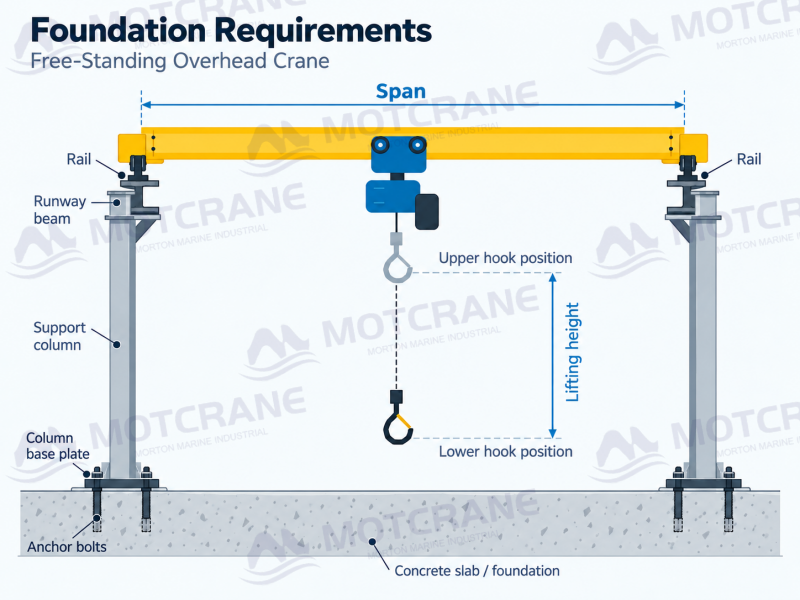
The supporting steelwork is designed to carry the crane loads without relying on the existing building structure. Column positions, runway beam sizes, and connection details are determined by the crane configuration and actual workshop layout.
◊ Steel Columns: Designed according to crane loads, column reactions, available headroom, and support spacing.
◊ Runway Beams: Sized for crane wheel loads, support spacing, and the required runway alignment.
◊ Flexible Column Layout: Columns can be positioned around machinery, doors, and access routes. Equal spacing is not required, provided the revised layout is structurally verified.
◊ Layout Confirmation: MOTCRANE provides a preliminary general arrangement drawing so the customer can review column positions and identify any site conflicts before final design.
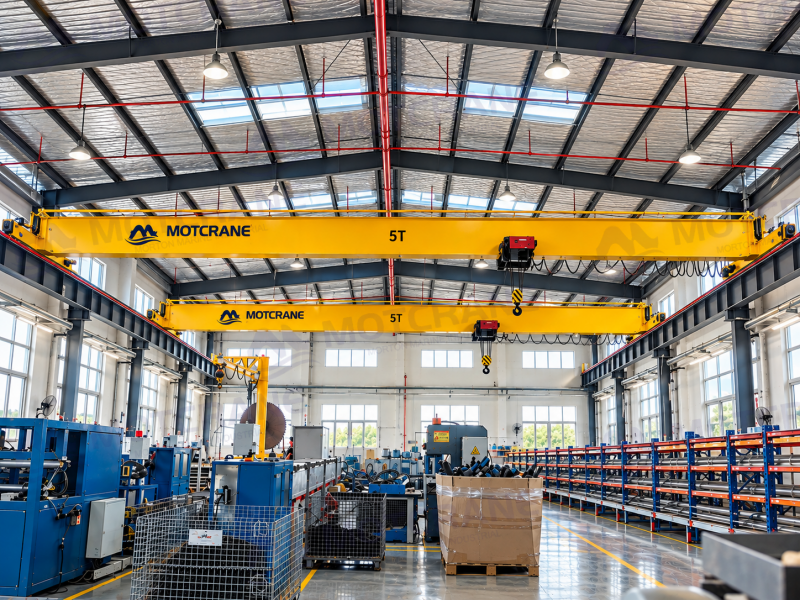
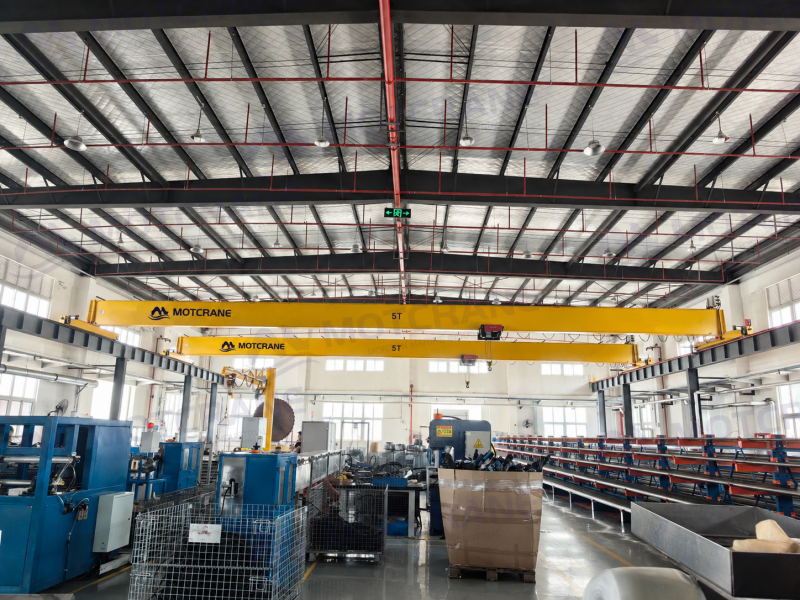
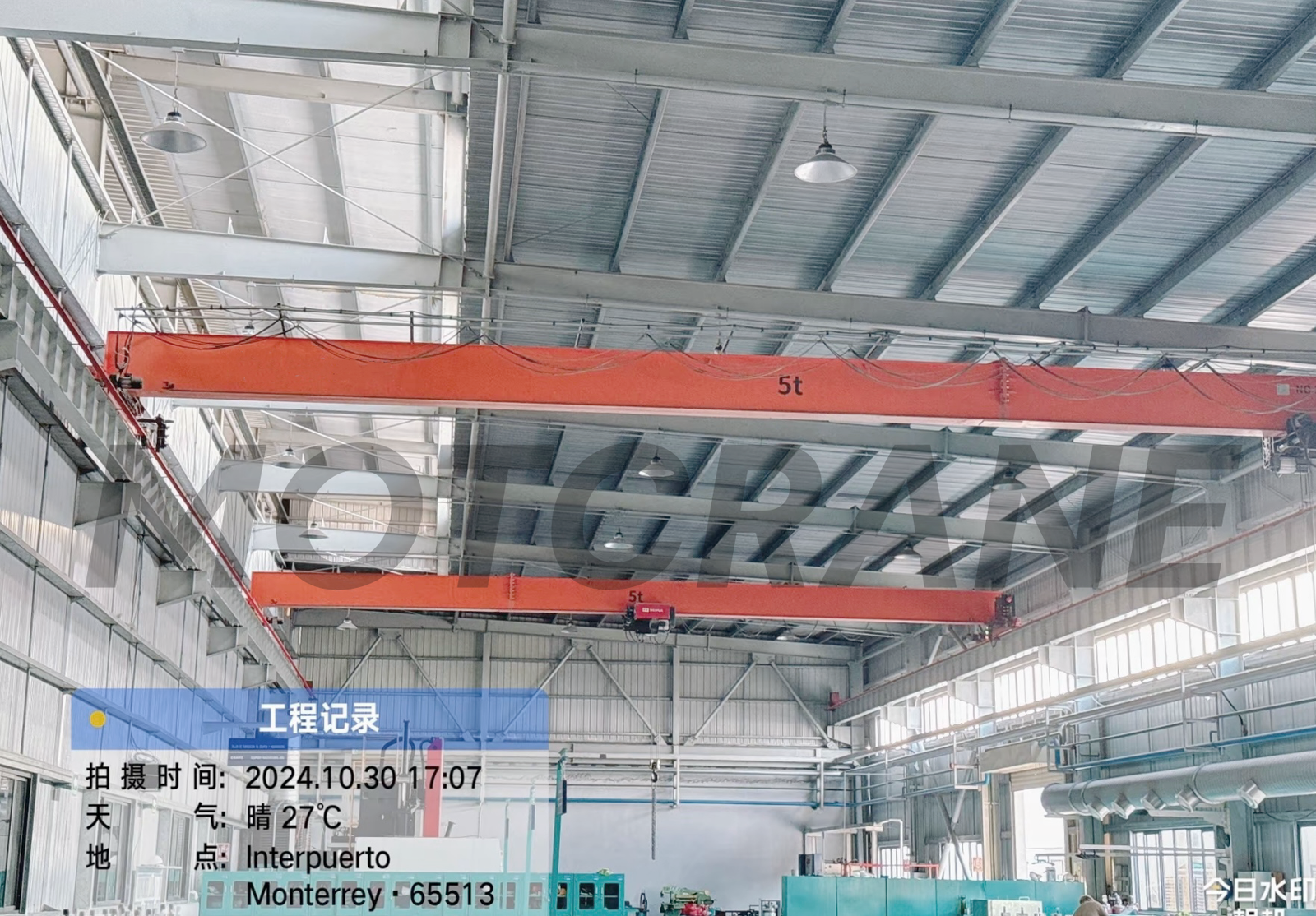
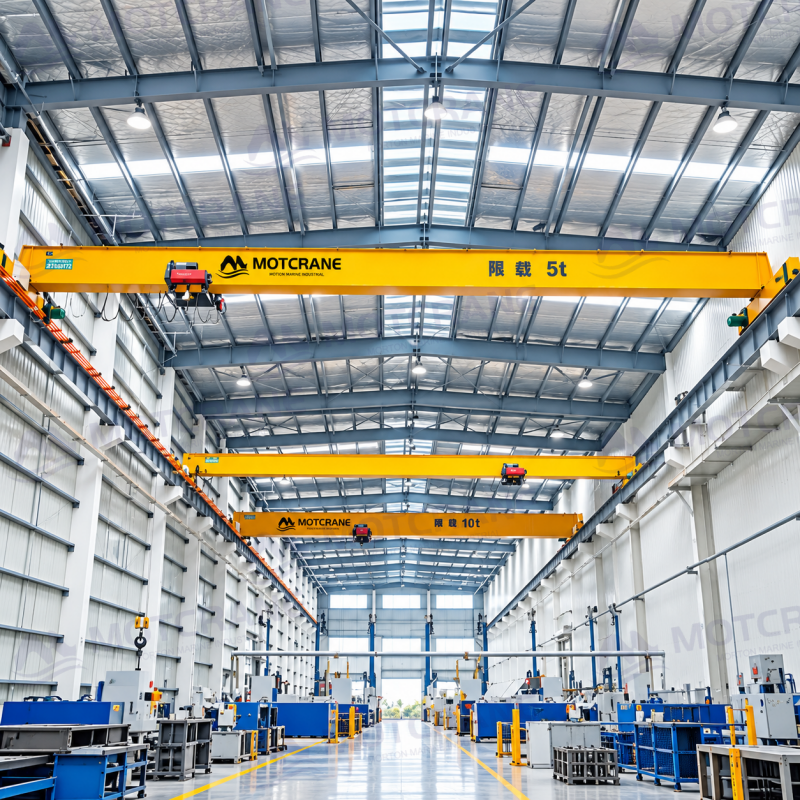
◊ Multiple-Crane Support: MOTCRANE has supplied an independent support system for two 5-ton bridge cranes. Shared structures are designed for the applicable combined crane loads.
A free standing bridge crane transfers its operating loads through independent support columns into the foundations. Foundation design must account for the calculated column reactions, concrete conditions, anchoring arrangement, and local site requirements.
For smaller 1–2 ton systems, installation on an existing reinforced concrete floor may be considered if its load-bearing capacity and anchoring conditions can be verified. Slab thickness alone is not sufficient to determine suitability.
As a general MOTCRANE project design policy, dedicated concrete foundations are specified for free standing bridge cranes rated at 3 tons and above.
The final foundation dimensions, reinforcement, anchor bolts, and base plates are determined from the calculated column reactions and site conditions, rather than crane capacity alone.
Outdoor installations also require checks for wind loads, corrosion exposure, anchoring forces, and foundation stability. Suitable weather protection and corrosion protection are selected according to the operating environment.
You do not need to finalize every crane dimension before requesting a quotation. Start with your lifting requirements and workshop layout. MOTCRANE can then prepare a preliminary arrangement for review.
Provide the maximum workpiece weight, dimensions, lifting points, and expected operating frequency. These details help determine crane capacity and hoist configuration.
Confirm the approximate crane span, runway length, required hook coverage, and highest lifting position. Workshop drawings or site photographs are useful at this stage.
Identify machinery, access routes, doors, and other obstacles that may affect column placement. Available floor or foundation information should also be provided.
Explain whether variable-frequency travel, wireless control, outdoor operation, future runway extension, or additional cranes may be required.
MOTCRANE will prepare a preliminary general arrangement drawing based on the available information. You can review the crane dimensions, column positions, hook coverage, and foundation layout before the final design is confirmed.
MOTCRANE provides the general arrangement and relevant technical drawings for customer approval before production. Crane dimensions, runway layout, column positions, and foundation requirements are reviewed against actual site conditions.
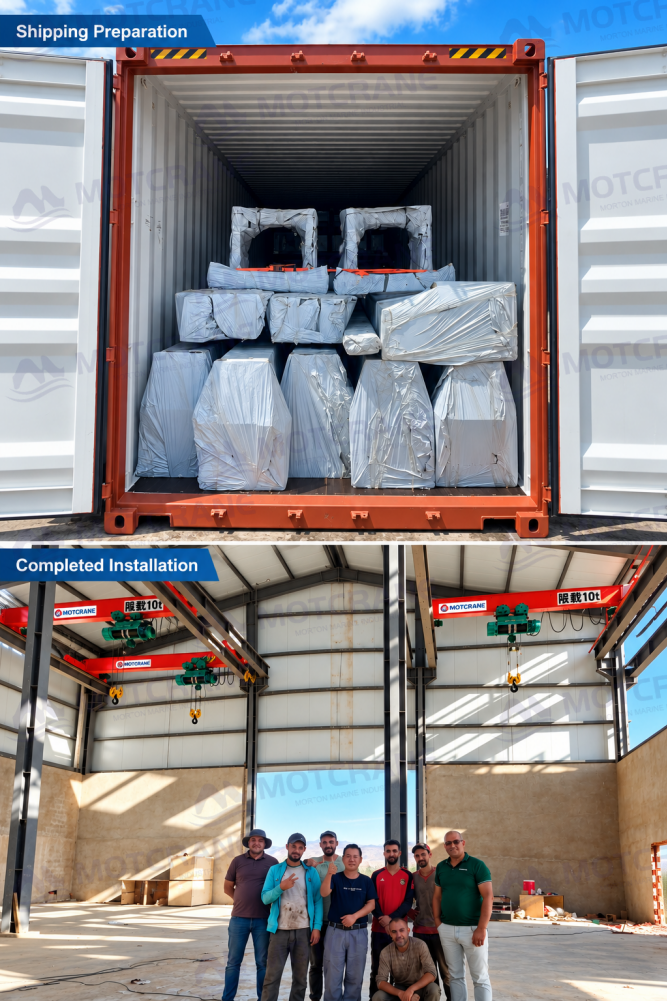
Columns, runway beams, and other steel components are designed and prepared for shipment according to their dimensions and structural requirements. Where practical, transportable sections are used to improve container loading and simplify installation without compromising structural integrity.
Structural components are identified for assembly. Hoists, electrical equipment, accessories, and other components are protected and packed according to the agreed shipping arrangement to facilitate inspection and installation after delivery.
MOTCRANE provides installation drawings, electrical documentation, and remote technical assistance. Additional on-site installation guidance, commissioning, load testing, or operator training can be arranged where required and agreed as part of the project scope.
MOTCRANE generally recommends free standing bridge cranes for projects of 3 tons and above or spans of approximately 6 m and above. For lighter loads, shorter spans, or applications requiring easy manual movement, a workstation crane may be more economical.
Most MOTCRANE free standing bridge crane projects are in the 3–10 ton range. Capacities up to 20 tons can be evaluated for custom projects, subject to the required span, structural design, and foundation conditions.
MOTCRANE generally specifies dedicated concrete foundations for projects of 3 tons and above. Smaller systems may be evaluated for installation on existing reinforced concrete floors if the calculated support loads and anchoring conditions permit.
Yes. Column positions can be adjusted around machinery, doors, and access routes. Any changes must be checked against the runway beam design and support loads.
Yes. Outdoor installations require additional consideration of wind loads, corrosion protection, weather exposure, and foundation stability.
Yes. MOTCRANE has supplied a system with two 5-ton bridge cranes using a shared independent steel structure. The supporting steelwork must be designed for the applicable combined crane loads.
Please provide the required capacity, approximate span, runway length, hook height, workpiece details, workshop layout, operating requirements, and available site drawings or photographs.



 English
 Russian
 French
 Spanish
 Arabic
 Indonesian
 Japanese