


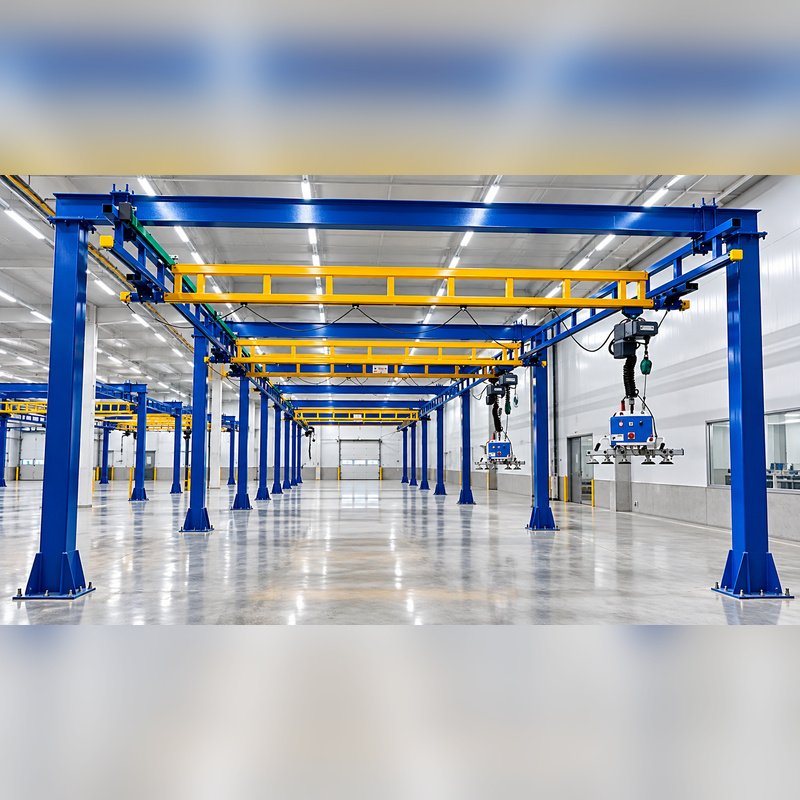
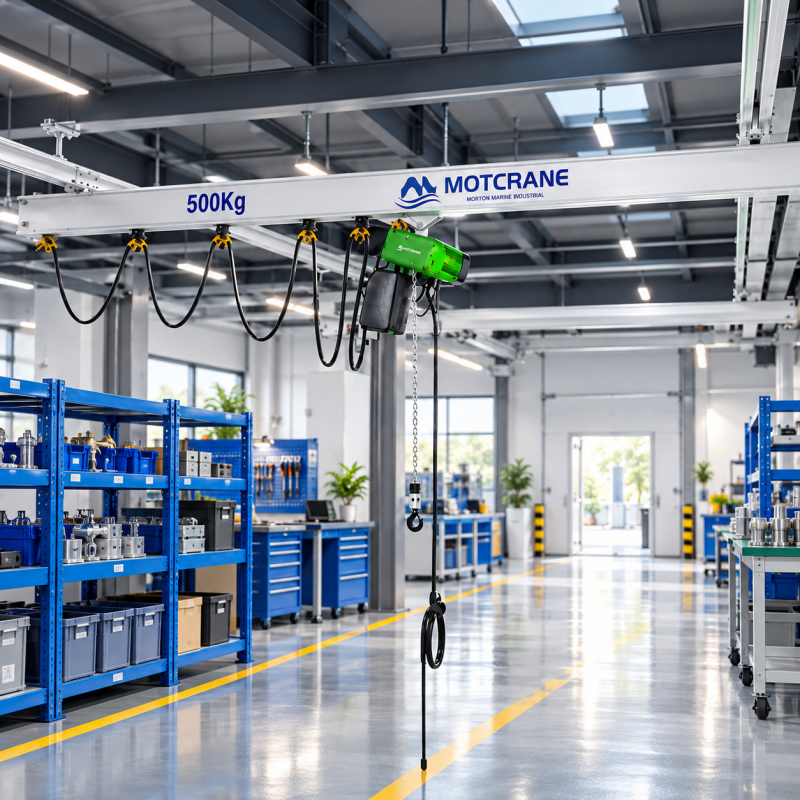
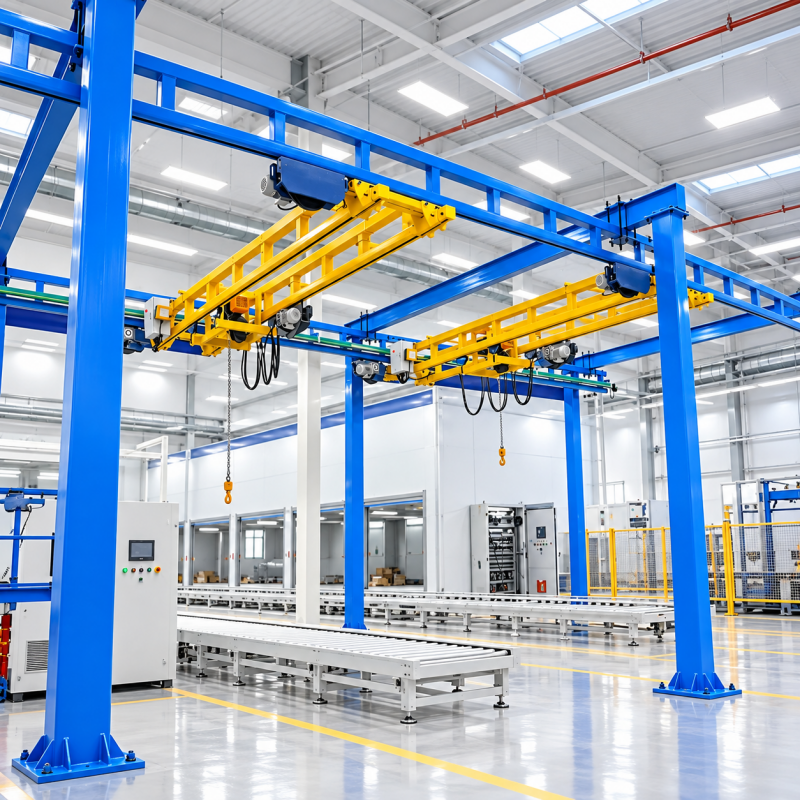
A workstation overhead crane, also called a workstation bridge crane, is a lightweight modular lifting system for assembly lines, machining areas, production cells, maintenance stations, and other defined work areas.
Unlike a conventional overhead crane that normally covers an entire workshop bay, a workstation crane is designed for frequent lifting, short-distance movement, and accurate positioning within a specific production area.
The system can be designed as a free-standing or ceiling-mounted crane with a single-girder or double-girder bridge. Depending on the workpiece, capacity, span, and operating requirements, modular aluminum or steel profiles can be combined with electric chain hoists, manual hoists, vacuum lifting devices, and custom lifting attachments.
Rated Capacity: 50 kg – 3 t (Aluminum up to 2 t / Steel up to 3 t)
Girder: Single Girder / Double Girder
Span: Project-specific; typically used for localized areas up to approx. 12 m
Lifting Height: Customized; typically within 9 m
Installation: Free-Standing / Ceiling-Mounted
Girder & Runway: Aluminum / Steel Modular Track
Travel: Manual / Motorized
Hoisting: Electric Chain Hoist / Manual Hoist / Custom Device
Power Supply: Customized for project location

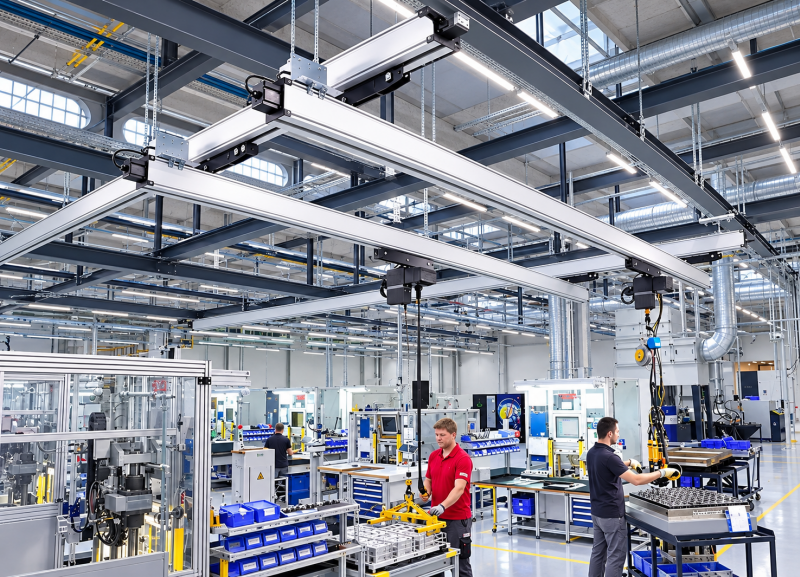
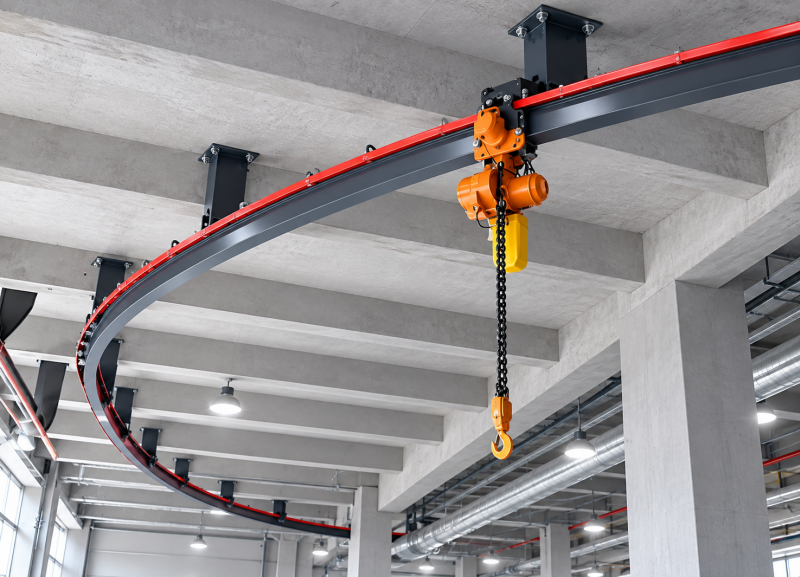
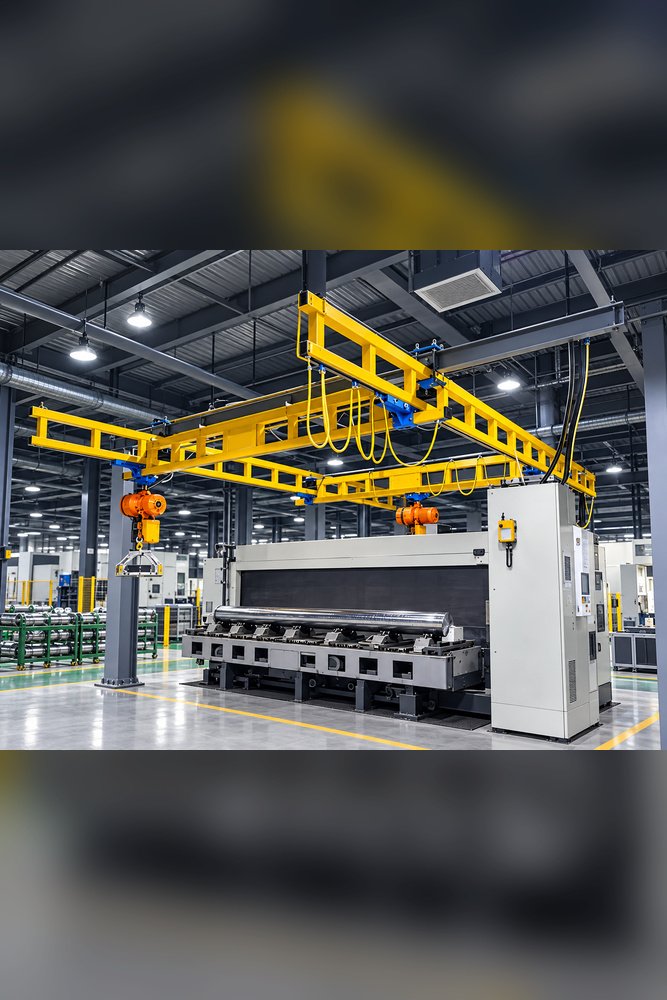
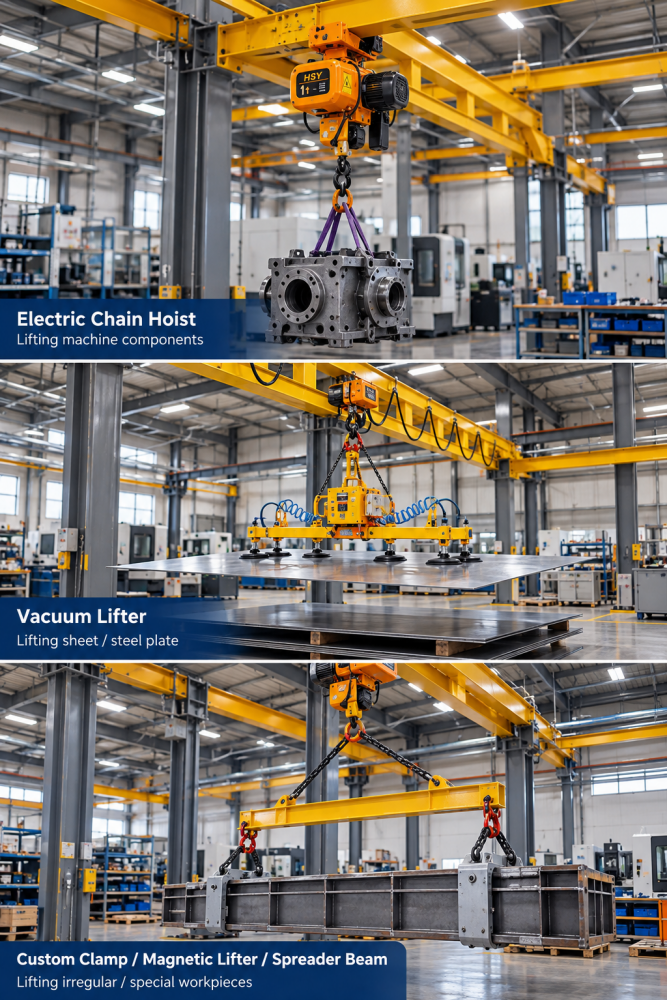
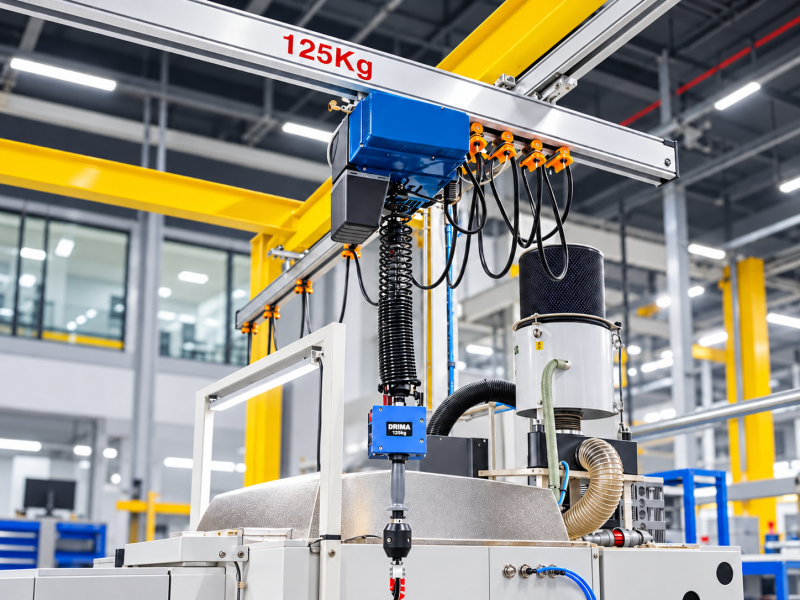
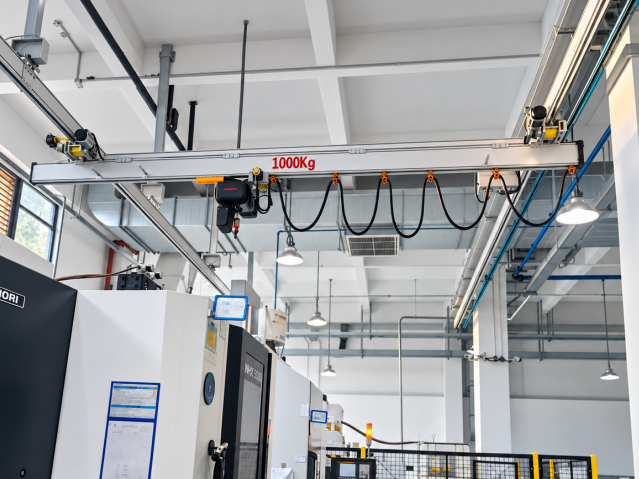

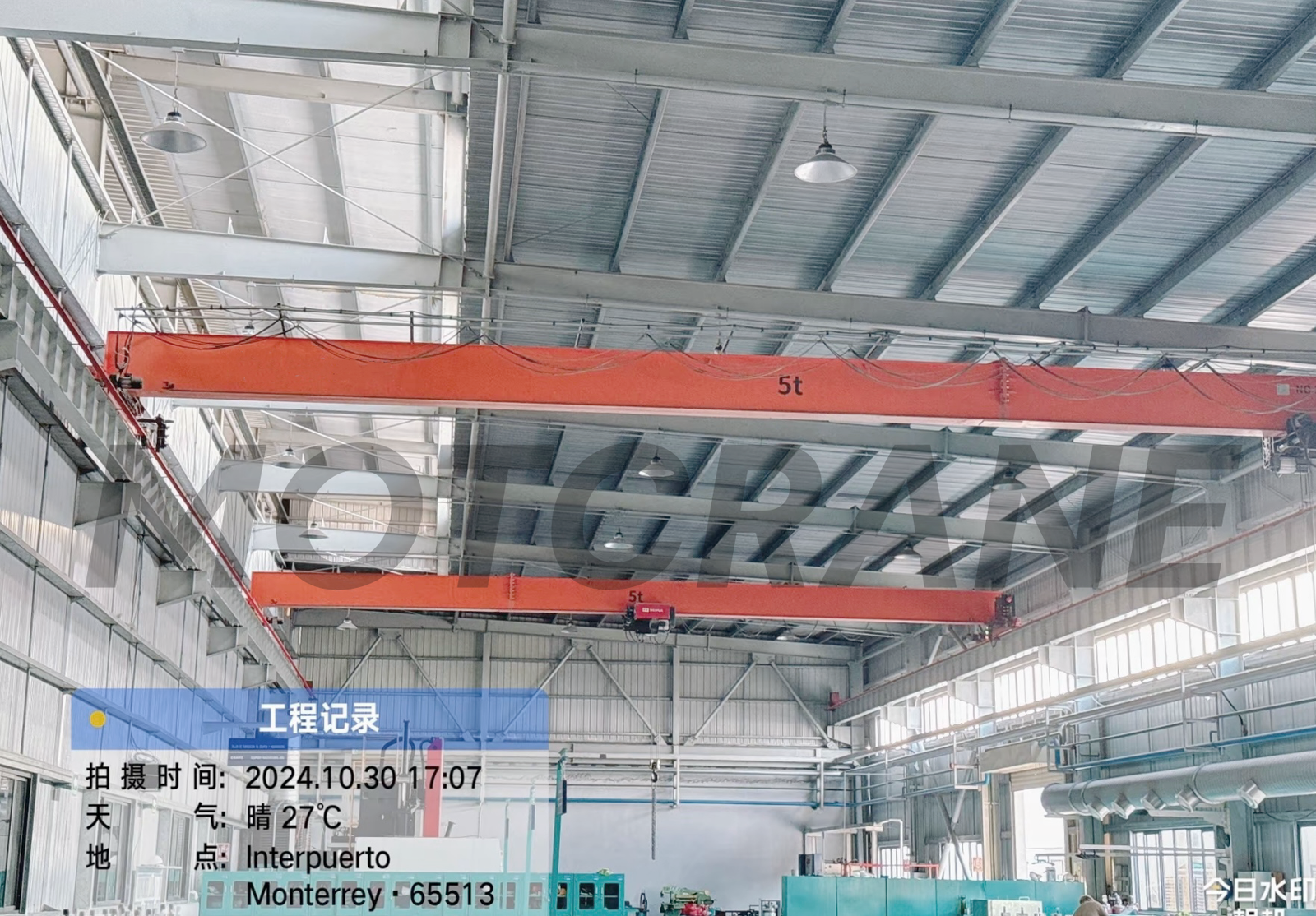
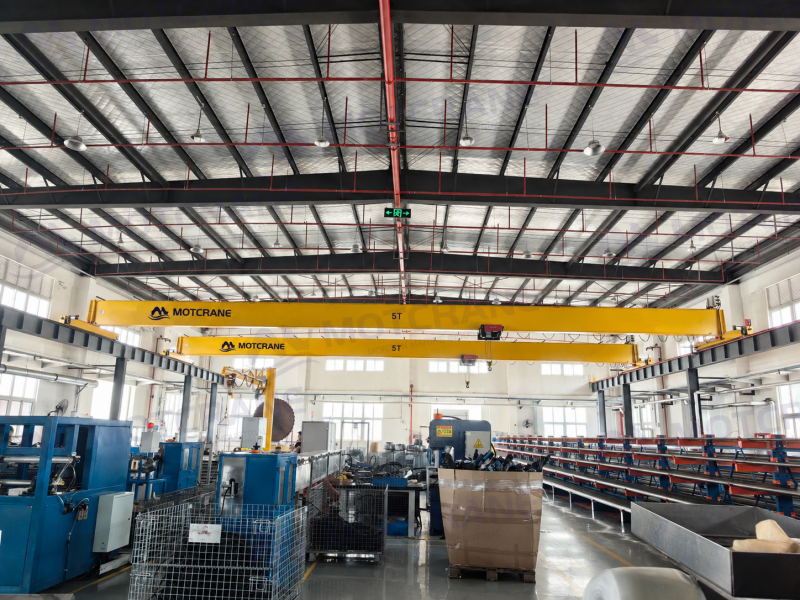


| Lower Operating Effort | Dedicated Work Area |
|---|---|
| Lightweight bridges, enclosed tracks, and low-resistance trolleys reduce the force required to move loads. | The crane can be designed around the exact assembly station, machining area, or production cell where lifting is required. |
| Modular and Adaptable | Flexible Lifting Equipment |
| The system can be expanded, relocated, or reconfigured when the production layout changes. | Chain hoists, vacuum lifters, pneumatic aids, and custom attachments can be selected around the actual workpiece. |
An aluminum workstation crane uses lightweight modular aluminum profiles for the bridge girder and runway tracks.
Its lower bridge weight reduces manual operating force, making it particularly suitable for frequent movement, direct operator guidance, and precise positioning.
MOTCRANE aluminum workstation crane systems can be designed for capacities up to 2 metric tons. The allowable span depends on the capacity, profile size, girder configuration, and operating method.
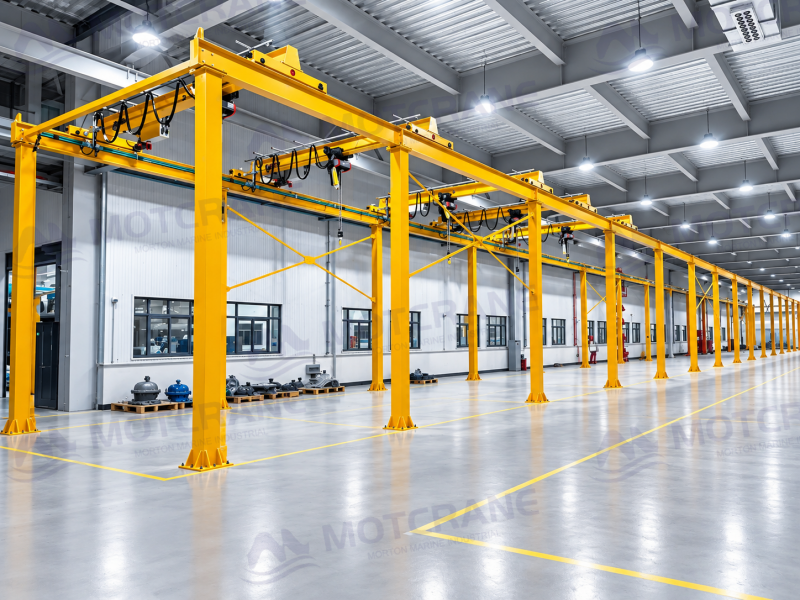
Independent steel columns support the aluminum runway and bridge. This configuration is suitable for existing factories, leased facilities, and projects where future relocation may be required.
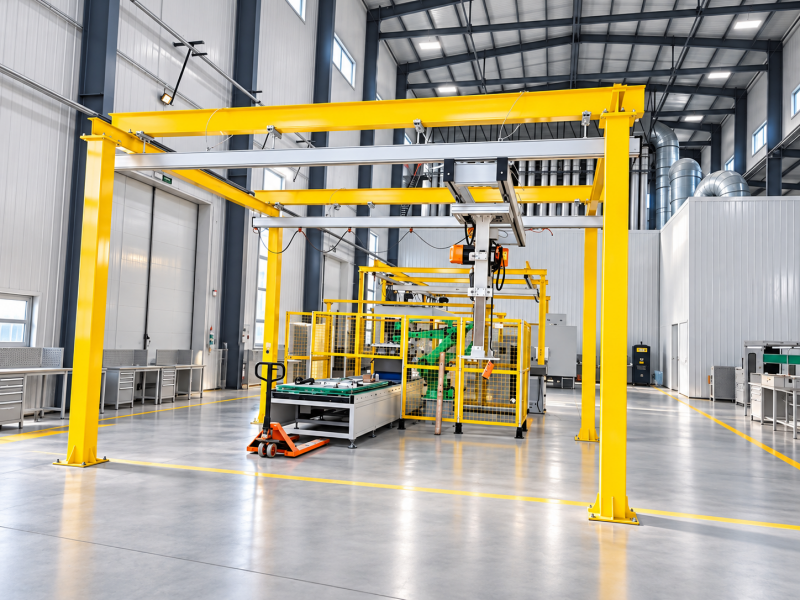
Aluminum runway tracks are suspended from verified building structural members. This arrangement reduces floor obstructions and works best where complete structural data and load calculations are available.
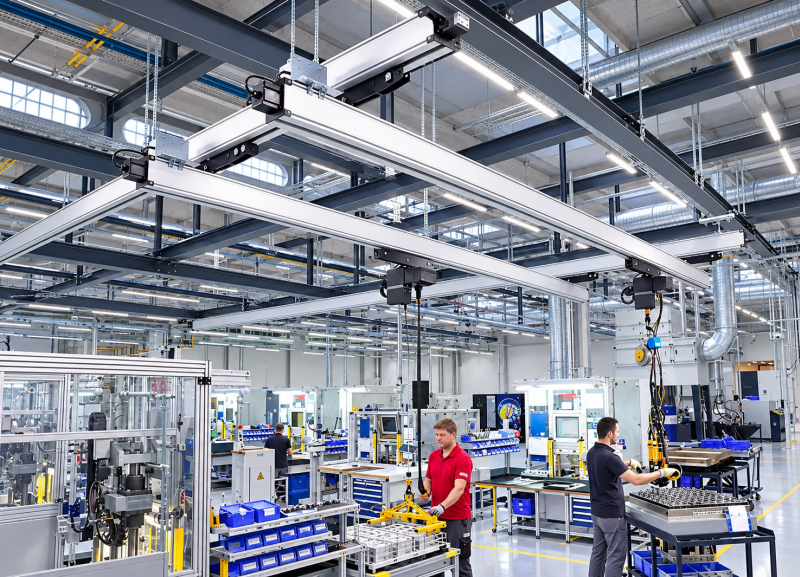
| Specification | Configuration |
|---|---|
| Capacity | Up to 2 t |
| Girder | Single / Double Girder |
| Installation | Free-Standing / Ceiling-Mounted |
| Girder & Runway | Aluminum Modular / Enclosed Track |
| Travel | Manual / Motorized |
| Hoisting | Electric Chain Hoist / Pneumatic Aid / Custom Device |
A steel workstation crane uses modular steel profiles for the bridge girder and runway tracks.
Steel provides higher structural rigidity and is better suited to larger spans, higher capacities, or projects where structural performance and overall cost need to be balanced.
MOTCRANE steel workstation crane systems can be designed for capacities up to 3 metric tons, subject to span and structural calculation.
Independent steel columns support the crane without transferring loads to the existing building structure. It is a practical option for overseas retrofit projects, leased factories, and sites where roof capacity cannot be confirmed. For projects requiring U.S. structural design criteria, the supporting steel structure can also be evaluated with reference to ANSI/AISC 360.
The steel runway is suspended from verified building structural members, keeping the production floor clear of supporting columns.
For overseas projects, this configuration should only be selected after the building structure and suspension points have been checked by a qualified engineer.
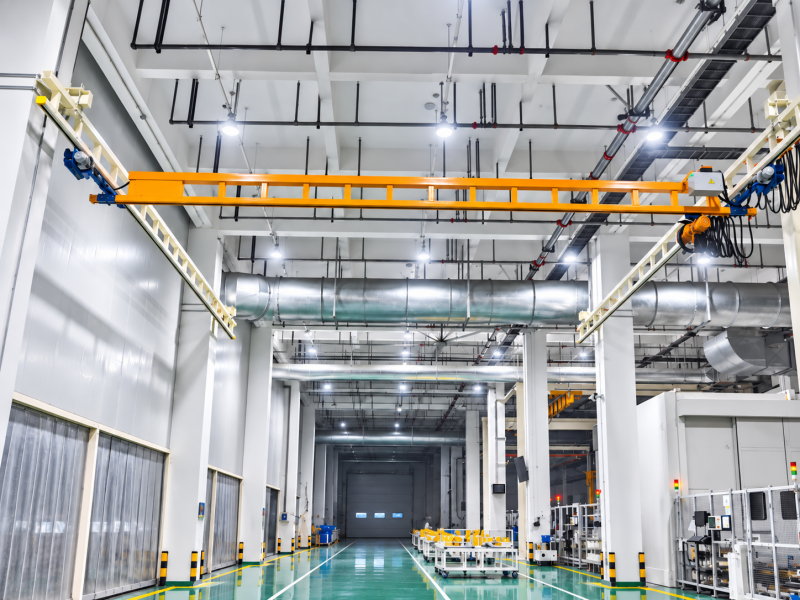
| Specification | Configuration |
|---|---|
| Capacity | Up to 3 t |
| Girder | Single / Double Girder |
| Installation | Free-Standing / Ceiling-Mounted |
| Girder & Runway | Steel Modular Track |
| Travel | Manual / Motorized |
| Hoisting | Electric Chain Hoist / Manual Hoist / Custom Device |
Start with the maximum load, workpiece dimensions, lifting points, gripping method, daily lifting frequency, movement route, and whether the load needs to be turned or precisely positioned.
Confirm the required length, width, effective span, hook coverage, and lifting height. A monorail is suitable for a fixed route, while a workstation bridge crane provides movement in both X and Y directions.
Use a free-standing system where roof capacity cannot be confirmed, the building is leased, or future relocation is possible. Ceiling-mounted systems require verified structural capacity.
Aluminum is preferred where low manual pushing force and frequent operator-controlled movement are important. Steel is better suited to higher capacities, larger spans, greater rigidity, or tighter structural cost control.
Single-girder systems suit many standard light-duty applications. Double-girder designs can be considered as capacity or span increases, or where greater rigidity and a different hook arrangement are required.
Manual travel works well for lighter loads and shorter distances. Motorized bridge or trolley travel becomes more practical for heavier loads, longer spans, and longer travel distances.
If production lines may be extended, equipment moved, additional workstations added, or the crane relocated, these requirements should be considered during the initial design.
| Application | Typical Use |
|---|---|
| Assembly Lines | Moving and positioning parts and assemblies between workstations |
| Machining | Loading and unloading machine tools and machining centers |
| Automotive Manufacturing | Handling engines, transmissions, molds, and components |
| Equipment Manufacturing | Assembly of pumps, valves, motors, and machinery |
| Maintenance & Repair | Component removal, installation, and localized maintenance |
| Material Handling | Repetitive short-distance movement and accurate positioning |
MOTCRANE workstation crane systems can be designed for capacities up to 3 metric tons. Aluminum systems are available up to 2 metric tons, while steel systems can reach 3 metric tons, subject to span and structural design.
A double-girder structure can be selected when capacity or span increases, or where greater structural rigidity, hook position, or headroom arrangement is required.
MOTCRANE has supplied a 3-ton double-girder steel workstation crane system for a project in Algeria.
Yes. The modular structure can be dismantled and reinstalled, making it suitable for leased factories and changing production layouts. The floor conditions, dimensions, and layout of the new site must still be checked before reinstallation.
It may be possible depending on the load and structural design. However, when the span exceeds approximately 12 m or a larger factory area needs to be covered, MOTCRANE will normally evaluate a conventional free-standing bridge crane first.
Building structural drawings, beam and column information, suspension locations, crane span, rated capacity, and site photographs are required. A qualified engineer should verify that the existing structure can safely carry the additional crane loads.
Please provide the maximum load, workpiece dimensions, lifting method, required working area, lifting height, building drawings or site photos, operating frequency, material movement route, power supply, and any future expansion or relocation plans.



 English
 Russian
 French
 Spanish
 Arabic
 Indonesian
 Japanese