


Overhead Crane vs Gantry Crane: Which One Is Right for Your Project?
In industrial material handling projects, overhead cranes and gantry cranes are both widely used for lifting and moving heavy loads. However, they are not the same type of crane. The main differences are found in their support structure, installation requirements, floor space use, and suitable working environments.
Many customers ask similar questions:
- Can an overhead crane be installed in an existing factory building?
- For the same 20-ton lifting capacity, why do some suppliers recommend an overhead crane while others recommend a gantry crane?
- If a gantry crane has a higher equipment price, does that mean the total project cost is always higher?
- Which crane is better for an indoor workshop or an outdoor yard?
There is no single answer for every project. The right choice depends on the site conditions, building structure, lifting requirements, production process, and long-term plan.
Quick Answer
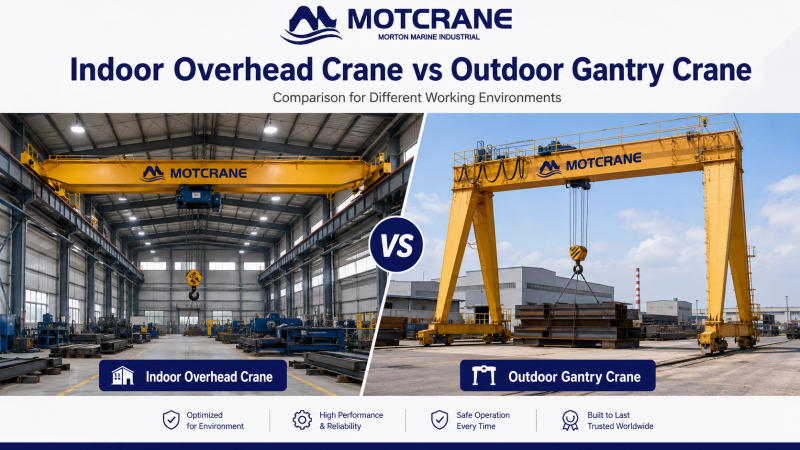
If your facility has suitable building columns, runway beams, or structural support for crane rails, and you want to maximize floor space, an overhead crane is usually the better choice.
If your project is located outdoors, in a temporary work area, or in a building that cannot support crane loads, a gantry crane is usually more practical.
For new workshops, semi-open sites, or expansion projects, both solutions may be possible. In this case, the final decision should be based on a full review of the site layout, lifting duty, installation conditions, and total project cost.
What Is an Overhead Crane?
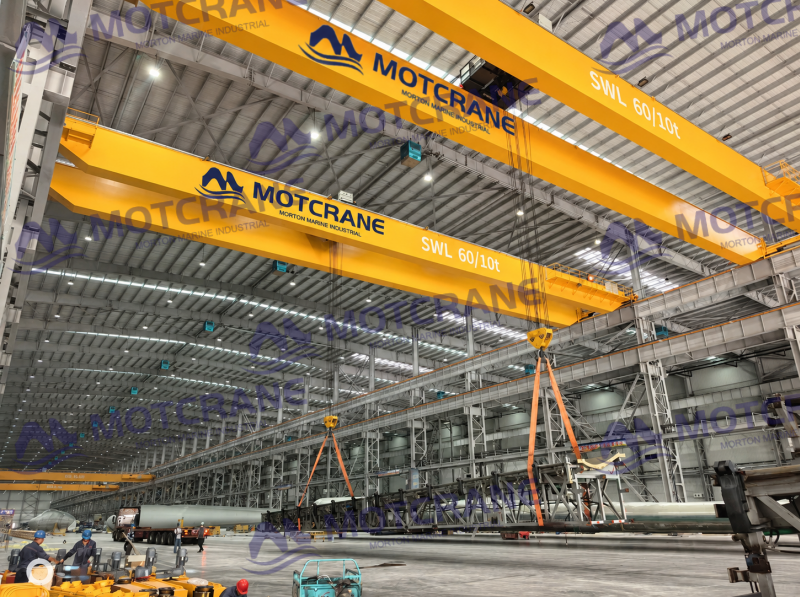
An overhead crane, also called a bridge crane, runs on rails supported by the building structure or by independent supporting columns. It usually includes a main girder, end carriages, a trolley, and a hoist.
Because the crane operates above the floor, it does not occupy valuable ground space. This makes overhead cranes very suitable for manufacturing workshops, warehouses, steel fabrication plants, machine shops, and fixed production areas.
For workshops with frequent lifting, stable production flow, and limited floor space, an overhead crane can provide high efficiency and good space utilization.
What Is a Gantry Crane?
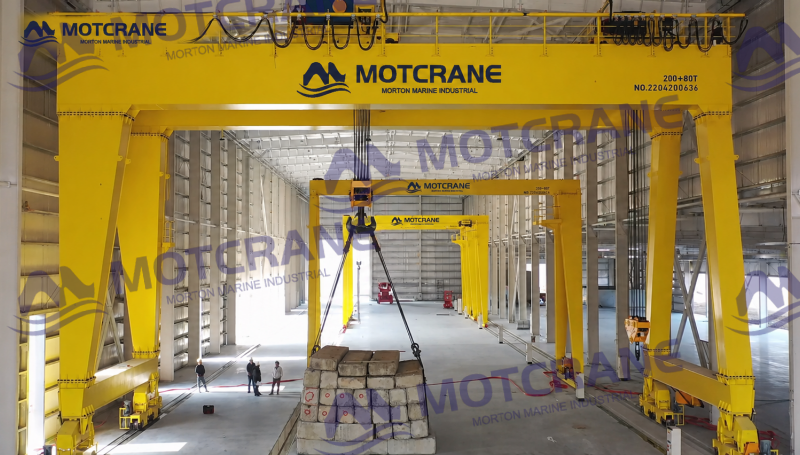
A gantry crane is supported by its own legs. The load is transferred to the ground through rails, wheels, or other traveling systems. Unlike an overhead crane, it does not need to rely on the building columns or runway beams.
This self-supporting structure makes gantry cranes suitable for outdoor yards, shipyards, docks, precast yards, steel stockyards, equipment storage areas, and sites where the building structure cannot support an overhead crane.
For more specialized lifting needs, gantry crane options can include a portable gantry crane for flexible temporary lifting, an aluminum alloy gantry crane for lightweight indoor handling, and a hydraulic gantry crane for customized heavy lifting and equipment installation projects.
The Key Difference: Building-Supported vs Self-Supported
Many customers first compare lifting capacity when choosing between an overhead crane and a gantry crane. In reality, the most important difference is not how many tons the crane can lift, but how the crane is supported.
An overhead crane is a fixed lifting system supported by the building or an additional steel structure. It is better suited for stable indoor production areas.
A gantry crane is a self-supporting lifting system. It is less dependent on the building and is usually better for outdoor sites, open areas, temporary projects, or facilities without runway beam support.
In many projects, the crane type is decided by installation conditions before lifting capacity is discussed in detail.
Overhead Crane vs Gantry Crane: Main Differences
| Factor | Overhead Crane | Gantry Crane |
| Support Structure | Supported by building columns, runway beams, or added steel structure | Supported by its own legs |
| Installation | Requires runway beams or structural support | Requires rails, wheels, or ground preparation |
| Floor Space | Does not occupy floor space | Legs may occupy part of the work area |
| Mobility | Fixed working area | Can be movable or relocatable |
| Outdoor Use | Mainly used indoors | More suitable for outdoor use |
| Expansion | Limited by building structure | Easier to relocate or expand |
| Typical Use | Workshops, warehouses, manufacturing plants | Stockyards, shipyards, docks, construction sites |
5 Factors to Consider Before Choosing
1. Installation Location and Building Conditions
The first question is simple: where will the crane be used?
If the crane will work inside a factory and the building can support crane loads, an overhead crane is often the preferred solution. It runs above the working area and keeps the floor clear.
If the crane will be used outdoors, or if the existing building cannot support the crane load, a gantry crane is usually more suitable. Its independent legs reduce dependence on the building structure.
Before selection, check the building load capacity, runway beam conditions, installation feasibility, and whether structural reinforcement is needed.
2. Floor Space Utilization
In a busy workshop, floor space is valuable. Production lines, forklifts, AGVs, storage areas, and workers all need clear access.
An overhead crane uses the upper space of the workshop and does not block floor traffic. This is one of its biggest advantages in indoor production environments.
A gantry crane has legs, so it may occupy part of the working area. However, in outdoor yards or wide open sites, this is usually less of a problem.
3. Duty Cycle and Production Flow
Lifting capacity alone does not determine the crane configuration. A 10-ton crane used a few times per day is different from a 10-ton crane used continuously in two shifts.
For high-frequency lifting and fixed production flow, an overhead crane is often more efficient. For intermittent lifting, temporary work areas, or outdoor loading and unloading, a gantry crane can offer more flexibility.
4. Actual Lifting Requirements
When comparing overhead cranes and gantry cranes, you should consider more than capacity. Important parameters include span, lifting height, working frequency, load size, center of gravity, lifting attachments, and site conditions.
For common 5-ton, 10-ton, and 20-ton applications, both crane types may be possible. For large-span outdoor areas, gantry cranes often provide better coverage. For fixed indoor workshops, overhead cranes usually provide better space efficiency. For fixed indoor applications, the choice between a single girder or double girder overhead crane should also be reviewed based on span, lifting height, and duty class.
5. Total Project Cost
The equipment price is only one part of the total investment.
An overhead crane may require runway beams, building reinforcement, installation work, and structural checks. A gantry crane may require ground rails, foundations, site preparation, power supply systems, and outdoor protection.
If the building already has suitable crane support, an overhead crane may offer better long-term return. If the site is outdoors or the building needs major reinforcement, a gantry crane may be more cost-effective.
Typical Applications
Manufacturing Workshops
Recommended solution: overhead crane
Most machinery manufacturing workshops, steel fabrication plants, and equipment assembly areas prefer overhead cranes. They cover the production area from above, keep the floor clear, and support frequent material transfer between workstations.
Outdoor Stockyards
Recommended solution: gantry crane
Steel yards, equipment storage yards, and material handling areas often use gantry cranes. They can work in open spaces without the need for a full factory building.
Shipyards and Offshore Projects
Recommended solution: gantry crane
Ship sections, steel modules, and large marine equipment usually require wide working areas and outdoor lifting. Gantry cranes are commonly used in shipyards, repair yards, docks, and offshore equipment manufacturing sites.
Factory Expansion Projects
Recommended solution: combined system
In some projects, overhead cranes and gantry cranes are used together. The overhead crane handles indoor production, while the gantry crane handles outdoor storage, pre-assembly, and loading. This combination is common in steel structure fabrication, heavy equipment manufacturing, and marine-related industries.
Common Mistakes When Selecting a Crane
Choosing Based Only on Equipment Price
A lower crane quote does not always mean a lower project cost. Installation, civil work, foundations, building reinforcement, and long-term maintenance should also be included in the comparison.
Assuming Standard Models Fit Every Project
A “20-ton overhead crane” or “10-ton gantry crane” is not enough information for accurate selection. Span, lifting height, duty class, control method, site layout, and working environment can all change the final design.
Ignoring Building Load Capacity
For overhead crane projects, building strength is critical. Columns, runway beams, and the overall structure must be checked before finalizing the crane solution.
Focusing Only on Capacity Instead of Workflow
The real question is not only “Can it lift 20 tons?” but also “How will the load move through the production process?” Workflow, lifting frequency, floor space, and future expansion all affect the final choice.
Quick Selection Checklist
Choose an overhead crane if:
- The facility has suitable structural support
- You want to maximize floor space
- Lifting operations are frequent
- The crane will be used in a fixed indoor area
- Forklifts or AGVs need clear floor access
- Long-term production layout is stable
Choose a gantry crane if:
- The project is mainly outdoors
- The building cannot support an overhead crane
- The work area may change in the future
- The project may require relocation
- A large open working area needs to be covered
- A self-supporting lifting system is preferred
Frequently Asked Questions
1. Can an overhead crane be installed in an existing building?
Yes, but the building height, column load capacity, runway beam conditions, and installation space must be checked first. If the building cannot support the load, a gantry crane or freestanding crane structure may be considered.
2. Do gantry cranes always need ground rails?
Not always. Large gantry cranes usually run on rails, while some mobile or portable gantry cranes can use rubber wheels or casters. The final choice depends on lifting capacity, span, travel distance, floor condition, and working frequency.
3. Can overhead cranes and gantry cranes be used together?
Yes. In large projects, overhead cranes can handle indoor production lifting, while gantry cranes handle outdoor storage, pre-assembly, and loading. They can work together as part of a complete material handling system.
Summary
Overhead cranes and gantry cranes can both lift heavy loads, but they are suitable for different project conditions.
An overhead crane is better for fixed workshops, continuous production, and indoor areas where floor space is limited. A gantry crane is better for outdoor sites, open yards, temporary work areas, and projects where the building structure cannot provide support.
If you are comparing an overhead crane and a gantry crane for your project, request a crane solution from MOTCRANE with your workshop layout, lifting requirements, and site conditions. Our engineers can review the details and help determine which crane solution is more practical for your operation.



 English
  Russian
  French
  Spanish
  Arabic
  Indonesian
  Japanese