


Is an Aluminum Workstation Crane Right for Your Factory?
If your factory needs a lightweight lifting system for a fixed working area, an aluminum workstation crane may be a practical option. Its lightweight structure and low operating resistance make it suitable for many assembly, maintenance, and light-production tasks. Depending on your building conditions, the system can be suspended from the existing structure or installed on independent supports.
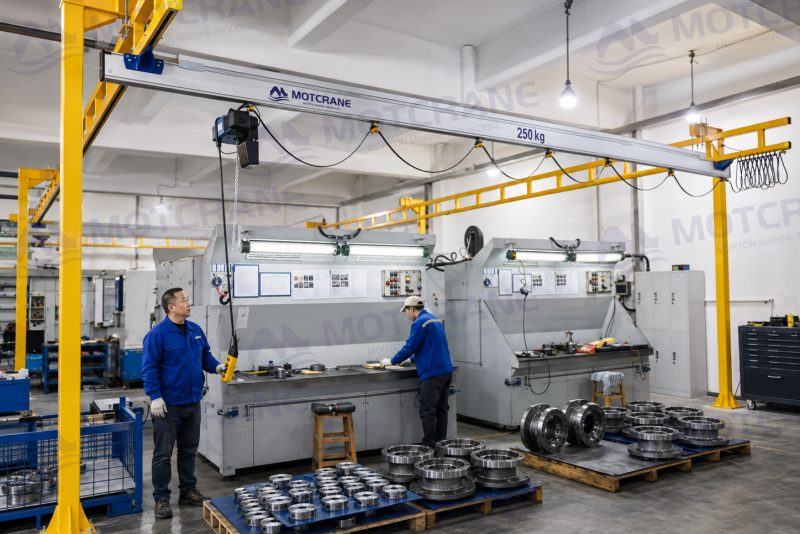
However, an aluminum workstation crane is not suitable for every application. Typical applications include assembly stations, equipment maintenance, electronics manufacturing, laboratories, and flexible production lines.
What Is an Aluminum Workstation Crane?
An aluminum workstation crane is a lightweight material-handling system. It normally consists of aluminum alloy rails or girders, a traveling trolley, a hoisting mechanism, and a supporting structure.
Depending on the installation conditions, the system can use either a suspended configuration or a free standing bridge crane system with independent support columns.
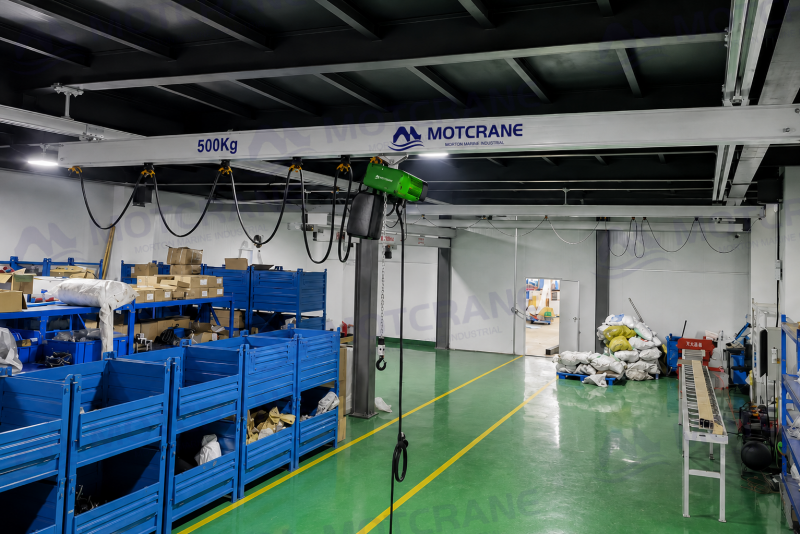
Compared with a traditional steel overhead crane, an aluminum alloy structure has a lower dead weight and usually requires less force to move manually. For the aluminum workstation crane configurations discussed here, lifting capacities can reach up to 2 metric tons, making them suitable for assembly, maintenance, and other light-duty material-handling applications.
What Material-Handling Problems Does It Solve?
In your workshop, the crane can be used to lift, move, and position workpieces within a defined working area. Because the load moves along the crane system rather than being carried manually, the system can reduce physical handling effort and make repetitive material movement easier and more controlled.
It is particularly useful where materials need to move repeatedly between assembly, maintenance, or processing positions within the crane coverage area.
Which Projects Should Consider an Aluminum Workstation Crane?
An aluminum workstation crane is worth considering if your lifting work is concentrated within a defined area and the loads are relatively light.
It is particularly suitable in the following situations:
Repetitive handling between fixed workstations:
If your operators repeatedly move parts between assembly, machining, inspection, or maintenance positions, the crane can cover these movements without relying on manual handling.
Light loads that need frequent positioning:
For components that are not extremely heavy but need to be lifted and positioned many times during production, the low moving resistance of an aluminum rail system can make operation easier.
Limited installation options in an existing factory:
If your building structure is suitable, the crane can be suspended from the existing structure. Where this is not possible, a freestanding support system can be considered.
Production layouts that may change later:
A modular aluminum workstation crane can be useful if your production line may be relocated or reconfigured in the future, although the new installation conditions must still be checked before relocation.
If your project involves loads above 2 metric tons, a large span, higher-duty operation, or special environments requiring specific materials or corrosion-protection measures, an aluminum workstation crane may not be the best option. In these cases, you should also compare a steel overhead crane or gantry crane before making the final selection.
What Should You Confirm Before Selecting an Aluminum Workstation Crane?
Before deciding whether an aluminum workstation crane is suitable for your factory, confirm the following information:
- Lifted objects: Confirm the load weight, dimensions, lifting points, and whether special lifting attachments are required.
- Handling process: Specify where the load is picked up, where it needs to be moved, and whether frequent repositioning is required.
- Hoisting mechanism: Confirm whether a manual chain hoist or an electric chain hoist is required.
- Installation conditions: Provide the length, width, and height of the working area, together with site conditions and available supporting structures.
- Future adjustments: Confirm whether the workstation crane may need to be relocated or reconfigured as the production layout changes.
- Operating frequency: Confirm daily operating hours, approximate lifting cycles per hour, typical load conditions, and the required duty class.
Frequently Asked Questions
Can an Aluminum Workstation Crane Use an Electric Wire Rope Hoist?
It is possible, but manual chain hoists and electric chain hoists are more common for this type of lightweight crane system. The final hoist configuration should match the required lifting capacity, lifting height, and crane structure.
Can the Crane Be Moved to Another Area After Installation?
Yes. A modular aluminum workstation crane can generally be dismantled and reinstalled in another working area, provided that the new installation conditions are suitable.
Is Routine Maintenance Complicated?
Routine maintenance mainly involves inspecting the hoisting mechanism, moving parts, rails, fasteners, and limit switches. Lubrication and other maintenance should be carried out according to the equipment manual.
Can It Be Installed in an Existing Factory Building?
Yes, but the load-bearing capacity of the existing building structure and the available installation space must first be evaluated.
Depending on the site conditions, the crane can use either a suspended configuration or an independent freestanding support structure.
How Long Does Installation Typically Take?
Installation time depends on the system size, installation method, site preparation, and commissioning requirements. A small modular aluminum workstation crane system can often be installed within one week when the site is ready.
Summary
An aluminum workstation crane is suitable for assembly, maintenance, light manufacturing, and material-handling projects that require a lightweight lifting system within a defined working area.
Selection should not be based only on the crane material, dead weight, or lifting capacity. The load, working range, lifting height, operating frequency, installation conditions, and future production layout should all be considered.
Before requesting a quotation, prepare the load dimensions, lifting capacity, working range, lifting height, workflow, daily operating hours, factory layout, and site photographs.
Based on this information, MOTCRANE can determine whether an aluminum workstation crane is suitable or whether a steel workstation crane, conventional overhead crane, or another configuration would better match the application.



 English
  Russian
  French
  Spanish
  Arabic
  Indonesian
  Japanese