


Electric Hoist Trolley vs Winch Trolley: How to Choose for a Bridge Crane
The rated lifting capacity alone does not determine which trolley should be used on a bridge crane. Depending on how the crane will be operated, a 10-metric-ton bridge crane, for example, may be designed with either an electric hoist trolley or an open winch trolley.
The right choice depends on your actual operating conditions. Duty class, operating frequency, lifting height, hoisting speed, load type, control requirements, and future production plans all affect the final configuration. This electric hoist trolley vs winch trolley comparison explains how these factors should be evaluated before you select the trolley system for your bridge crane.
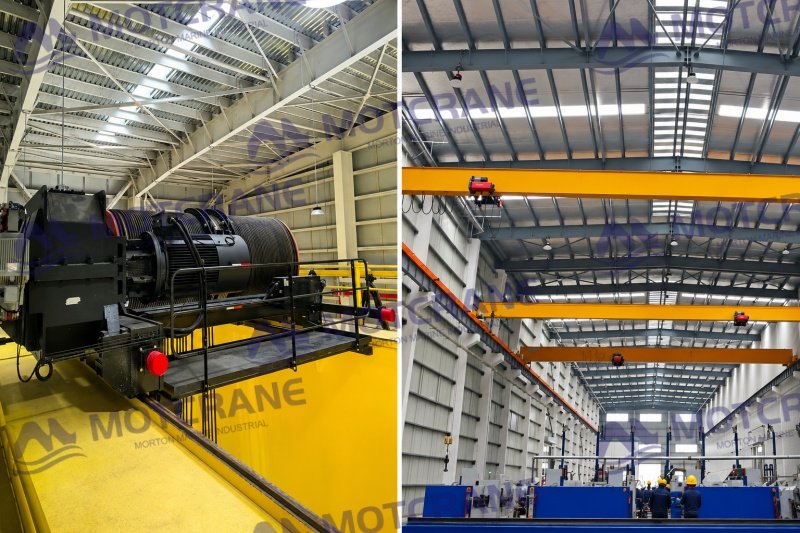
Electric Hoist Trolley vs Winch Trolley: Key Differences
The main difference is not lifting capacity. Both trolley types can be designed for the same rated load. What matters is how your crane will be used.
Duty Class and Operating Frequency
For normal workshop lifting and moderate operating frequency, an electric hoist trolley is often sufficient.
If your crane works for long periods, makes frequent lifts, or regularly handles loads close to its rated capacity, an open winch trolley gives more flexibility in selecting the motor, brake, drum, gearbox, and other components.
Lifting Height and Headroom
An electric hoist trolley has a compact and standardized structure, which works well for most common lifting heights.
For projects with a large lifting height or special space restrictions, the two trolley arrangements should be compared using the actual crane dimensions. An open winch trolley allows more flexibility in drum size, wire rope reeving, and overall layout.
Hoisting Speed and Control
If you only need standard lifting speeds, dual-speed operation, or VFD control, an electric hoist trolley can usually meet the requirement.
For special speed ranges, more precise control, or more complex operating requirements, an open winch trolley offers greater design flexibility.
Load Type and Working Process
For machinery, equipment parts, molds, and other common workshop loads, an electric hoist trolley is usually the simpler choice.
If your production involves special lifting attachments, long or irregular loads, frequent heavy lifting, or a demanding production cycle, the trolley should be selected according to the complete lifting process rather than load capacity alone.
Maintenance and Cost
An electric hoist trolley has fewer separate components and is generally easier to install, maintain, and replace. Spare parts are also easier to standardize.
An open winch trolley is more complex and normally costs more, but it can be designed around demanding operating conditions where a standard electric hoist trolley may not be the best fit.
When Should You Choose an Electric Hoist Trolley?
An electric hoist trolley may be the better choice for your bridge crane when the lifting work is relatively standard and there is no need for a highly customized hoisting system.
Consider this option when:
- The crane operates intermittently or at a moderate frequency.
- The loads and handling process are relatively consistent.
- Lifting height and hoisting speed requirements are standard.
- Easy maintenance and readily available spare parts are important.
- Standard pendant, remote, or variable-frequency control can meet the operating requirements.
For machining, assembly, warehousing, equipment maintenance, and general workshop handling, an electric hoist trolley is often the simpler solution when these conditions are met.
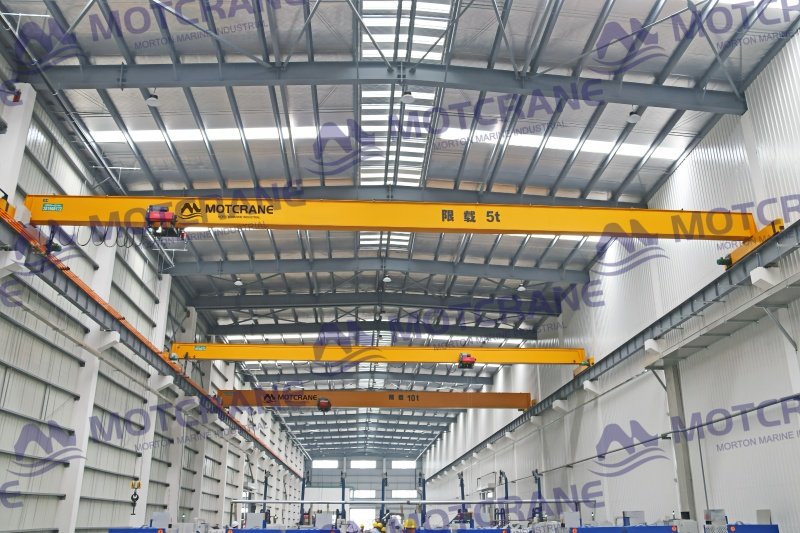
When Should You Choose an Open Winch Trolley?
You should consider an open winch trolley when your bridge crane has more demanding operating requirements and a standard electric hoist trolley does not fully match the required duty, lifting height, speed, or control requirements.
Typical conditions include:
- Long operating hours or frequent lifting cycles.
- Frequent handling of loads close to the rated capacity.
- Large lifting heights.
- Special hoisting speeds or a wide speed-control range.
- Redundant brakes, special reeving arrangements, or other customized features.
- More complex control, monitoring, or safety requirements.
Open winch trolleys are often used where the hoisting system needs to be designed around a specific production process rather than selected as a standard package.
However, a more complex trolley does not automatically mean a better crane. If an electric hoist trolley already meets your operating requirements, using an open winch trolley may only increase project cost, maintenance work, and system complexity.
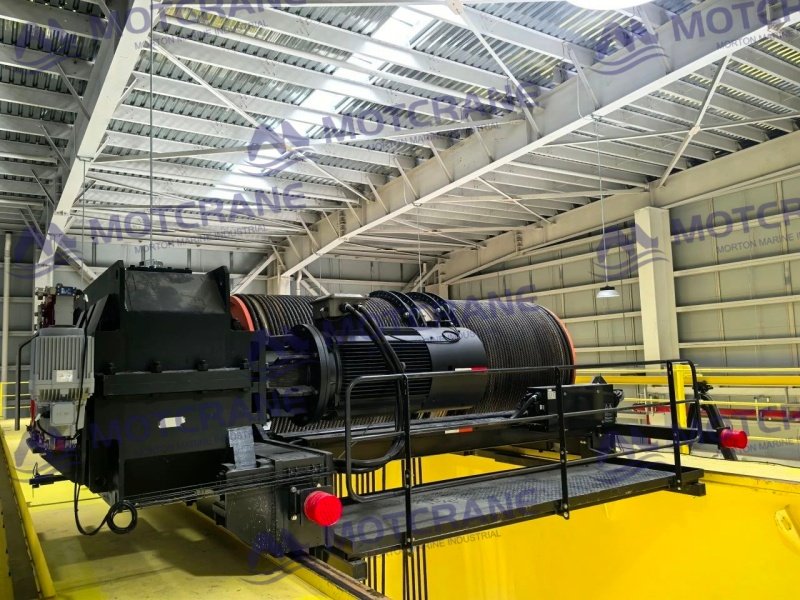
Why Can Two 10-Ton Bridge Cranes Use Different Trolleys?
Consider two bridge cranes, both rated at 10 metric tons.
The first crane is installed in a general manufacturing workshop. It performs a limited number of lifts each day, the loads are relatively consistent, and the lifting height and speed requirements are standard. In this case, an electric hoist trolley may already meet the requirements.
The second crane moves large steel structures throughout each production shift. It starts and stops frequently, handles heavy loads repeatedly, and requires greater lifting height and more flexible speed control. An open winch trolley may be more suitable for this type of operation.
If your project is closer to the first case, there may be little reason to use a more complex trolley system. If the operating conditions are closer to the second case, an open winch trolley should be evaluated.
Both cranes have the same rated capacity, but their operating conditions are different. This is why lifting capacity alone cannot determine the correct trolley configuration.
What Should You Confirm Before Choosing a Trolley?
Before choosing between an electric hoist trolley and an open winch trolley, confirm the following information about your project:
- Load: Maximum lifting capacity, load type, dimensions, and any special lifting attachments.
- Operating frequency: Daily operating hours and approximate lifting cycles per hour.
- Lifting height and headroom: Required maximum hook height and the available space between the runway rail and the roof or other overhead obstructions.
- Hoisting speed: Standard speed, dual speed, or variable-frequency control.
- Duty requirement: How frequently the crane operates and how often it handles loads close to its rated capacity.
- Control requirements: Pendant control, wireless remote control, cabin control, or other special control requirements.
- Special requirements: Redundant brakes, special monitoring, unusual lifting processes, or other customized functions.
- Future changes: Possible increases in production volume, operating frequency, or lifting requirements.
With this information, it is much easier to determine whether a standard electric hoist trolley is sufficient or whether an open winch trolley is justified.
Summary
Choosing between an electric hoist trolley and an open winch trolley should be based on how the crane will actually operate, not on lifting capacity alone.
For standard workshop lifting with moderate operating frequency, an electric hoist trolley is often sufficient. If your project involves frequent lifting cycles, large lifting heights, special speed or control requirements, or other demanding operating conditions, an open winch trolley may provide more design flexibility.
Before making the final selection, confirm the load, lifting height, operating frequency, duty requirement, speed, control method, and future production needs.
If you are planning a bridge crane project, send these details to MOTCRANE for a trolley and crane configuration review.



 English
  Russian
  French
  Spanish
  Arabic
  Indonesian
  Japanese