


Electric Hoist Trolley vs Winch Trolley: How to Choose for a Bridge Crane
When configuring a bridge crane, two cranes with the same lifting capacity may use completely different trolley systems. For example, a 10-metric-ton bridge crane may use an electric hoist trolley or an open winch trolley.
The final choice is usually determined not by lifting capacity alone, but by how the crane will operate. Duty class, operating frequency, lifting height, hoisting speed, load type, control requirements, and future production plans all affect the selection. This electric hoist trolley vs winch trolley comparison explains how duty class, lifting height, operating frequency, and control requirements affect the final bridge crane configuration.
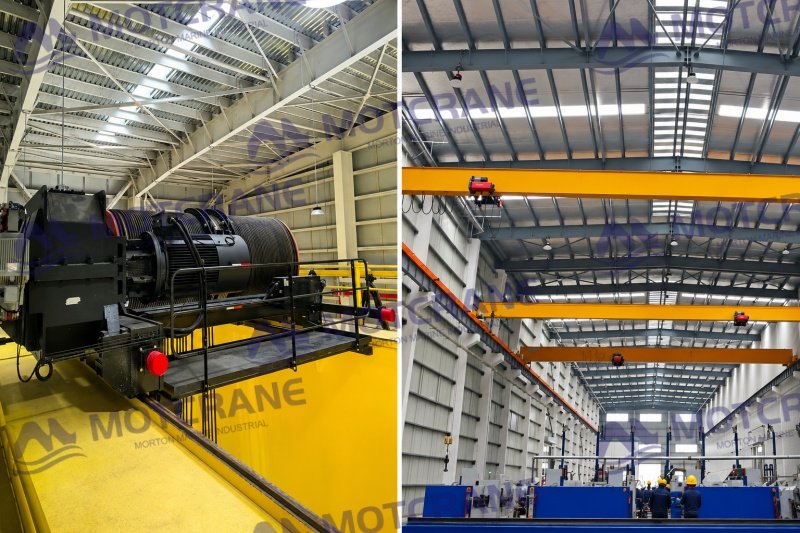
Electric Hoist Trolley vs Winch Trolley: Key Differences
An electric hoist trolley uses a standardized, modular hoisting system. It has a compact structure, is relatively easy to install and maintain, and usually offers better spare-parts interchangeability.
This configuration is commonly used for intermittent lifting tasks with standard operating requirements. Under Chinese crane duty classifications, electric hoist trolleys are often used for A3 to A5 applications, although the final duty class depends on the specific hoist design.
An open winch trolley is designed around the requirements of a particular project. The drum, wire rope reeving, motor, gearbox, brake, lifting speed, and control system can all be selected separately.
This gives the open winch trolley greater flexibility for continuous operation, high-duty applications, large lifting heights, or special control requirements. It is commonly used in A5 to A7 bridge crane projects, including steel production, shipbuilding, metallurgy, and heavy equipment manufacturing.
Neither trolley is automatically better. They are designed for different operating conditions.
When Should You Choose an Electric Hoist Trolley?
An electric hoist trolley normally uses a standardized electric wire rope hoist as its main lifting mechanism.
An electric hoist trolley is usually suitable when:
- The materials handled each day are relatively consistent.
- The crane operates intermittently rather than continuously.
- Lifting height and speed requirements are standard.
- Easy maintenance and common spare parts are important.
- No complex or highly customized control system is required.
Typical applications include machining workshops, assembly areas, warehouses, equipment maintenance facilities, and general manufacturing plants.
Electric hoist trolleys are not limited to low-capacity cranes. When the hoist duty class and crane structure are properly selected, they can also be used on medium- and high-capacity bridge cranes. Some double-girder electric hoist trolley designs are available for capacities up to approximately 80 metric tons.
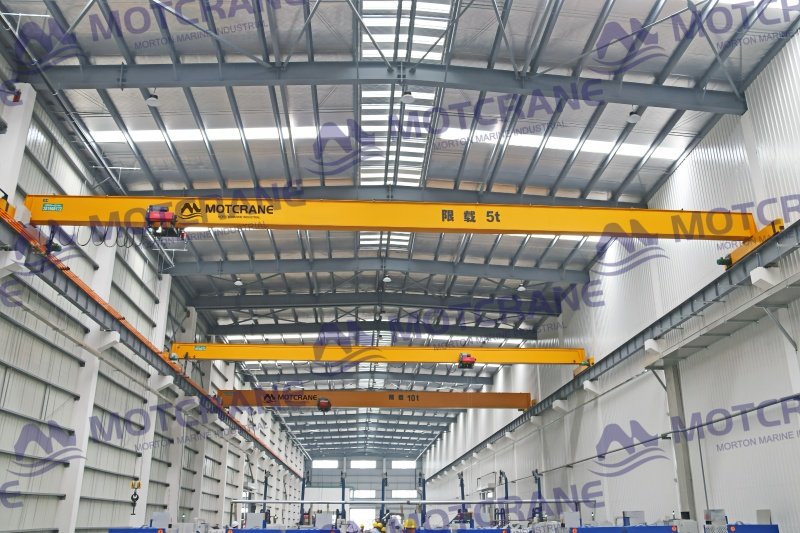
When Should You Choose an Open Winch Trolley?
An open winch trolley is usually more suitable when the project requires:
- Long operating hours or frequent lifting cycles.
- A higher crane duty class.
- Greater lifting height.
- Special lifting speeds or a wider speed-control range.
- Redundant brakes, dual drums, or other customized features.
- Special control or safety monitoring systems.
These configurations are more common in steel fabrication, shipbuilding, metallurgical plants, heavy machinery production, and high-intensity production lines.
However, a more complex trolley does not always mean a better solution. If a standardized electric hoist trolley already meets the operating requirements, an open winch trolley may only increase the purchase cost, maintenance workload, and system complexity.
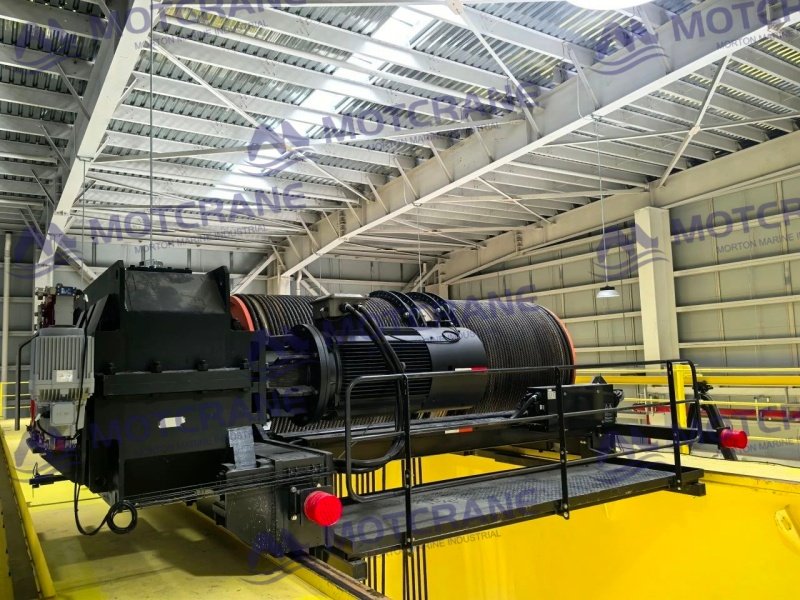
Why Can Two 10-Ton Bridge Cranes Use Different Trolleys?
Consider two bridge cranes, both rated at 10 metric tons.
The first crane is installed in a general manufacturing workshop and performs a limited number of lifts each day. Its loads are relatively consistent, and the lifting height and speed requirements are standard. An electric hoist trolley may be sufficient.
If greater hook height is required, a double-girder bridge crane with a trolley-mounted electric hoist may provide better headroom utilization.
The second crane is used to move large steel structures throughout each production shift. It starts and stops frequently, requires a greater lifting height, and operates at a higher duty class. In this case, an open winch trolley is usually more suitable.
The lifting capacity is the same, but the operating conditions are completely different. This is why tonnage alone cannot determine the correct bridge crane trolley configuration.
What Should Be Confirmed Before Selection?
Before choosing an electric hoist trolley or open winch trolley, confirm:
- Maximum lifting capacity.
- Required lifting height.
- Daily operating hours.
- Number of lifting cycles per hour.
- Required crane duty class.
- Load type and working process.
- Single-speed, dual-speed, or variable-frequency hoisting.
- Remote control, cabin control, or intelligent control requirements.
- Available headroom.
- Possible future production expansion.
The more accurately these conditions are defined, the easier it is to select a trolley that meets both current and future operating requirements.
For general safety and operating reference, OSHA provides requirements for overhead and gantry cranes.
Summary
In an electric hoist trolley vs winch trolley decision, lifting capacity is only one part of the selection process. Duty class, operating frequency, lifting height, maintenance requirements, and actual lifting tasks are usually more important.
An open winch trolley is more suitable for continuous operation, higher duty classes, large lifting heights, and customized lifting or control requirements.
When comparing an electric hoist trolley vs winch trolley, focus on duty class, operating frequency, lifting height, control requirements, and actual lifting tasks rather than lifting capacity alone.
If you are planning a bridge crane project, you can send MOTCRANE your crane requirements, including capacity, span, lifting height, duty class, daily operating hours, and control method.



 English
  Russian
  French
  Spanish
  Arabic
  Indonesian
  Japanese