


Wire Rope Hoist for Crane: Common Types and Selection Guide
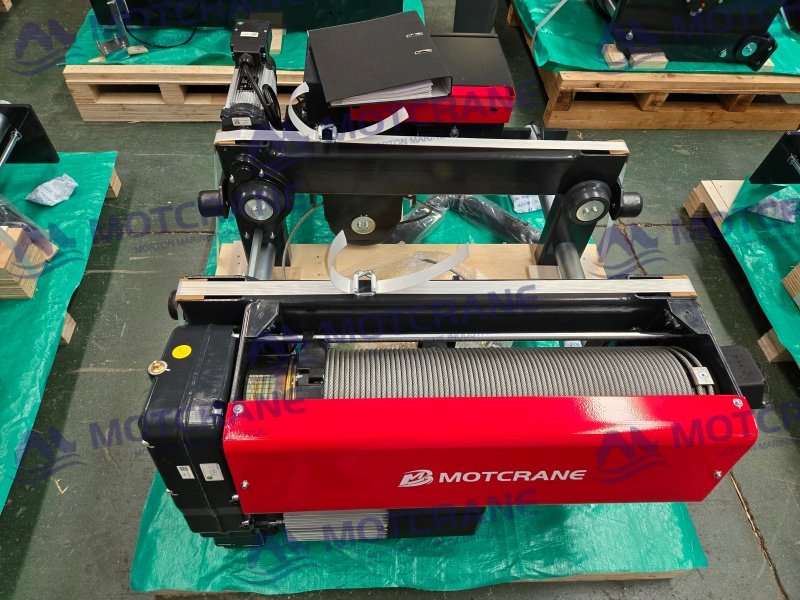
When purchasing a crane, many customers first focus on lifting capacity, span, and lifting height. However, one key component is often overlooked: the wire rope hoist. This wire rope hoist for crane guide explains how different crane structures affect the final hoist configuration.
In fact, two cranes with the same lifting capacity may use completely different hoist configurations. For example, a 10-ton single girder overhead crane usually uses a suspended wire rope hoist mounted under the main girder, while a 10-ton double girder overhead crane is more likely to use a trolley-mounted wire rope hoist running between the two girders.
That is why selecting a wire rope hoist for crane applications should not be based on lifting capacity alone. Crane structure, lifting height, duty cycle, available headroom, installation space, and working environment all affect the final hoist selection.
Wire Rope Hoist for Crane: Common Configurations
The following table gives a quick overview of common wire rope hoist for crane configurations in different applications.
| Crane Type | Common Hoist or Lifting System |
| Single Girder Overhead Crane | Standard wire rope hoist / Low headroom wire rope hoist / Electric chain hoist |
| Double Girder Overhead Crane | Trolley-mounted wire rope hoist / European wire rope hoist / Open winch hoist |
| Single Girder Gantry Crane | Standard wire rope hoist / Low headroom wire rope hoist |
| Double Girder Gantry Crane | Trolley-mounted wire rope hoist / Open winch hoist |
| Hydraulic Gantry Crane | Hydraulic jacking system / Synchronous hydraulic lifting system |
| Jib Crane | Electric chain hoist / Manual chain hoist / Small wire rope hoist |
| Marine Crane | Marine winch / Hydraulic lifting system / Offshore lifting winch / Pneumatic hoist |
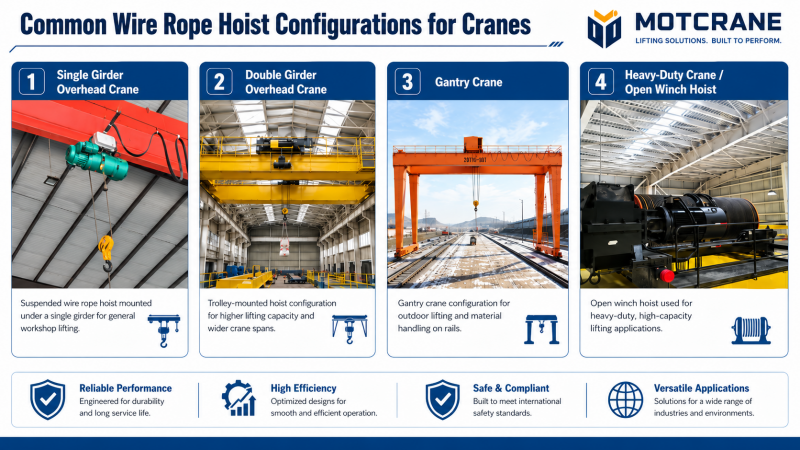
Most industrial overhead cranes, gantry cranes, and some jib cranes use electric wire rope hoists because they provide good lifting capacity, higher lifting height, and stable operation for repeated lifting tasks.
However, there is no single hoist type that fits every crane. Hydraulic gantry cranes, marine cranes, and offshore lifting projects often require hydraulic systems, marine winches, pneumatic hoists, or other dedicated lifting solutions.
Why the Same Capacity Crane May Use a Different Hoist
Wire rope hoist for crane selection depends on more than lifting capacity.
First, the crane structure matters. A single girder overhead crane usually uses a suspended wire rope hoist. A double girder overhead crane is better suited for a trolley-mounted wire rope hoist or an open winch hoist. A gantry crane must also consider outdoor wind load, rain, temperature changes, and ground conditions. A marine crane must work reliably in salt fog, high humidity, and corrosive environments.
Second, the duty cycle matters. A crane used for equipment maintenance may only operate a few times per day, while a crane used on a production line may handle frequent lifting cycles. The higher the working frequency, the more important the motor, gearbox, brake, control system, and safety monitoring become.
Available headroom is another important factor. If installation space is limited, a standard wire rope hoist may not provide enough hook height. In this case, a low headroom wire rope hoist is usually a better option. It can increase the effective lifting height without changing the building structure.
Hoist Selection for Common Crane Types
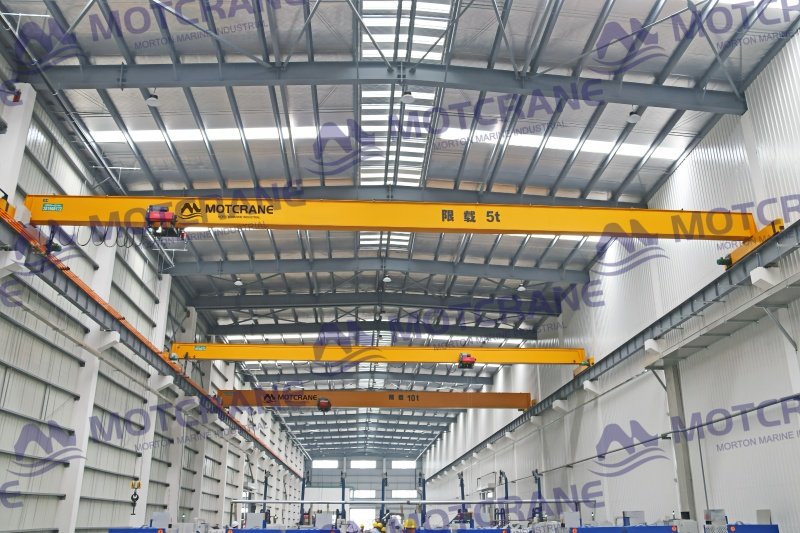
For single girder overhead cranes, standard wire rope hoists and low headroom wire rope hoists are commonly used for 1-ton to 20-ton projects. A standard hoist is suitable for most general workshop lifting tasks. If the workshop height is limited, a low headroom hoist should be considered first.
For double girder overhead cranes, trolley-mounted wire rope hoists, European wire rope hoists, and open winch hoists are more common when the lifting capacity, lifting height, or duty cycle increases. For projects above 30 tons or high-duty applications, an open winch hoist is often more suitable for long-term heavy-duty operation.
For gantry cranes, the hoist selection should consider span, capacity, and working environment. Single girder gantry cranes often use standard or low headroom wire rope hoists. Double girder gantry cranes used for heavy loads, long spans, or frequent lifting usually use trolley-mounted hoists or open winch hoists.
Hydraulic gantry cranes are different from traditional gantry cranes. In many heavy equipment installation projects, the main lifting system is not an electric wire rope hoist. Instead, hydraulic cylinders, hydraulic jacking systems, or synchronous hydraulic lifting units are used. In these cases, the main selection focus shifts to synchronization control, jacking capacity, load distribution, and overall stability.
Jib cranes are mainly used for local workstation lifting. For light-duty applications, a manual chain hoist or electric chain hoist may be enough. If higher lifting height, faster lifting speed, or more frequent operation is required, a small wire rope hoist can be a better choice.
Marine cranes require special consideration. A standard industrial wire rope hoist is usually not designed for long-term marine use. Marine applications often require marine winches, hydraulic lifting systems, pneumatic hoists, anti-corrosion coatings, sealed motors, seawater-resistant brakes, marine-grade wire rope, and classification society certification.
Simple Guide by Lifting Capacity
| Lifting Capacity | Common Configuration |
| 1–20 tons | Single girder wire rope hoist / Low headroom wire rope hoist |
| 5–80 tons | Double girder wire rope hoist / Double girder low headroom hoist |
| Above 10 tons | Open winch hoist / Heavy-duty trolley-mounted hoist |
This table is only a general reference. The final crane hoist selection should still be confirmed according to lifting height, duty cycle, installation space, and working environment.
Common Mistakes in Hoist Selection
Many projects focus only on lifting capacity and ignore the duty cycle. As a result, the hoist can lift the load but may not perform reliably over long-term operation.
Another common problem is headroom miscalculation. If the available height is not checked early, the hook may not reach the required lifting position after installation.
For cranes used frequently, choosing a duty class that is too low may reduce service life and increase maintenance costs. It is also not recommended to select only the lowest price. For industrial lifting equipment, reliability, maintainability, and service life are often more important than the initial purchase cost.
Information Needed for Wire Rope Hoist for Crane Selection
Before requesting a quote, it is helpful to prepare the lifting capacity, lifting height, span, duty cycle, available headroom, working environment, power supply, and crane type.The more complete these details are, the more accurate the proposal will be. It also helps avoid repeated design changes later.
For general crane safety reference, OSHA provides requirements for overhead and gantry cranes, including inspection and operating considerations.
Frequently Asked Questions
1. What is the difference between a wire rope hoist and a winch?
A wire rope hoist usually integrates lifting, travel, and control functions. It is commonly used on overhead cranes and gantry cranes. A winch mainly winds and unwinds wire rope and is more common in high-capacity, long-travel, metallurgical, or special lifting projects.
2. Can only the hoist be replaced without replacing the entire crane?
In many cases, yes. However, the main girder structure, rail size, power supply, travel mechanism, and new hoist configuration must be checked before replacement.
3. Can a standard wire rope hoist be converted to a low headroom hoist?
Usually, it is not recommended. A low headroom wire rope hoist has a different installation structure from a standard hoist. If headroom is limited, it is better to choose a low headroom solution at the beginning of the project.
Summary
Choosing a wire rope hoist for crane applications is not only about lifting capacity. Crane structure, available headroom, duty cycle, working environment, and future expansion needs all affect the final configuration.
If you are planning a new crane project or upgrading an existing lifting system, request a hoist solution from MOTCRANE with your lifting capacity, lifting height, crane type, working frequency, environment, and site conditions. Our engineers can recommend a suitable wire rope hoist or lifting mechanism based on your actual application.



 English
  Russian
  French
  Spanish
  Arabic
  Indonesian
  Japanese