


Les grues sont largement utilisées dans les usines, les entrepôts, les ports, les chantiers navals et les projets de construction pour soulever et déplacer des matériaux lourds. Les différentes industries et environnements de travail nécessitent des solutions de grue différentes, c'est pourquoi le choix de la grue adéquate est important pour l'efficacité comme pour les coûts d'exploitation à long terme.
Alors que toutes les grues sont conçues pour soulever et déplacer des charges, différentes applications nécessitent différents types de grues. Par exemple, les potences sont souvent utilisées pour le levage localisé près des postes de travail fixes, les ponts roulants sont mieux adaptés à la manutention de matériaux sur de grandes surfaces intérieures, et les portiques sont couramment utilisés dans les cours extérieures et les chantiers navals.
Choisir la mauvaise grue peut réduire l'efficacité de la manutention, augmenter les coûts de maintenance et raccourcir la durée de vie de l'équipement. Avant d'acheter une grue, il est important de comprendre les principaux types de grues, leurs composants clés, leurs principes de fonctionnement et les paramètres de sélection de base.
Ce guide présente les types de grues industrielles courants, leurs applications, leurs principaux composants et les facteurs clés à prendre en compte lors de la sélection d'une grue.
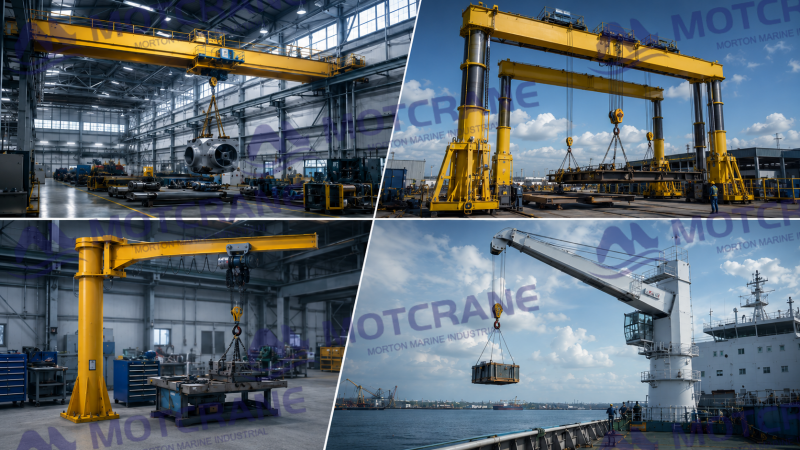
Qu'est-ce qu'une grue ?
Une grue est un appareil de levage mécanique utilisé pour soulever, abaisser et déplacer des charges lourdes. La plupart des systèmes de grue se composent d'un mécanisme de levage, d'un mécanisme de translation, d'une structure en acier et d'un système de commande qui fonctionnent ensemble pour accomplir les tâches de manutention.
Dans les projets industriels, une grue est plus qu'un simple équipement de levage. La sélection de la grue affecte l'efficacité de la production, l'agencement de l'atelier, la sécurité opérationnelle, les besoins de maintenance et les coûts d'exploitation à long terme.
Lors de la sélection d'une grue, les facteurs suivants doivent généralement être confirmés :
- Capacité de levage
- La portée
- Hauteur de levage
- Classe de service
- Fréquence d'utilisation
- Installation intérieure ou extérieure
- Espace d'installation disponible
- Dimensions de chargement et méthode de manutention
Une fois ces conditions clarifiées, il devient beaucoup plus facile de déterminer si une grue pont roulant, une grue portique, une potence ou une autre solution de levage convient au projet.
Principaux types de grues
Différents types de grues sont conçus pour différents environnements de travail. Il n'existe pas de grue unique convenant à toutes les applications, par conséquent, la sélection d'une grue doit toujours être basée sur les conditions réelles du site et les exigences de levage.
Ponts roulants
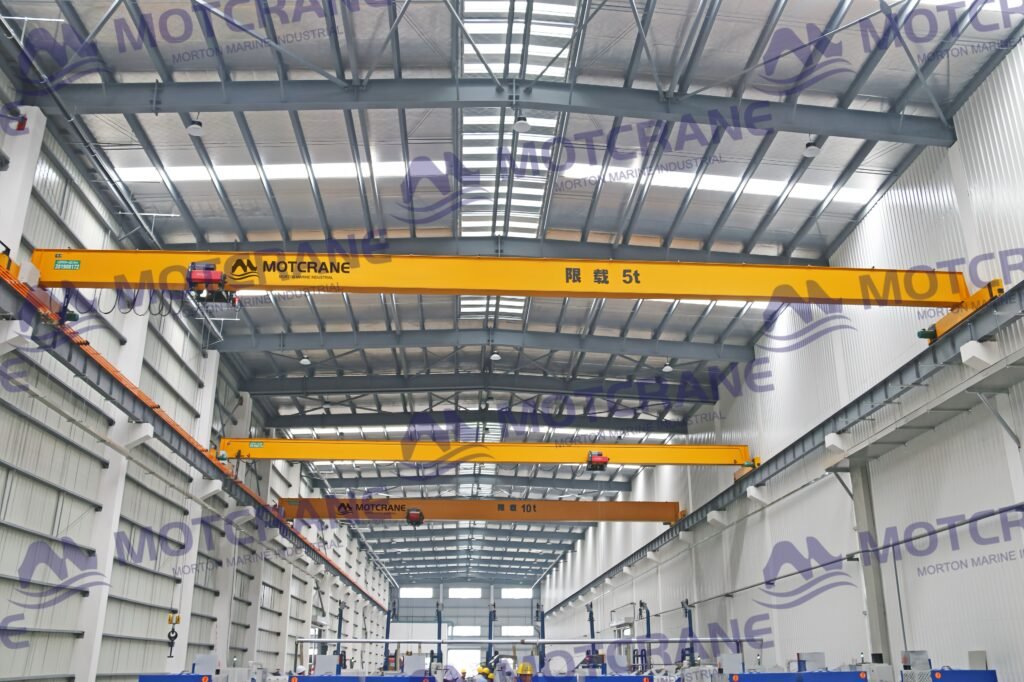
Les ponts roulants, également appelés grues ponts, sont couramment installés dans les usines, les entrepôts, les ateliers et les installations de production. Ils se déplacent sur des poutres de roulement surélevées et permettent aux charges de se déplacer longitudinalement, transversalement et verticalement dans toute la zone de travail.
Les ponts roulants sont idéaux pour la manutention intérieure lorsque l'espace au sol est limité mais qu'une grande couverture de levage est requise.
Les types courants de ponts roulants comprennent :
- Ponts roulants à poutre unique
- Ponts roulants à double poutre
- Ponts roulants de style européen
- Ponts roulants sidérurgiques
- Ponts roulants antidéflagrants
Les ponts roulants sont largement utilisés dans les usines de fabrication, les ateliers de machines, les installations de fabrication d'acier, les entrepôts et les chaînes de montage.
Ponts roulants
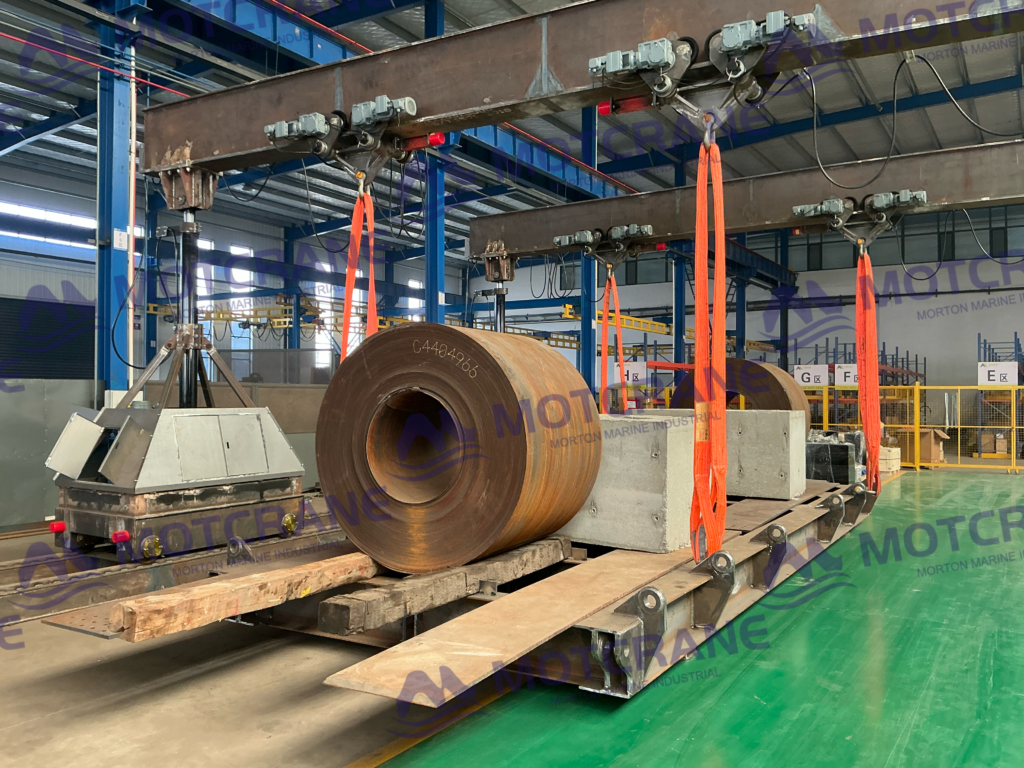
Une potence roulante est similaire à un pont roulant, mais au lieu de s'appuyer sur des structures de bâtiment, elle est supportée par ses propres pieds et circule généralement sur des rails au sol ou sur des pneus en caoutchouc.
Les portiques sont couramment utilisés dans les parcs à matériaux extérieurs, les chantiers navals, les ports, les parcs de préfabrication, les zones de stockage d'acier et les applications de manutention de gros équipements.
Les types courants de portiques comprennent :
- Ponts roulants monopoutre
- Ponts roulants à deux poutres
- Grues à semi-portique
- Grues portiques portables
- Ponts roulants en aluminium
- Grues portiques hydrauliques
- Treuils de levage de bateaux mobiles
- Tracteurs de parc
Pour les applications de levage en extérieur ou sur des sites sans structures de support de bâtiment adaptées, les portiques sont souvent la solution privilégiée.
Palan à flèche
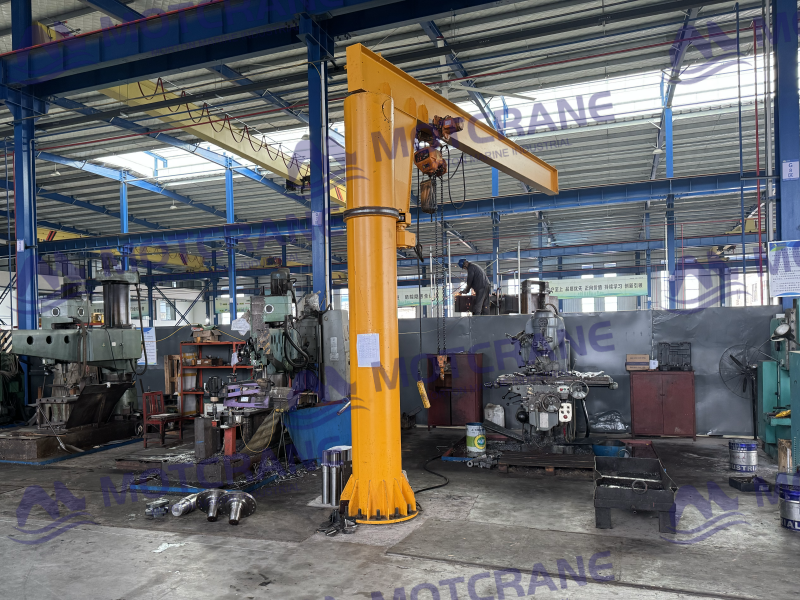
Les potences pivotantes sont principalement utilisées pour le levage localisé dans une zone de travail fixe. Elles se composent généralement d'un support sur colonne ou mural, d'une potence, d'un mécanisme de pivotement et d'un palan.
Comparés aux systèmes de grues plus grands, les potences ont une structure plus simple, nécessitent moins d'espace d'installation et sont plus faciles à utiliser. Ils sont couramment installés près des postes de travail, des zones d'assemblage, des équipements d'usinage, des zones de maintenance et des points de chargement.
Les types courants de potences comprennent :
- Grues à flèche sur colonnes
- Grues à flèche murale
- Chariots porte-flèche muraux
- Grues portuaires mobiles
Pour les tâches de levage répétitives près des postes de travail individuels, les potences de levage peuvent améliorer l'efficacité du flux de travail et réduire la manutention manuelle.
Grues mobiles
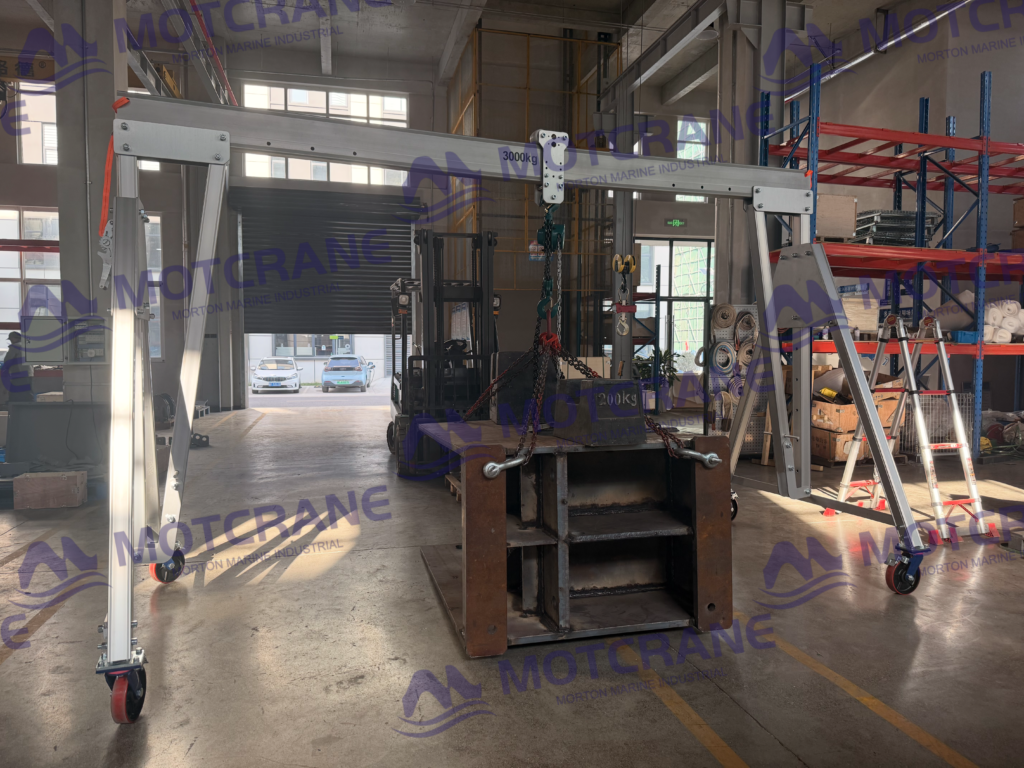
Les grues mobiles sont des engins de levage conçus pour se déplacer entre différentes zones de travail. Selon l'application, elles peuvent utiliser des pneus en caoutchouc, des chenilles ou des systèmes de translation sur rails.
Leur principal avantage est la mobilité, ce qui les rend adaptés aux opérations de levage temporaires, aux projets de construction, aux travaux d'assemblage modulaire et aux applications nécessitant que l'équipement de levage se déplace fréquemment entre les sites.
Lors de l'utilisation de grues mobiles, les facteurs importants comprennent :
- Capacité portante du sol
- Rayon d'action
- Hauteur de levage
- Stabilité de la machine
- Limites du graphique de chargement
Les systèmes de grues mobiles courants comprennent grues portiques portables, systèmes de portiques hydrauliques, potences mobiles pour bateaux, et les chariots cavaliers.
Grues marines
Les grues marines sont généralement installées sur des navires, des quais, des chantiers navals, des plateformes offshore ou des équipements de génie maritime. Elles sont utilisées pour la manutention de fret, l'entretien des navires, les opérations de levage sur pont et les travaux de construction offshore.
Comparés aux grues industrielles standard, les grues marines fonctionnent dans des environnements plus exigeants. L'embrun salin, l'humidité, l'espace limité sur le pont, la corrosion et les structures environnantes affectent toutes la conception et le fonctionnement des grues.
Lors de la sélection d'une grue marine, les facteurs suivants doivent être soigneusement examinés :
- Capacité de levage
- Rayon de travail
- Configuration de la bombe
- Position d'installation
- Exigences de protection contre la corrosion
- Certification par une société de classification
- Environnement d'exploitation
La sélection d'une grue marine nécessite généralement des informations de projet plus détaillées que les grues d'atelier standard.
Composants principaux d'une grue et leurs fonctions
Un système de grue est composé de plusieurs éléments clés. Chaque partie affecte directement les performances de levage, la sécurité, la stabilité d'exploitation et la durée de vie de l'équipement.
Treuil électrique / Mécanisme de levage
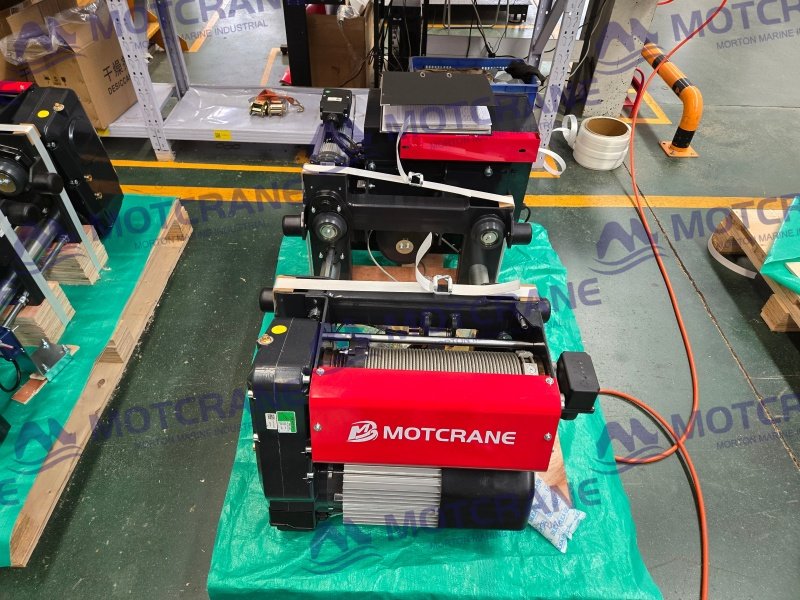
Le palan électrique est le composant de levage central responsable de la montée et de la descente des charges. Il comprend généralement des câbles métalliques ou des chaînes, des tambours, des crochets, des moteurs, des réducteurs et des systèmes de freinage.
Les types de palans courants comprennent :
- Treuils à câble électrique
- Palan à chaîne électrique
- Palans électriques de type européen
La sélection du palan affecte la vitesse de levage, la hauteur de levage, les performances de service, la protection de la sécurité et la fiabilité à long terme.
Poutre maîtresse / Structure de pont
La poutre principale est l'une des structures porteuses primaires d'une grue. Elle supporte le palan, le chariot et la charge soulevée.
Les configurations de poutre courantes comprennent :
- Structures à poutre unique
- Structures à double poutre
- Structures en caissons
La conception de la poutre principale affecte directement la capacité de charge, la rigidité structurelle, la portée et la stabilité de fonctionnement. Une mauvaise conception structurelle peut entraîner une déflexion excessive, des vibrations ou un fonctionnement instable.
Boggies de bout
Les chariots d'extrémité sont généralement installés aux deux extrémités de la structure de la grue et sont équipés de roues, d'unités d'entraînement et de mécanismes de translation. Ils sont responsables du déplacement du pont roulant le long du chemin de roulement tout en transférant la charge du pont roulant et les forces structurelles aux rails ou à la structure de support. Un système de chariot d'extrémité bien conçu aide à réduire les vibrations et le bruit tout en améliorant la précision du positionnement et la stabilité opérationnelle globale.
Système de contrôle
Le système de contrôle gère le mouvement de la grue, les opérations de levage, la protection de la sécurité et la coordination opérationnelle.
Les méthodes de contrôle courantes comprennent :
- Télécommande sans fil
- Commande suspendue
- Cabine de contrôle
- Systèmes de contrôle PLC
- Variateurs de fréquence (VFD)
- Systèmes de contrôle synchrones intelligents
Pour la plupart des applications d'atelier, la télécommande sans fil est généralement suffisante. Les projets lourds ou de haute précision peuvent nécessiter des systèmes de contrôle et de positionnement plus avancés.
Comment fonctionnent les grues
Les grues effectuent la manutention des matériaux grâce à l'action coordonnée du mécanisme de levage, du mécanisme de translation, de la structure en acier et du système de commande.
- Le mécanisme de levage monte et descend la charge
- Le mécanisme de déplacement déplace la charge horizontalement
- Le système de contrôle gère les fonctions de mouvement et de sécurité
En combinant les mouvements de levage et de translation, les grues peuvent soulever des charges d'un endroit, les transporter à travers la zone de travail et les positionner avec précision.
Par exemple :
- Les ponts roulants déplacent des matériaux dans les ateliers et les entrepôts.
- Les potences rotatives traitent le levage localisé près des postes de travail fixes
- Les grues portiques transportent de gros composants dans les cours extérieures ou les chantiers navals
- Les grues marines effectuent des opérations de levage sur des navires et des structures offshore
Paramètres de base de la grue
Avant de demander un devis de grue, il est important de confirmer le type de grue et plusieurs paramètres techniques clés. Plus l'information sera claire, plus la conception et le devis de la grue seront précis.
Capacité de levage
La capacité de levage désigne le poids maximum qu'une grue peut soulever en toute sécurité.
Lors de la détermination de la capacité de levage, la charge totale doit inclure non seulement le poids du matériau lui-même, mais aussi les poutres de levage, les pinces, les aimants, les crochets ou tout autre accessoire de levage.
Pour les projets susceptibles d'une expansion future, il est généralement recommandé de laisser une marge de capacité supplémentaire.
La portée
La portée est principalement utilisée pour les ponts roulants et les portiques. Elle désigne habituellement la distance horizontale entre les axes des rails de roulement. La portée détermine la largeur de la zone de travail que la grue peut couvrir. Les portées plus grandes nécessitent une plus grande rigidité structurelle et un fonctionnement de grue plus stable.
Hauteur de levage
La hauteur de levage désigne la distance verticale entre les positions de travail les plus basses et les plus hautes de l'hameçon. Ce paramètre affecte directement la capacité de la grue à répondre aux exigences de levage réelles du projet. Lors du calcul de la hauteur de levage, des facteurs tels que la hauteur du bâtiment, l'approche du crochet, la taille de la charge et les conditions d'installation doivent tous être pris en considération.
Classe ouvrière
La classe de travail reflète l'intensité de travail de la grue, y compris la fréquence de fonctionnement, les conditions de charge, les cycles de service et l'environnement de travail.
Par exemple :
- Les grues utilisées occasionnellement pour la maintenance sont souvent classées A3.
- Les grues utilisées dans les ports et les chantiers navals sont couramment classées A5 ou plus.
- Les grues métallurgiques dans les aciéries sont généralement classées A6 ou au-dessus.
Choisir la classe de travail appropriée est important pour la sécurité, la durabilité et la fiabilité d'exploitation à long terme.
Applications des grues dans différentes industries
Les grues sont largement utilisées dans de nombreuses industries, mais les exigences de levage et les environnements d'exploitation varient considérablement d'une industrie à l'autre.
Fabrication
Dans les installations de fabrication, les grues sont couramment utilisées pour la manutention des matières premières, le transfert de composants usinés, le levage de moules, l'assemblage d'équipements et le déplacement des produits finis.
Les types de grues courants comprennent les ponts roulants, les grues à potence, les systèmes de portiques hydrauliques et les portiques sur pneus.
Sideries
Dans les aciéries, les grues sont utilisées pour la manutention des billettes, des tôles d'acier, des bobines d'acier, des profilés, des poches de coulées et des équipements de maintenance. Ces applications nécessitent généralement des grues robustes avec une résistance aux hautes températures et des classes de service plus élevées. Les ponts roulants métallurgiques à double poutre font partie des solutions les plus courantes.
Chantiers navals
Les grues de chantier naval sont utilisées pour soulever des sections de navires, des structures en acier, des équipements marins, des moteurs, des modules de tuyauterie et des matériaux de réparation. Les ponts roulants à poutre unique et à double poutre sont couramment utilisés dans les projets de construction et de réparation navale.
Ports
Dans les ports, les grues sont essentielles pour la manutention des conteneurs, le mouvement des marchandises en vrac, le chargement des navires et la logistique de cour. L'équipement courant de levage portuaire comprend les portiques, les portiques mobiles pour bateaux et les chariots cavaliers.
Comment choisir la bonne grue
La sélection de la bonne grue commence par la compréhension des exigences réelles du projet. Premièrement, déterminez si la grue sera installée à l'intérieur ou à l'extérieur. Les grues extérieures nécessitent généralement une protection supplémentaire contre la corrosion, une résistance aux intempéries et la prise en compte de la charge de vent. Deuxièmement, déterminez le poids et les dimensions de la charge, les points de levage, la fréquence de manipulation et si des dispositifs de levage spéciaux tels que des palans, des pinces ou des aimants sont nécessaires. Enfin, examinez les conditions d'installation, notamment :
- Hauteur du bâtiment
- Espacement des colonnes
- Poutre de piste
- Conditions de fondation
- Espace de travail disponible
- Alimentation électrique
- Itinéraire de manutention
Pour les projets plus complexes, la fourniture de photos du site, de plans d'implantation et de paramètres de fonctionnement de base peut aider les ingénieurs à recommander une solution de grue plus appropriée.
FAQ à propos des grues
1. À quelle fréquence une grue doit-elle être inspectée ?
La fréquence d'inspection dépend principalement de l'utilisation de la grue et des conditions de travail. Pour la plupart des grues industrielles, des inspections de routine devraient être effectuées régulièrement, tandis qu'une inspection annuelle plus complète est également recommandée. Les applications lourdes telles que les ports, les aciéries et les chantiers navals nécessitent généralement des calendriers d'inspection plus stricts.
2. Quels sont les dispositifs de sécurité couramment utilisés sur les grues ?
Les dispositifs de sécurité courants pour les grues comprennent :
- Limiteurs de surcharge
- Limiteurs de course
- Limitateurs de course de palan
- Boutons d'arrêt d'urgence
- Systèmes anti-collision
- Systèmes de protection des freins
- Systèmes de surveillance de charge
Certains systèmes de grue intelligents peuvent également inclure des fonctions de diagnostic à distance, de surveillance d'état et d'anti-balancement.
3. Combien de temps durent généralement les grues industrielles ?
Avec un entretien approprié, de nombreuses grues industrielles peuvent fonctionner de manière fiable pendant 20 à 30 ans. Cependant, des environnements difficiles tels que les températures élevées, l'humidité, la poussière, la corrosion ou un fonctionnement continu et intensif peuvent réduire la durée de vie de l'équipement. Les inspections de routine et le remplacement en temps voulu des composants usés sont importants pour prolonger la durée de vie utile.
4. Les grues peuvent-elles être personnalisées pour différentes industries ?
Oui. Les grues industrielles sont souvent personnalisées en fonction de l'application et de l'environnement d'exploitation. Par exemple, les aciéries peuvent nécessiter des conceptions résistantes à la chaleur, tandis que les projets maritimes nécessitent généralement une protection plus solide contre la corrosion. Fournir des photos du site et des détails de fonctionnement pendant la phase de devis peut aider les ingénieurs à recommander une configuration plus adaptée.
5. Comment les conditions environnementales affectent-elles les performances d'une grue ?
Les conditions environnementales affectent directement la stabilité, la fiabilité de fonctionnement et la durée de vie des grues. Les températures élevées peuvent accélérer le vieillissement des composants électriques, tandis que les environnements humides ou sujets aux embruns salins peuvent augmenter la corrosion des structures en acier. Les environnements poussiéreux peuvent également augmenter l'usure des composants électriques et mécaniques. Pour les ports, les chantiers navals et les applications offshore, la protection contre la corrosion et les performances d'étanchéité sont particulièrement importantes.
Dernières réflexions
La sélection d'une grue ne doit pas être basée uniquement sur la capacité de levage ou le prix. Une solution de grue appropriée doit tenir compte de l'environnement de travail réel, des conditions d'installation, des exigences de manutention, de la fréquence d'utilisation et des besoins de maintenance futurs.
Si vous planifiez un projet de grue, vous pouvez fournir à MOTCRANE des photos du site, des croquis d'implantation, la capacité de levage, la portée, la hauteur de levage et les exigences opérationnelles de base. Notre équipe d'ingénieurs peut vous aider à examiner les conditions d'installation et recommander une solution de grue qui correspond mieux aux exigences de votre projet.



 French
  English
  Russian
  Spanish
  Arabic
  Indonesian
  Japanese