


Une potence peut-elle être utilisée à l'extérieur ?
Quand les gens pensent à un grue à flèche, ils imaginent généralement un atelier intérieur, une station d'assemblage ou une zone de maintenance. C'est compréhensible, car les potences élévatrices sont le plus souvent installées à proximité d'équipements ou de postes de travail fixes à l'intérieur des bâtiments d'usine, là où une levée localisée dans une zone limitée est nécessaire quotidiennement. Mais dans les projets réels, une potence élévatrice n'est pas limitée à un usage intérieur. Sous certaines conditions, elle peut également être utilisée à des points de travail extérieurs fixes, tels que des zones de service à quai, des points de maintenance au bord de la rivière, des postes de levage auxiliaires près de petites plateformes, des zones de réparation extérieures ou certaines zones de travail semi-ouvertes.
La vraie question n'est donc pas simplement de savoir si une potence peut être utilisée à l'extérieur. La question la plus importante est : Sous quelles conditions extérieures une grue à potence prend-elle sens et que faut-il vérifier avant de la configurer pour une utilisation en extérieur ?
Pour de nombreux projets, l'utilisation en extérieur ne signifie pas passer à un produit complètement différent. Dans de nombreux cas, cela implique de revoir plus attentivement la méthode d'installation, la protection de surface, la protection électrique et la tâche de levage réelle en fonction de la structure existante de la potence et des conditions du site.
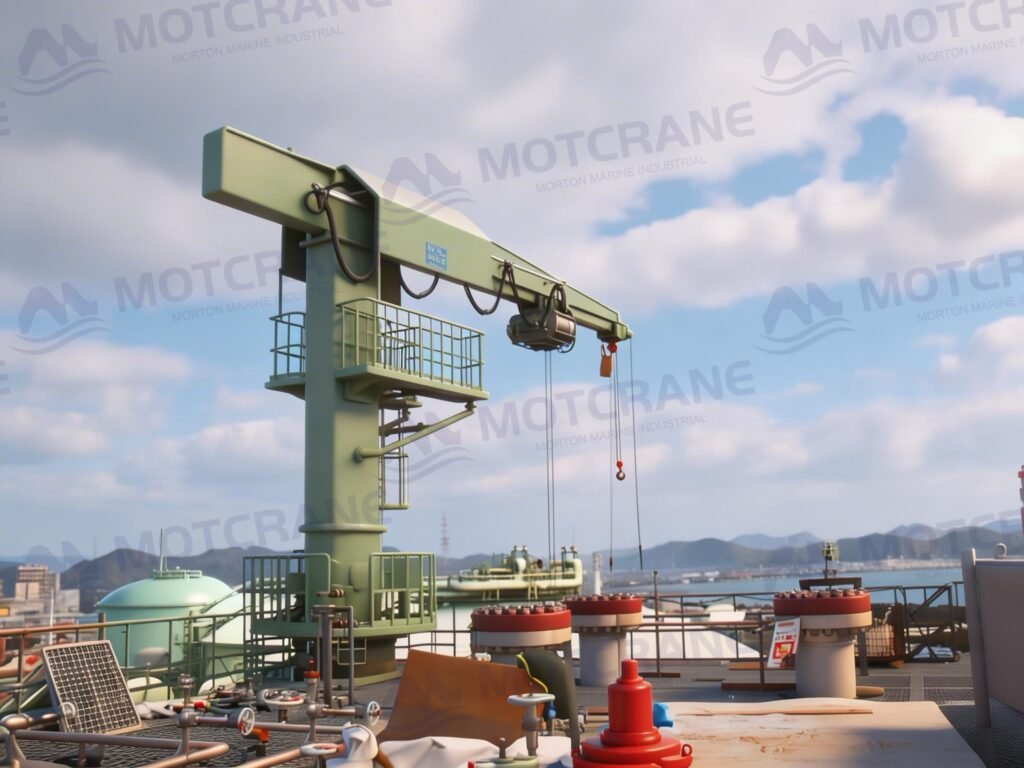
I. Une potence peut-elle être utilisée à l'extérieur ?
Oui, un La potence peut être utilisée en extérieur, lorsque l'application elle-même est appropriée et que les conditions pertinentes ont été confirmées à l'avance.
Si le travail de levage est concentré dans une zone fixe, ne nécessite pas une large couverture et n'implique pas de transport sur de longues distances, une potence peut toujours être une solution pratique pour une utilisation en extérieur. Dans ce type de projet, la grue est généralement utilisée pour soulever, aider au déplacement et positionner autour d'un point de travail défini.
La plus grande différence entre une utilisation en intérieur et en extérieur réside dans l'environnement. De nombreuses conditions qui sont considérées comme acquises à l'intérieur d'un atelier peuvent ne pas s'appliquer à l'extérieur. Les fondations d'installation, la protection anticorrosion à long terme, la compatibilité électrique, l'exposition au vent et la stabilité de la zone de travail ont tous un effet direct sur la pertinence d'une potence pivotante pour la tâche.
En d'autres termes, potence de levage extérieure des applications sont possibles, mais toutes les tâches de levage en extérieur ne conviennent pas à une potence. La bonne façon de juger est de se demander d'abord si le projet est réellement une application de levage localisée dans une zone fixe, puis de confirmer si les conditions d'installation et d'exploitation étayent ce choix.
II. Dans quels scénarios extérieurs peut-on Grue à flèche Considéré ?
Bien que les potences soient plus courantes en intérieur, elles peuvent néanmoins être pratiques dans certaines applications extérieures. Ces projets ont généralement un point commun : le travail de levage est concentré, la zone de travail est limitée et une large couverture n'est pas nécessaire.
1. Bornes de service côté quai ou côté rivière
Sur certains postes de travail à quai ou au bord de la rivière, il peut être nécessaire de soulever des outils, des pièces, du matériel léger ou des matériaux de service dans une zone limitée. Tant que le travail de levage est localisé et n'implique pas de manutention continue et intensive, une potence peut être une solution pratique.
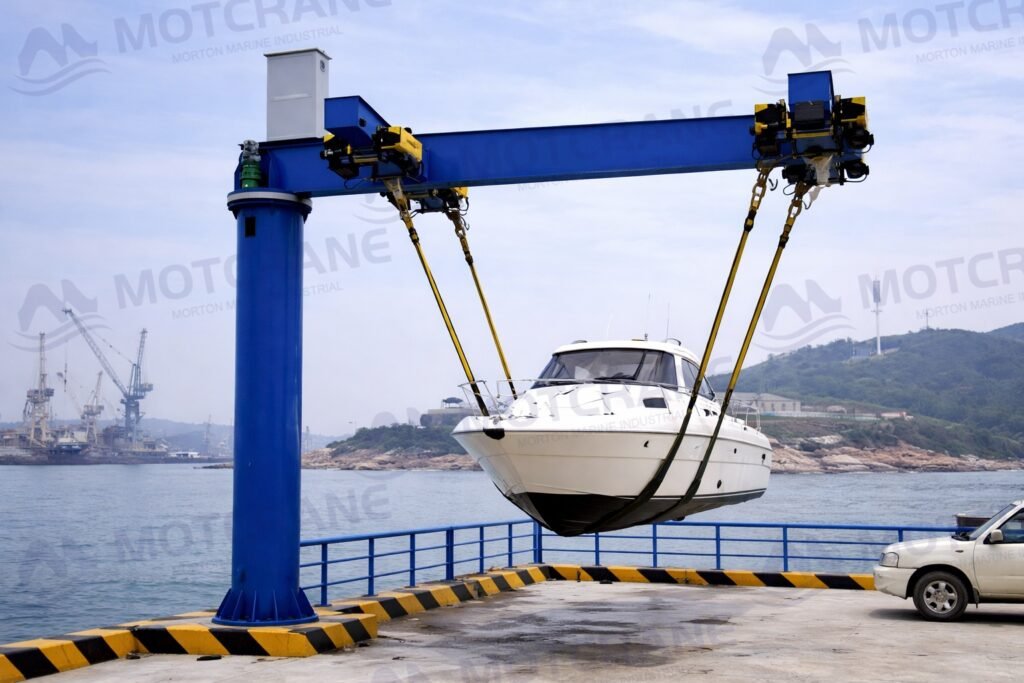
2. Aires d'entretien du matériel extérieur
Certains projets comportent des zones de maintenance situées à l'extérieur, telles que des zones de service à ciel ouvert pour de gros équipements, des points de réparation extérieurs ou des stations de maintenance semi-ouvertes. Dans ces cas, si un point de levage à proximité est nécessaire pour aider au retrait, au remplacement et au transfert de composants, une potence peut être une solution naturelle.
3. Points de levage fixes sur les toits ou les étages spécifiques du bâtiment
Une potence peut également être envisagée pour les travaux sur les toits, l'installation d'équipements, l'entretien de murs-rideaux ou le transfert de matériaux à des étages spécifiques d'immeubles de grande hauteur. Dans ces applications, la potence n'est pas toujours de type pilier autoportant. Elle peut être fixée à un poteau en béton à l'intérieur du bâtiment ou ancrée à la dalle de toiture ou à la structure du plancher pour créer un point de levage localisé pour une zone de travail spécifique.
Ce type d'application nécessite un examen très attentif. Ce qui importe, ce n'est pas seulement la capacité de levage, mais aussi la structure du bâtiment, la position de montage, la plage de pivotement disponible, le rayon d'action et la tâche de levage réelle à ce niveau ou sur ce toit.
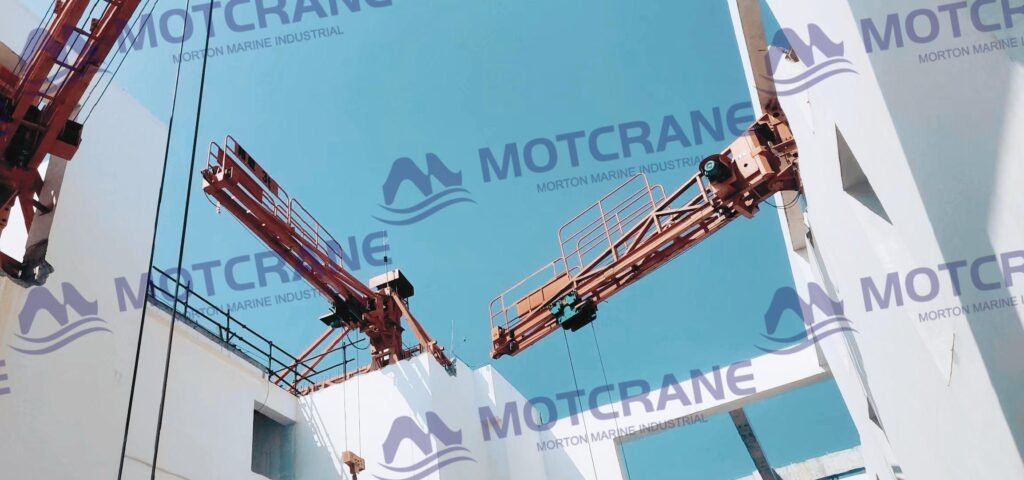
III. Pourquoi certains projets extérieurs choisissent-ils encore une potence ?
Toutes les tâches de levage en extérieur ne nécessitent pas un système de grue important. Dans certains projets, le travail est toujours concentré autour d'un point fixe, et ce dont le client a besoin n'est pas une large couverture, mais un dispositif de levage simple et fonctionnel proche du travail réel.
C'est pourquoi un Potence mobile pour usage extérieur reste intéressant à considérer dans certains cas. Il peut fournir un point de levage pratique exactement là où le travail s'effectue, sans introduire un système plus important que celui dont le projet a réellement besoin.
Ceci est particulièrement vrai pour les travaux de manutention légers ou moyens où la trajectoire de levage est courte, la plage de travail est fixe et le client souhaite une solution relativement directe et facile à intégrer sur le site.
IV. Que faut-il considérer lors de l'utilisation d'une grue à flèche en extérieur ?
La pertinence d'une potence pivotante pour un projet extérieur ne dépend pas de sa possibilité d'installation en théorie. Elle dépend si le site réel et les conditions de travail la supportent.
1. Conditions d'installation
La première étape consiste à vérifier si l'emplacement d'installation est approprié.
Ceci inclut :
♣ si le sol, la dalle ou les fondations répondent aux exigences d'installation
♣ si des obstacles à proximité affectent la trajectoire de rotation ou le mouvement de levage
♣ si le point de levage est effectivement situé là où le travail est effectué
♣ si le rayon de travail correspond à la portée de levage réelle nécessaire sur site
Pour les applications en.
2. Protection de surface et protection contre la corrosion
L'une des plus grandes différences entre une utilisation en intérieur et en extérieur est l'exposition à long terme. Les conditions extérieures imposent beaucoup plus de contraintes directes aux structures en acier, au traitement de surface et à la qualité du revêtement.
Si le projet se trouve à proximité de l'eau, dans une zone humide ou exposé à des conditions plus agressives, le traitement de surface et la protection contre la corrosion ne doivent pas simplement suivre les pratiques standard pour un usage intérieur. Le système de revêtement, le niveau de protection et l'environnement d'exploitation doivent tous être examinés tôt, et non une fois la grue déjà construite.
3. Protection électrique
Si la potence utilise un palan électrique, un pivotement motorisé ou d'autres composants électriques, le système électrique doit également être adapté aux conditions extérieures. La pluie, l'humidité, la poussière et l'exposition peuvent tous affecter la fiabilité à long terme, de sorte que la protection électrique doit être confirmée dans le cadre de la configuration.
4. Exposition au vent et impact environnemental
Les points de levage extérieurs sont affectés par des conditions qui sont souvent beaucoup moins importantes à l'intérieur. Le vent, les changements de température et l'exposition générale sont tous importants, en particulier dans les zones ouvertes, sur les toits, les points riverains et les environnements côtiers.
C'est pourquoi la sélection d'une potence extérieure ne devrait jamais être basée uniquement sur la capacité et la longueur du bras. L'environnement environnant doit faire partie de la décision.
5. La tâche de levage réelle
Toutes les tâches de levage en extérieur ne conviennent pas à une potence à flèche. Les questions clés restent très simples :
♣ Qu'est-ce qui doit être soulevé exactement ?
♣ Quel est le poids de la charge ?
À quelle fréquence la grue sera-t-elle utilisée ?
Le travail de levage est-il concentré dans une zone fixe ?
Est-ce uniquement un levage auxiliaire, ou cela implique-t-il un déplacement de matériaux plus large ?
Si le projet nécessite une grande portée, une manipulation à longue distance ou des trajectoires de levage plus complexes, une potence n'est souvent pas la meilleure solution.
6. Alimentation et mode de fonctionnement
L'alimentation électrique disponible doit également être vérifiée. Certains projets extérieurs se prêtent bien au fonctionnement électrique, tandis que d'autres peuvent être mieux adaptés à une configuration plus simple.
Le choix final dépend généralement de :
♣ si une alimentation électrique appropriée est disponible sur place
♣ à quelle fréquence la grue sera utilisée
♣ à quel point la facilité d'utilisation est importante
que le client soit davantage axé sur le budget ou sur l'efficacité au quotidien
V. Quand une potence n'est-elle pas la bonne solution extérieure ?
Une potence à flèche ne devrait pas être considérée comme la solution par défaut pour chaque projet en extérieur.
1. Lorsque la gestion sur de grandes distances ou à longue portée est requise
Si le travail implique de longs trajets, des transports inter-zones ou des manipulations répétées sur une large zone de couverture, une potence est généralement un mauvais choix. Sa force réside dans le levage localisé autour d'un point fixe, et non dans le transport sur de vastes zones.
2. Lorsque l'exposition environnementale est trop sévère
Si le site est fortement exposé au vent, à la corrosion ou à d'autres conditions difficiles, et que ces facteurs rendraient le fonctionnement à long terme difficile, alors le projet doit être examiné plus attentivement et un autre type de grue pourrait être plus approprié.
3. Lorsque les conditions d'installation sont encore floues
Si les conditions relatives à la fondation, au rayon de travail, à la position de montage ou à l'espace environnant ne sont pas encore confirmées, il est trop tôt pour supposer qu'une potence est la bonne solution. Dans de nombreux projets, le problème ne vient pas de la potence elle-même, mais du fait que les conditions du site ne sont pas encore définies.
4. Lorsque l'œuvre est déjà au-delà du levage localisé
Si le client a vraiment besoin d'une couverture plus large, d'une gestion inter-zones plus flexible ou d'un système pour des mouvements à plus haute fréquence dans une zone plus étendue, alors une configuration de grue plus grande peut être plus judicieuse.
En termes simples, une potence peut fonctionner à l'extérieur, mais c'est quand même une solution de levage localisée, pas une réponse universelle pour chaque tâche de levage en extérieur.
VI. Comment MOTCRANE aide-t-il à examiner les applications de potences extérieures ?
À MOTCRANE, nous ne répondons pas simplement par oui ou par non aux questions sur les potences porte-à-faux. Nous examinons d'abord l'application réelle.
Les points que nous confirmons habituellement incluent :
où les travaux de levage sont concentrés
si la position d'installation est appropriée
si le travail est réellement une tâche de levage localisée dans une zone fixe
♣ quel niveau de protection contre la corrosion et de protection électrique le site nécessite
♣ que le client essaie principalement de simplifier la solution, de maîtriser les coûts ou d'améliorer la facilité d'utilisation
Si le client peut fournir des photos du site, un croquis simple de l'agencement, la capacité de levage, la longueur de bras requise, la hauteur de levage et une description de base de l'environnement, il devient beaucoup plus facile de juger si une potence de levage est adaptée et quel type de configuration serait le plus judicieux.
VII. Conclusion
A La potence peut être utilisée en extérieur, mais seulement lorsque le projet se prête à ce type de solution.
Si les travaux de levage sont concentrés dans une zone fixe, ne nécessitent pas une large couverture, et que les conditions d'installation, l'exposition environnementale, la protection contre la corrosion et les exigences électriques peuvent être confirmées à l'avance, alors une potence peut encore être un choix pratique pour certaines applications extérieures.
Mais si le projet a déjà dépassé le levage localisé, ou si les conditions du site et d'installation sont encore floues, alors une solution de type intérieur ne doit pas être simplement copiée dans un environnement extérieur.
Pour de nombreux clients, la question la plus utile n'est pas seulement “ Peut-il être utilisé à l'extérieur ? ”, mais plutôt : Une potence est-elle vraiment la bonne solution pour ce projet en extérieur ?
Si vous évaluez un Potence mobile pour usage extérieur, Envoyer MOTCRANE vos photos du site, croquis de la disposition, capacité de levage, tâche de levage et informations environnementales de base. Nous pouvons vous aider à examiner les conditions réelles et suggérer une configuration plus adaptée à votre projet.



 French
  English
  Russian
  Spanish
  Arabic
  Indonesian
  Japanese