


Potence Murale vs Potence sur Colonne : Comment Choisir
Une fois qu'un client a décidé que grue à flèche est nécessaire, la question suivante n'est généralement pas de savoir s'il faut en acheter un, mais si un potence murale ou un potence murale à colonne est le meilleur choix.
Les deux sont des solutions courantes pour le levage localisé dans les ateliers, les zones de maintenance et les postes d'assemblage. Tous deux peuvent effectuer des opérations de levage, de déplacement et de positionnement dans une zone de travail fixe. Mais dans les projets réels, la différence entre eux n'est pas négligeable. La méthode d'installation, l'espace au sol, l'état du bâtiment et la manière dont la grue sera utilisée affectent tous le type qui convient le mieux.
Pour la plupart des clients, la question la plus importante au début n'est pas la capacité de levage en premier lieu, mais quelle structure est réellement la plus adaptée au site. Une fois le bon type sélectionné, l'installation et l'utilisation quotidienne sont généralement beaucoup plus faciles. Si le mauvais type est choisi, la grue peut encore fonctionner sur papier, mais elle peut ne pas être pratique sur site.
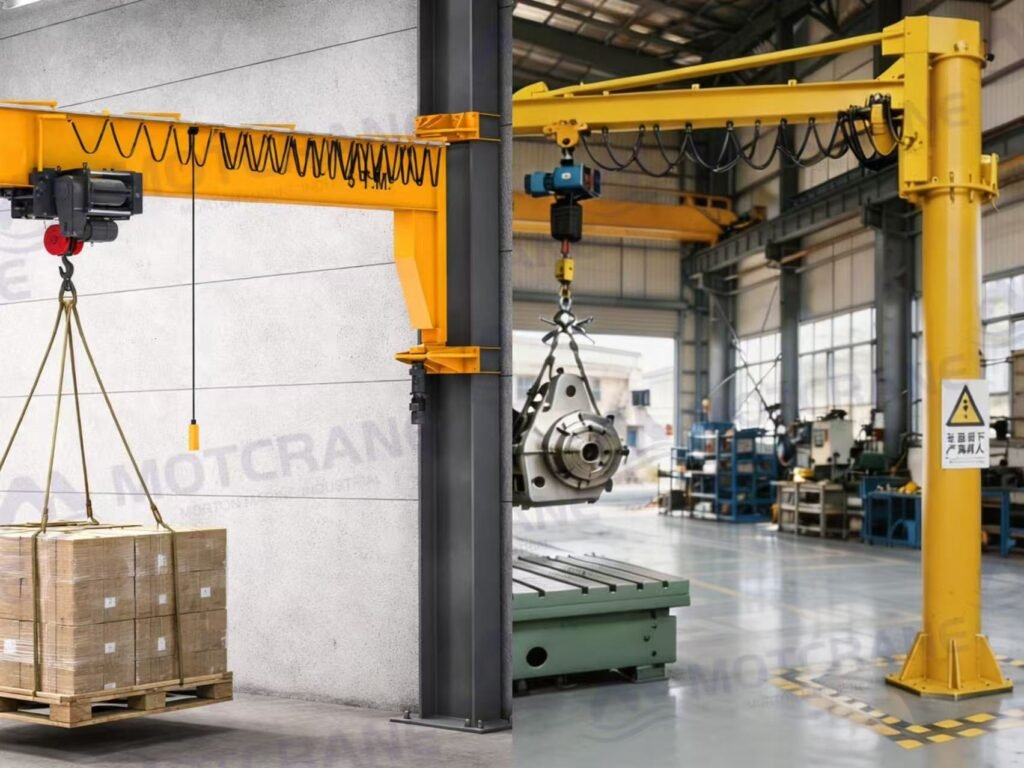
I. Qu'est-ce qu'une potence murale ?
A potence murale est généralement fixé à un mur ou à un poteau de bâtiment, la structure du bâtiment fournissant le support. Comme.
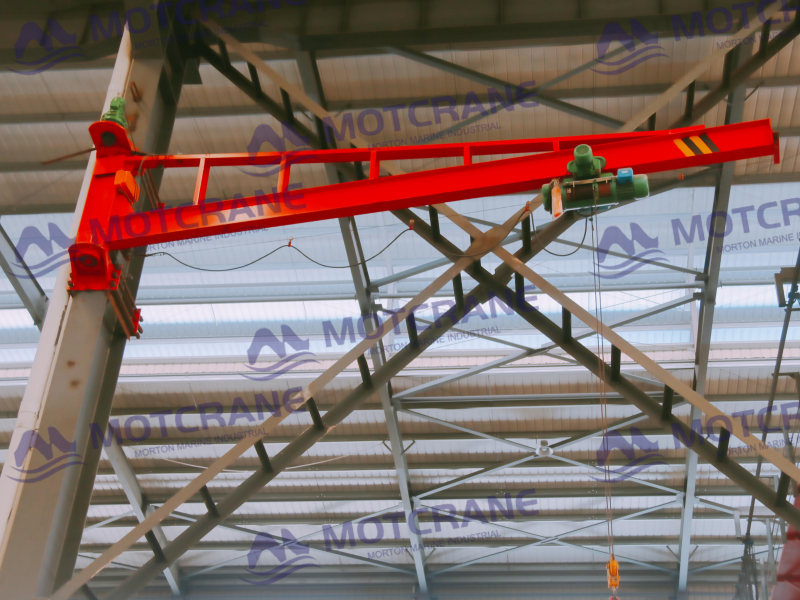
En plus du type fixe, certains projets utilisent également un potence murale roulante. Dans cette configuration, la grue se déplace horizontalement le long d'une voie installée sur le mur ou un poteau du bâtiment. Comparé à une potence murale fixe, le type à déplacement mural peut couvrir une zone plus longue et desservir plusieurs postes de travail. Cependant, il impose également des exigences plus strictes quant à l'état du bâtiment et à l'espace d'installation disponible.
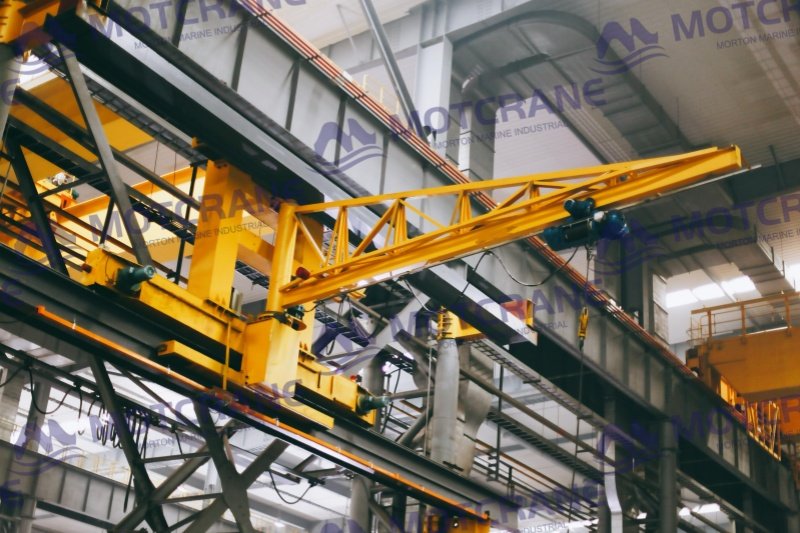
Que le pont roulant soit fixe ou qu'il se déplace sur un mur, une chose doit être confirmée en premier : le mur ou le poteau du bâtiment doit avoir une capacité de charge suffisante. Ainsi, bien qu'une potence murale soit attrayante car elle économise de l'espace, elle dépend également plus directement de l'état structurel de l'emplacement d'installation.
II. Qu'est-ce qu'une potence murale ?
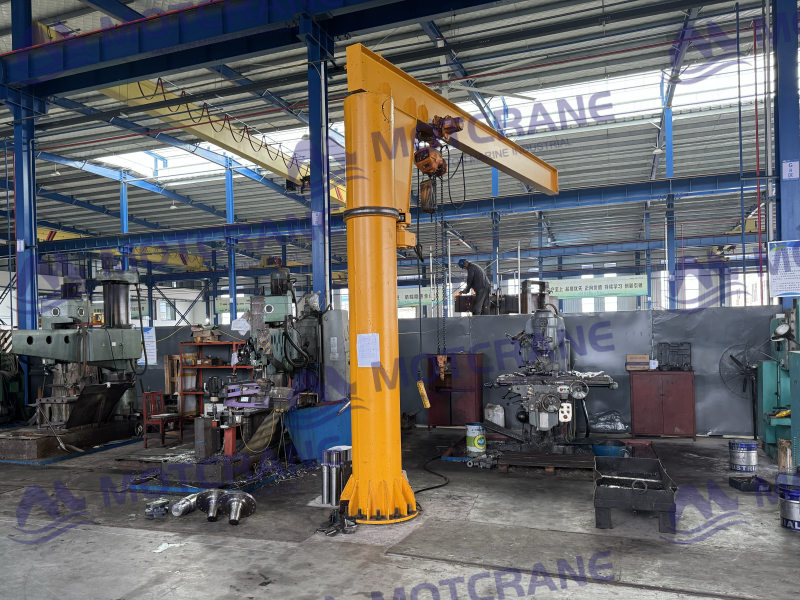
A potence murale à colonne, également communément appelé un potence autoportante, est un autre type très courant. Il est installé au sol avec sa propre colonne et fondation autoportantes, ce qui signifie qu'il ne repose pas sur le mur ou les colonnes du bâtiment existant pour son soutien.
Pour de nombreux ateliers, zones d'assemblage et postes de travail fixes, ce type est souvent l'option la plus simple. Tant qu'il y a une position d'installation appropriée et une base solide, la grue peut être agencée en fonction de la zone de travail réelle, de la longueur de bras requise et de la couverture de levage.
De nombreux clients choisissent ce type non pas parce qu'il est plus avancé, mais parce qu'il est plus facile de planifier autour du point de levage réel. Il dépend moins de la structure du bâtiment, l'approche d'installation est plus simple, et c'est souvent une meilleure solution lorsque l'installation murale est gênante ou lorsqu'un point de levage indépendant est nécessaire.
En termes pratiques, une potence murale est souvent le choix le plus sûr lorsque les clients souhaitent plus de liberté dans l'agencement ou lorsque l'état du mur ou du poteau existant n'est pas idéal pour le montage d'une potence.
III. Différences clés entre les potences murales et les potences à colonne
Bien que les deux appartiennent à la catégorie de grues à flèche, la différence entre les deux va bien au-delà de “ l'un est sur le mur et l'autre est au sol ”. Dans les projets réels, la décision se résume généralement aux points suivants.
1. Méthode d'installation
La différence la plus évidente est la méthode d'installation.
A potence murale est fixé à un mur ou à un poteau de bâtiment, de sorte que son support provienne de la structure existante. De ce fait, le site doit être vérifié au préalable pour confirmer si le mur, le poteau ou la poutre de support peut réellement supporter la charge.
A potence murale à colonne est installé avec sa propre colonne autoportante et sa fondation. Comme il ne dépend pas de la structure du bâtiment existant, il est souvent plus facile à intégrer dans des projets où les conditions des murs sont peu claires ou lorsque des modifications du bâtiment ne sont pas pratiques.
2. Impact sur l'espace au sol
Si l'espace au sol est limité, une potence murale présente généralement un avantage. Elle éloigne le point de levage du sol et évite d'ajouter un nouveau poteau dans la zone de travail. C'est particulièrement utile dans les postes de travail, les zones de maintenance et les chaînes de production où l'agencement est déjà restreint.
Une potence murale, en revanche, nécessite son propre poteau et sa propre fondation, de sorte qu'elle occupera une position fixe au sol. Sur de nombreux sites, cela ne pose pas de problème, mais là où le trafic au sol et l'agencement des équipements sont déjà surchargés, les clients peuvent y être plus sensibles.
3. Couverture et flexibilité
A potence murale à colonne fournit généralement une plage de pivotement plus large autour d'un point de levage fixe. Parce qu'il est autoportant, il est souvent plus facile à installer pour les projets où la grue doit couvrir une plus grande zone autour d'un poste de travail.
A potence murale est plus étroitement lié à la configuration du bâtiment. Un type fixe mural fonctionne bien lorsque les tâches de levage sont concentrées le long d'un mur, à côté d'équipements ou dans une zone latérale. Une potence murale roulante ajoute plus de flexibilité en se déplaçant le long d'un rail mural, ce qui lui permet de couvrir plusieurs postes de travail ou une zone de production plus longue sans occuper d'espace au sol.
Ainsi, en comparant les deux, les clients ne devraient pas seulement demander lequel permet d'économiser le plus d'espace. Ils devraient également examiner comment le travail de levage est effectivement effectué. Dans certains projets, la couverture est plus importante. Dans d'autres, maintenir le point de levage à proximité d'une position de travail spécifique est plus important.
4. Exigences du site
Une solution murale dépend davantage de l'état du bâtiment existant. Le mur, le poteau du bâtiment ou la poutre porteuse doivent être adaptés au montage de la grue, et pour un type à déplacement mural, il doit également y avoir de la place pour installer le rail.
Une solution montée sur colonne dépend davantage de l'état du sol, de la position de fondation disponible et s'il y a suffisamment d'espace pour placer la colonne autoportante.
Aucun type n'est automatiquement plus facile ou meilleur. Ce qui compte, c'est celui qui convient au site réel et à la manière dont le travail de levage sera effectué.
5. Applications typiques
A potence murale convient souvent pour :
♠ postes de travail disposés le long d'un mur
♠ zones de maintenance des équipements
un côté d'une chaîne de production
♠ zones nécessitant un espace au sol dégagé
A potence murale roulante convient souvent pour :
♠ plusieurs postes de travail le long du même mur
♠ couverture de levage plus longue à côté d'une chaîne de production
zones de maintenance où la grue doit se déplacer le long du mur
A potence murale à colonne convient souvent pour :
postes de travail fixes dans les ateliers
Zones de rassemblement
Ateliers privés
♠ sites qui ont besoin d'un point de levage indépendant
La vraie question n'est pas de savoir quel type est le plus courant, mais quel type sera le plus pratique une fois installé.
IV. Quand une potence murale est-elle le meilleur choix ?
A potence murale Il est souvent intéressant de considérer en premier lieu lorsque l'espace au sol est limité, que le client ne souhaite pas ajouter une nouvelle colonne autoportante, et que les travaux de levage sont concentrés près d'un mur, d'une ligne de production ou d'un pilier de bâtiment.
Son plus grand avantage n'est pas qu'il couvre une vaste zone, mais qu'il place le point de levage près du travail réel tout en gardant le sol dégagé. Dans les bonnes conditions du site, cela peut rendre l'ensemble de la disposition plus propre et plus efficace.
Mais ce type ne fonctionne bien que lorsque la condition d'installation est appropriée. Il ne suffit pas de dire qu'une potence murale permet d'économiser de l'espace. Le mur ou le poteau du bâtiment doit toujours être vérifié pour sa capacité portante, et si une version à déplacement sur mur est envisagée, il doit également y avoir suffisamment de place pour le rail et son système de support.
V. Quand une potence murale est-elle plus appropriée ?
A potence murale à colonne est souvent le meilleur choix lorsque le client souhaite un point de levage plus indépendant et ne veut pas que la grue dépende trop de la structure existante du bâtiment.
C'est aussi une option pratique lorsque la zone de levage doit être aménagée plus librement, lorsque l'installation murale est peu pratique ou lorsque le point de travail réel n'est pas proche d'un mur. Dans de nombreux ateliers, zones d'assemblage et espaces de travail privés, ce type est plus facile à placer exactement là où se déroulent les travaux de levage.
Une autre situation courante est celle où l'état du bâtiment est incertain. Même si un pont roulant mural peut sembler attrayant du point de vue de l'économie d'espace, il peut ne pas être le meilleur choix si le mur ou le poteau du bâtiment n'est pas adapté. Dans ce genre de cas, un pont roulant autoportant sur colonne est souvent la solution la plus réaliste et la plus fiable.
VI. Comment le MOTCRANE aide-t-il à déterminer quelle option est la plus appropriée ?
À MOTCRANE, nous ne recommandons pas de potence murale ou de potence à colonne en nous basant uniquement sur la capacité de levage. Même si la capacité requise est la même, le type le plus adapté peut toujours changer en fonction de l'agencement du site, des conditions d'installation et de la manière dont la grue sera réellement utilisée.
Nous examinons généralement des facteurs tels que :
♠ où les travaux de levage sont concentrés
si le mur ou le poteau du bâtiment est adapté au montage
♠ si le sol autorise un poteau autoportant et sa fondation
♦ si le client accorde plus d'importance à l'économie d'espace ou à une installation plus indépendante
♠ que le travail de levage se déroule le long d'un mur ou autour d'un poste de travail fixe
Dans de nombreux projets, ce qui affecte réellement l'utilisation à long terme n'est pas la capacité elle-même, mais le fait que le point de levage ait été placé au bon endroit et que la structure choisie convienne réellement au site.
Si un client peut fournir photos du site, une esquisse simple de la disposition, la capacité de levage, les exigences de longueur de flèche et la hauteur de levage, il est généralement beaucoup plus facile de déterminer quelle option est la plus appropriée.
VII. Conclusion
Pour un levage localisé dans une zone fixe, les deux potences murales et grues à potence murales peuvent être des solutions pratiques. Mais ils ne sont pas automatiquement interchangeables. La méthode d'installation, l'espace au sol, l'état du bâtiment et le trajet de levage réel affectent le choix du type le plus adapté.
Si le travail est concentré près d'un mur et qu'il est important de garder le sol dégagé, une potence murale peut être plus appropriée. Si le client souhaite un point de levage plus indépendant ou si la structure du bâtiment ne se prête pas à un montage, une potence sur colonne est souvent l'option la plus sûre et la plus pratique.
Ce qui importe le plus, ce n'est pas de savoir quel type a l'air le plus courant ou semble économiser le plus d'espace, mais lequel sera réellement plus facile à installer, plus pratique à utiliser et mieux adapté au travail à long terme sur le chantier.
Si vous comparez potences murales et grues à potence murales, Envoyer MOTCRANE les photos de votre site, un croquis d'implantation, la capacité de levage et les exigences de fonctionnement de base. Nous pouvons vous aider à examiner les conditions d'installation et suggérer une solution plus adaptée à votre projet.



 French
  English
  Russian
  Spanish
  Arabic
  Indonesian
  Japanese