


Single Girder vs Double Girder Overhead Crane: What Is the Difference?
When selecting industrial lifting equipment, single girder and double girder overhead cranes are the two most common types. Before purchasing an overhead crane, many buyers ask the same question: what is the difference between a puente grúa monorraíl and a double girder overhead crane, and which one is more suitable for their workshop?
Visually, both types fall under the category of overhead cranes, running along tracks on either side of the factory columns. They are used for tasks such as lifting raw materials, transporting components, assembling and commissioning equipment, and shipping finished products within the workshop. However, they differ significantly in terms of structural design, lifting capacity, lifting height, duty cycle, operational stability, suitable working conditions, and overall investment costs. Understanding these differences is crucial when selecting the right overhead crane for a specific project, as they not only affect the initial purchase cost but also impact operational efficiency, safety, and long-term maintenance costs.
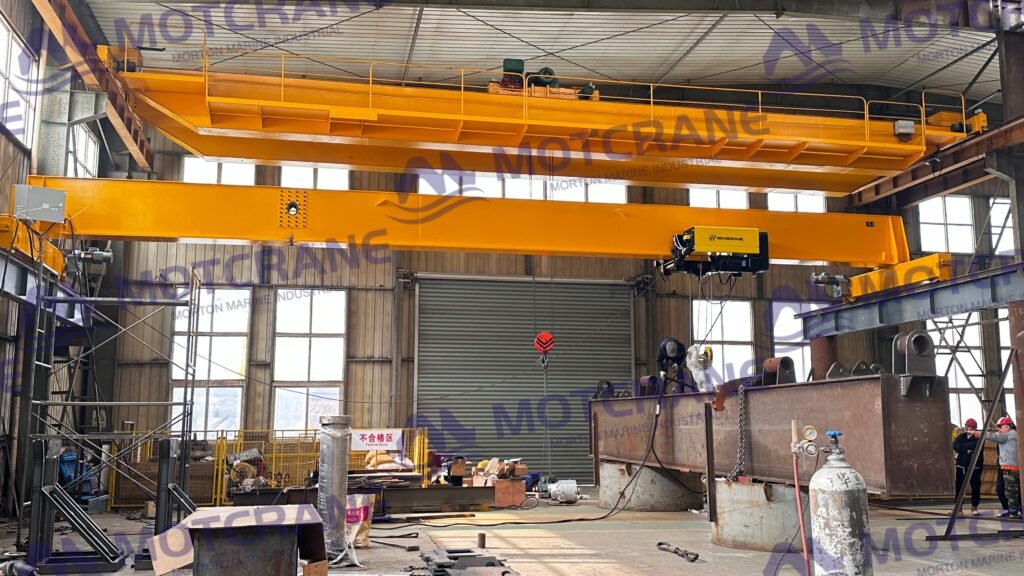
I. What Is a Single Girder Overhead Crane?
A puente grúa monorraíl (3–20 tons), as the name suggests, is a crane with a single main girder. Typically, the hoisting mechanism (electric hoist) is mounted on an I-beam or rail beneath the main girder and runs along it. Its structure is relatively simple, typically consisting of one main girder, two end beams, and an electric hoist. The equipment has a relatively light self-weight, low manufacturing costs, and is easy to install.
Single-girder overhead cranes are commonly found in small and medium-sized manufacturing workshops, warehouses, assembly lines, and maintenance facilities—typically in light-to-medium duty applications. They are particularly well-suited for scenarios with low usage frequency and single-lift capacities of ≤20 tons. For customers with limited budgets or whose factory designs did not initially account for structural load-bearing capacity, the single girder overhead crane offers an economical and practical solution.
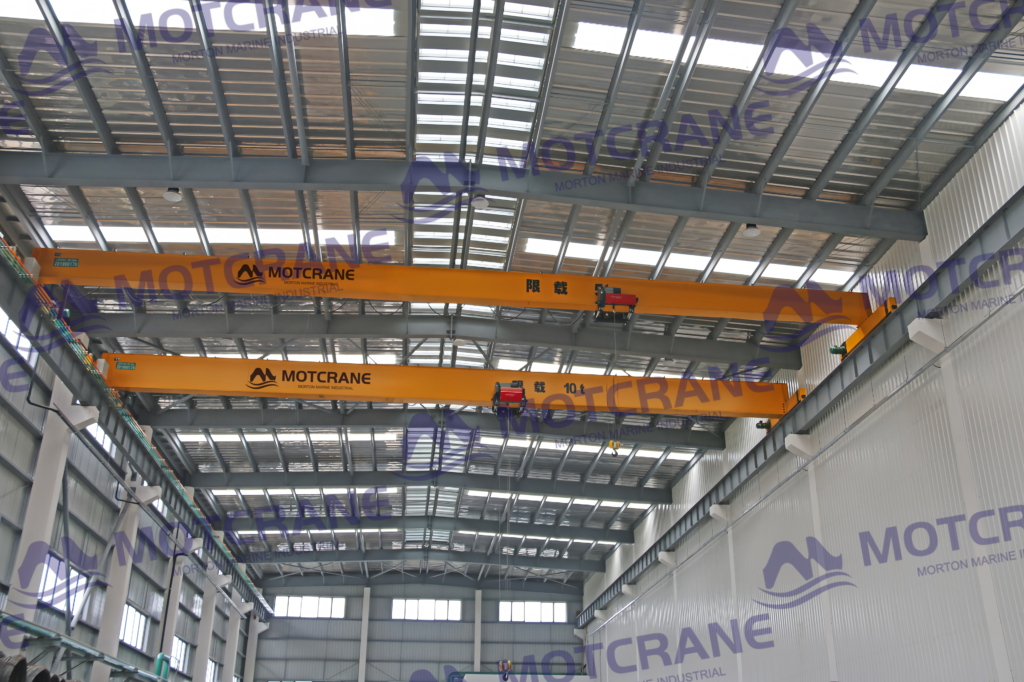
II. What Is a Double Girder Overhead Crane?
A puente grúa birraíl utilizes two main girders as its primary load-bearing structure. The hoist trolley runs on rails laid above the two main girders, with the hoisting mechanism mounted on the trolley frame. Due to its stronger overall structure, the double girder overhead crane typically offers superior performance in terms of load capacity, rigidity, operational stability, duty cycle, and lifting height, with lifting capacities generally ranging from 3 to 200 tons.
Double girder overhead cranes are generally used in applications such as steel fabrication, mold handling, heavy machinery manufacturing, steel mills, equipment installation, and the transport of heavy-duty equipment. In these high-frequency, complex operating environments—where production continuity, operational reliability, and lifting capacity are critical—the double girder configuration is often the preferred choice.
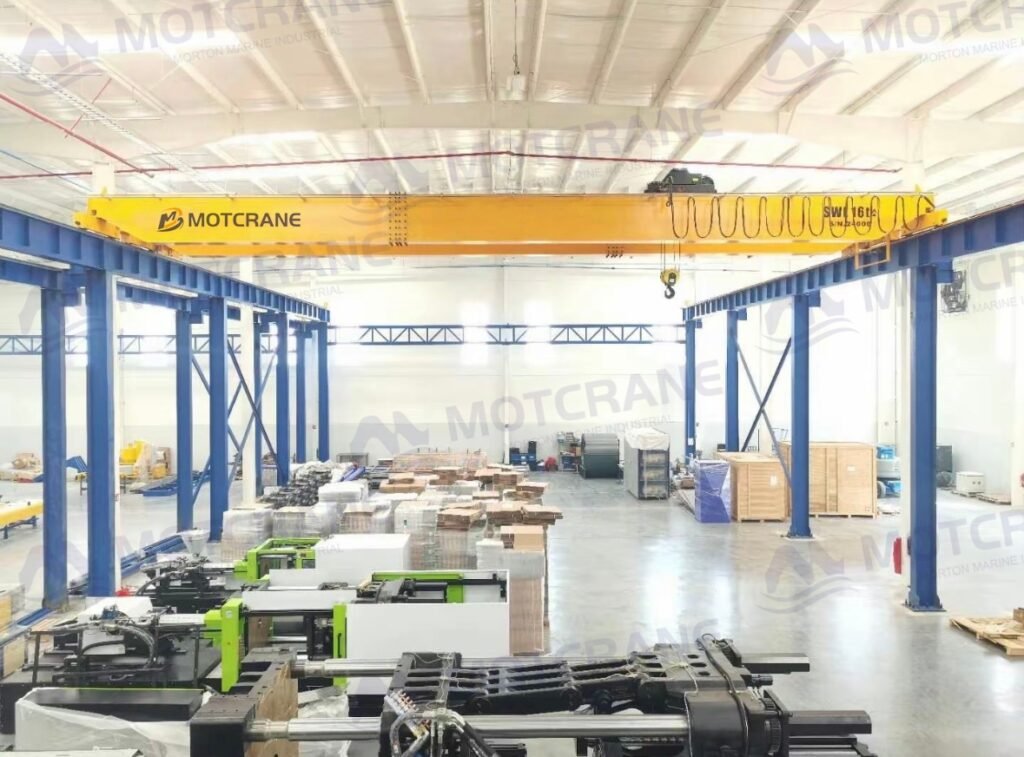
III. Quick Comparison: Single Girder vs Double Girder Overhead Crane
| Artículo | Puente grúa monorraíl | Puente grúa birraíl |
|---|---|---|
| Main Structure | One main girder | Two main girders |
| Typical Capacity | 3–20 tons | 3–200 tons |
| Altura de elevación | More limited | Greater |
| Span | Standard spans | Larger spans |
| Duty Class | M3/M5 | M5/M6/M7 |
| Installation Cost | Baja | Más alto |
| Maintenance Cost | Baja | Más alto |
| Typical Applications | Warehouses, assembly, maintenance | Steel plants, heavy fabrication, mold handling |
IV. Key Differences Between Single Girder and Double Girder Overhead Cranes
1. Differences in Structural Design
The most obvious difference between the two is the number of main girders. Single girder overhead cranes prioritize cost-effectiveness and simplified design; they feature a single main girder, resulting in a compact structure and lighter overall weight. Double girder overhead cranes prioritize load-bearing capacity and adaptability to heavy-duty applications, so they feature two main girders, resulting in greater overall rigidity and more stable load-bearing performance.
2. Differences in Lifting Capacity
Generally, single girder overhead cranes are better suited for lifting requirements of small to medium tonnages (3–20 tons), while double girder overhead cranes are better suited for larger tonnages (3–200 tons). When customers need to handle large steel structures, heavy machinery components, molds, or high-value heavy equipment, double-girder cranes typically offer a significant advantage.
3. Differences in Lifting Height
The electric hoist of a single girder overhead crane is generally suspended below the main girder, which occupies a certain amount of vertical space and limits the effective lifting height of the hook.
In double girder overhead cranes, the trolley runs above the main girder, allowing for more flexible arrangement of the hoisting mechanism. Consequently, the hook’s effective lifting height is greater; however, this configuration occupies the space between the crane and the roof. Therefore, if you plan to install a double girder overhead crane, it is essential to reserve sufficient headroom during the factory design phase.
If your project requires greater hook travel or a higher lifting height, a double girder crane often has an advantage. However, in buildings with limited headroom, low-headroom single girder or Puente grúa a la europea designs from MOTCRANE may also be worth considering, depending on the required capacity and workshop layout. Overall, double girder cranes still offer a clear advantage in lifting height for heavier-duty applications.
4. Differences in Span and Operational Stability
For workshops with large spans (exceeding 22.5 meters), double girder overhead cranes demonstrate greater stability. This is because the double girder structure provides higher rigidity, allowing the trolley to run more smoothly along the main girders.
Single girder overhead cranes are suitable for workshops within standard span ranges. However, if span and lifting capacity continue to increase, a double girder overhead crane is often a more suitable option. There is also a special case to note: in unmanned workshops, when the lifting capacity does not exceed 10 tons but high requirements for intelligent control and positioning accuracy are needed, double girder cranes are often more suitable.
5. Differences in Duty Class and Frequency of Use
If the workshop only requires intermittent lifting operations with low usage frequency, a single girder overhead crane will suffice to meet operational needs.
However, for high-frequency continuous operations, heavy-load handling, or multi-shift production environments—such as steel structure plants, machining centers, and mold workshops—a double girder overhead crane is more suitable. This is because its structural design is better suited for long-term, high-intensity operation, and it typically offers greater service life and stability.
6. Differences in Facility Conditions and Installation Requirements
Single girder overhead cranes have a lighter dead weight, so they typically place lower demands on the load-bearing capacity of the facility’s support beams (track beams) and columns. Installation is straightforward, making them ideal for facility retrofit projects.
Double girder overhead cranes, due to their heavier dead weight and more complex structure, place higher demands on track beams, columns, facility headroom, and installation conditions. This is generally not an issue for new facilities; however, for retrofits of existing facilities, all requirements must be comprehensively evaluated.
7. Cost Differences
Since single girder overhead cranes utilize a single girder structure with a relatively simple overall design, the configuration of their hoisting mechanisms and drive systems is typically more cost-effective. Consequently, the total investment in equipment procurement, transportation, installation, and subsequent maintenance is often lower than that of double girder overhead cranes.
Although double girder overhead cranes involve higher initial investment costs, they offer superior performance and better long-term stability. In the long run, if future operations involve heavy-load, high-frequency conditions, we still recommend choosing a double girder crane, as it reduces the risk of breakdowns and improves production efficiency.
V. Advantages and Limitations of Single Girder Overhead Cranes
The primary advantages of single girder overhead cranes lie in their cost-effectiveness, compact design, ease of installation, and simple maintenance. For workshops in small and medium-sized manufacturing enterprises or projects with strict budget constraints, the single-girder structure is undoubtedly the most cost-effective option.
However, single-girder cranes also have limitations, such as relatively limited load capacity (lifting capacity below 20 tons) and lifting heights that are typically lower than those of double-girder cranes (generally 6 meters and 9 meters). If a project is expected to undergo significant capacity upgrades in the future, it will be necessary to switch to a double-girder overhead crane structure.
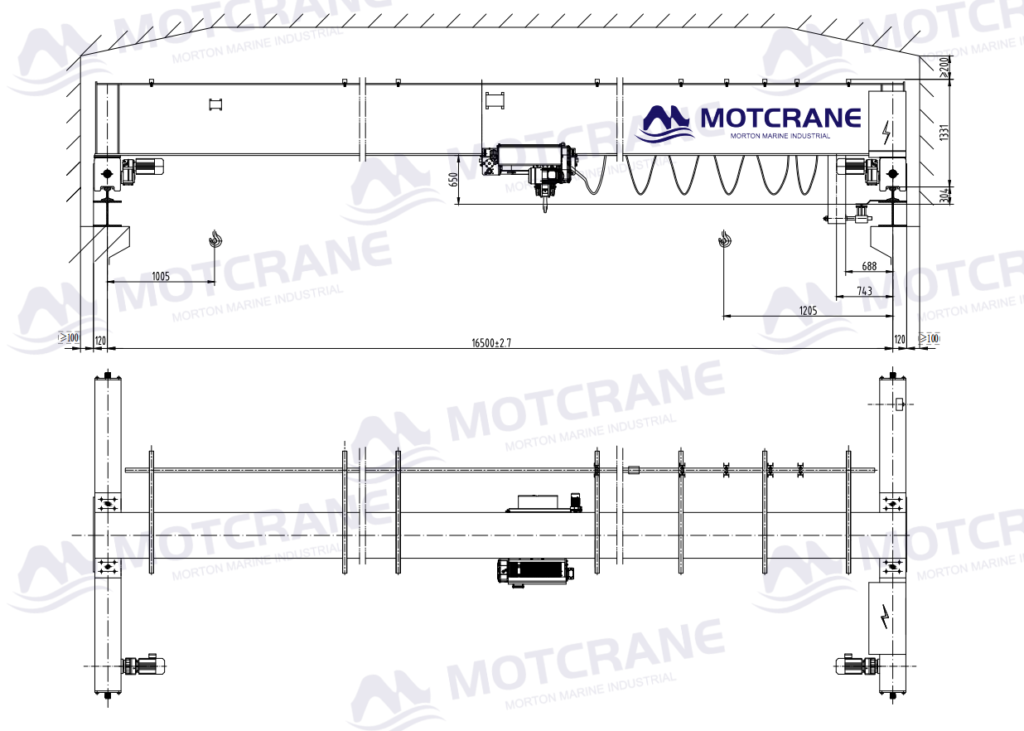
VI. Advantages and Limitations of Double Girder Overhead Cranes
The primary advantages of double-girder overhead cranes lie in their greater load-bearing capacity, smoother operation, higher lifting height, and suitability for high-intensity operations. For heavy industry and continuous production enterprises, this is often the more reliable choice.
Their main drawbacks include higher cost, greater dead weight, and specific installation height requirements. If a company’s lifting needs are not substantial, choosing a double girder crane without matching it to the actual duty requirements may lead to unnecessary investment.
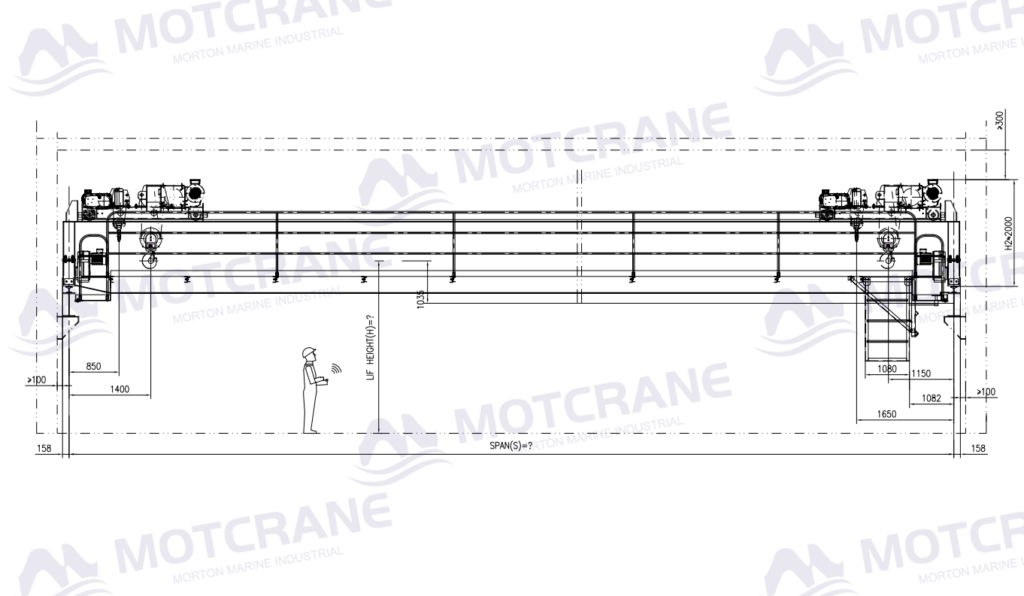
VII. How to Choose Between Single Girder and Double Girder Overhead Cranes?
In actual projects, the decision between a single-girder and a double-girder crane should not be based solely on price; rather, it requires a comprehensive evaluation of the following factors:
1. Maximum lifting capacity (future planning must be taken into account).
If there is a possibility of handling heavier workpieces in the future, it is essential to plan the facility’s load-bearing capacity in advance to allow for the eventual upgrade to a double-girder crane.
2. Lifting height (be sure to confirm the design specifications with MOTCRANE in advance).
If there are specific requirements for hook lifting height, a double-girder crane typically offers greater advantages.
3. Span and facility dimensions (it is best to provide a floor plan of the facility when requesting a quote).
If the span exceeds 22.5 meters, consider a double-girder overhead crane.
4. Frequency of use and duty cycle.
Double-girder overhead cranes are capable of handling high-frequency, heavy-load, and multi-shift operations.
5. Budget and building load-bearing capacity.
If your daily operations prioritize cost-effectiveness and the workload is not heavy, a single-girder overhead crane is the right choice.
6. Long-term development needs.
If your company has future expansion plans or equipment upgrade requirements, you must consider the prerequisites for installing a double-girder overhead crane (building load-bearing capacity and installation space) during the facility planning phase—even if you initially opt for a single-girder overhead crane due to budget constraints.
VIII. Conclusion
In summary, single-girder overhead cranes are better suited for medium-to-light-duty, cost-effective, and routine operations; double-girder overhead cranes are better suited for projects involving heavy lifting, high-frequency operations, and heavy-duty conditions. It is not a simple matter of “which is better,” but rather a question of which type best meets your current practical needs.
For procurement directors, the most prudent approach is not to simply compare which is cheaper—single-girder or double-girder—but to make a decision based on the project’s actual operational requirements over the next 5 to 10 years. Before requesting a quote, we recommend clarifying the following information in advance: lifting capacity, span, lifting height, operating hours, factory floor plans, and the type of materials to be lifted. If you are still not sure whether a single girder or double girder overhead crane is more suitable for your project, send MOTCRANE your lifting capacity, span, lifting height, workshop drawing, and daily working hours. Our team can help you evaluate a more suitable overhead crane solution based on your actual working conditions.
IX. FAQ About Single Girder and Double Girder Overhead Cranes
1. Is a single girder overhead crane cheaper than a double girder crane?
A puente grúa monorraíl uses only one main girder, so its overall self-weight is relatively low. Because the crane is lighter, the required drive motor power is usually smaller, which helps make the overall solution more cost-effective.
2. Which crane offers higher lifting height?
Generally speaking, puentes grúa birrail have a greater lifting height.
3. Which overhead crane is better for large-span workshops?
In most cases, a double girder overhead crane is more suitable for large-span workshops because it provides better rigidity, smoother trolley travel, and more stable performance under heavier loads.
4. Can a single girder overhead crane be used for heavy-duty applications?
MOTCRANE recommends using single girder overhead cranes for routine, low-frequency operations, typically with a duty class of M3 or M5.
5. What information should I prepare before requesting an overhead crane quotation?
Before requesting an overhead crane quotation, it is helpful to prepare the lifting capacity, span, lifting height, workshop drawing, daily working hours, and the type of materials to be handled. This information helps the supplier recommend a more suitable solution.You can also contact MOTCRANE directly for a customized overhead crane recommendation based on your workshop layout and lifting requirements.



 Spanish
  English
  Russian
  French
  Arabic
  Indonesian
  Japanese